
Lieferung heute & morgen

Qualitätsgarantie

Willkommens-Angebote freischalten: KOSTENLOSE Lieferung | Bis zu 80 % RABATT | Kostenlose 30-Tage-JoyPlus-Testphase
App herunterladen
As a Joybuy Product Recommendation Officer, I see every day how the right home accessory can transform a space. Decorative planters are more than just containers for your plants—they are statement pieces for your interior design. However, the search for the perfect pot can quickly lead to disappointment when the product doesn't live up to its online photos. Before you invest, you should be aware of the three most common pitfalls that lead to unnecessary expenses.
To avoid these mistakes, you should focus on three objective criteria. These will help you evaluate a planter's quality and functionality beyond the marketing hype.
The material determines not only the look but also the longevity and intended placement.
Healthy plant growth is nearly impossible without effective drainage. The most important feature here is the drainage hole at the bottom of the pot.
Always pay attention to the pot's interior dimensions, not just the exterior ones. A floor-standing planter should be not only tall but also wide enough to give the root ball ample room to grow. As a rule of thumb, the new pot should be about 2-4 cm (approx. 1-2 inches) larger in diameter than the current root ball.
Based on these objective criteria, we have identified several products that are well-suited for specific use cases.
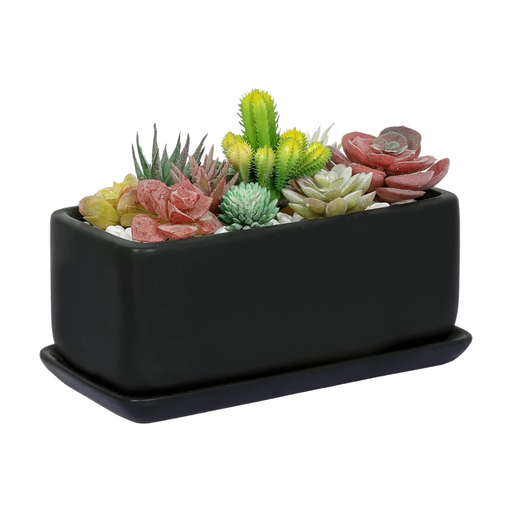
Why It's a Great Fit: The rectangular shape and matte black finish are a perfect match for modern, minimalist interiors. It's ideal for stylishly displaying herbs or succulents on windowsills or sideboards.
This model avoids the waterlogging trap with two integrated drainage holes and a matching, detachable ceramic drip tray. This protects furniture from water stains and plant roots from rot.
The combination of modern design and thoughtful functionality makes this planter an all-in-one solution that requires no additional saucers or inner pots.
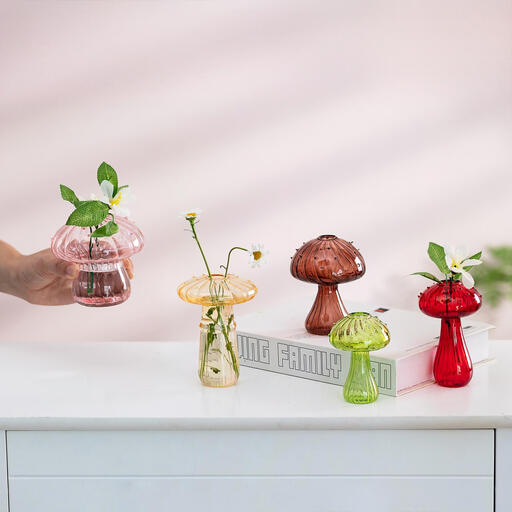
Why It's a Great Fit: This planter set is ideal for plant enthusiasts who love to propagate cuttings. The small, mushroom-shaped glass vases are not only functional for hydroponics but also serve as a playful decorative element for shelves and windowsills.
Since these are vessels for water propagation, the drainage pitfall is irrelevant. The handcrafted borosilicate glass is also thicker and more stable than many comparable decorative glass items, reducing the risk of breakage.
The set includes five individual vases in various colours and shapes, allowing for a creative and diverse display of cuttings or single small flowers.
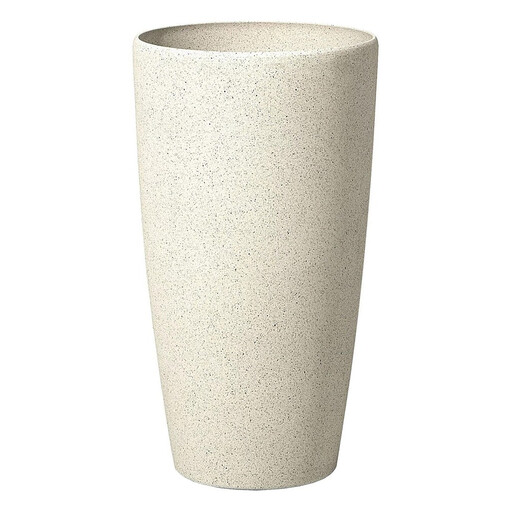
Why It's a Great Fit: At 58 cm tall, this pot is an ideal floor-standing planter for large houseplants like a Fiddle Leaf Fig or Bird of Paradise. Its slim, round shape and light colour create an elegant and understated look.
It bypasses the material trap with its durable stone-clay-fibre blend, which is UV and weather-resistant. The drainage pitfall is addressed with a flexible solution: a pre-marked opening that can be drilled out for outdoor use.
Its versatility for both indoor and outdoor use, combined with its relatively low weight compared to solid stone pots, makes this model exceptionally flexible and easy to handle.
We have compiled a complete, up-to-date list of products that meet these strict selection criteria and quality standards.
For most plants, a drainage hole is essential to prevent root rot caused by waterlogging. If you use a decorative cachepot without a hole, the plant should be kept in a separate plastic nursery pot that has holes. This can be briefly removed after watering to allow it to drain completely.
Materials like stone-fibreglass composites, high-quality plastic (with UV protection), and stoneware explicitly labelled as "frost-proof" are generally suitable for outdoor winter use. Terracotta and standard ceramics are often porous, absorb water, and can crack in freezing temperatures. Always look for the manufacturer's explicit label.
Measure the diameter of your plant's root ball. The new pot's inner diameter should be about 2-4 cm (approx. 1-2 inches) larger. A pot that is too large can cause the soil to stay wet for too long, which can also lead to root rot. For tall, slender pots, it's important that the depth also accommodates the root system.