
Lieferung heute & morgen

Qualitätsgarantie

Willkommens-Angebote freischalten: KOSTENLOSE Lieferung | Bis zu 80 % RABATT | Kostenlose 30-Tage-JoyPlus-Testphase
App herunterladen
A decorative vase can be used as a flower container, table decoration or standalone home accessory. However, appearance is not the only factor to consider when choosing one. The material, stability, opening size and intended use all determine whether a vase remains practical in everyday life or ends up unused in a cupboard after a short time.
A narrow opening is often suitable for individual branches, a single rose or a few dried flowers. However, it may be too narrow for a full bouquet or pampas grass. Conversely, a small arrangement can quickly look lost in a very wide opening.
Before buying, decide whether the vase is intended for fresh flowers, artificial branches, eucalyptus, dried flowers or purely as a decorative vase.
A ceramic vase often looks solid and stable, but its edges can be damaged if knocked. A glass vase makes the water level and stems visible, but is more vulnerable if dropped. For painted or textured surfaces, it is also important to check whether abrasive cleaning products can be used.
Descriptions such as “handmade” or “high quality” do not replace specific information about the material, care requirements and water resistance. Details such as 100% glass, ceramic, terracotta, dimensions and cleaning instructions are much more informative.
A tall, narrow flower vase can look decorative with long branches, but it requires a stable, level surface. In homes with children or pets, the risk of tipping and breakage should be taken into account. For a coffee table or narrow shelf, a small vase with a wider base is often more suitable than a tall model.
For a table vase on the dining table or bedside table, compact models around 9 to 17 cm high save space. A taller vase measuring around 25 to 27 cm can make a stronger impression on a sideboard, chest of drawers or in an entrance hall.
Pay attention to three dimensions:
For a dried flower vase, a narrow opening is often sufficient. With pampas grass, the stems should not be compressed too tightly. A boho vase with ridges, a wave texture or a matt finish can work as a standalone design feature.
A modern vase in beige, white, black or grey can be combined with a wide range of furniture. Gold-coloured details or coloured glass create a deliberate accent and should be coordinated with other home accessories in the room. For a calm look, choose a minimalist vase and just a few branches. In boho, vintage or country-style interiors, textured ceramics, terracotta and natural dried flowers can be combined.
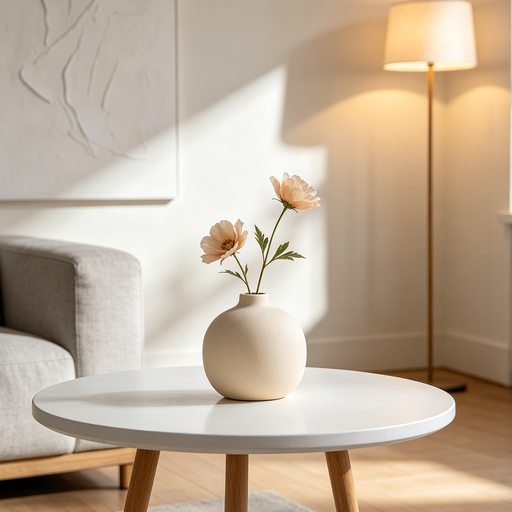
Why this product suits this profile: The compact ceramic vase is designed for small tables, shelves, bedside tables or desks. It can be decorated with individual roses, pampas grass or small dried flowers.
At around 10 cm wide and 9.5 cm high, its dimensions make the intended use clear. The narrow opening is designed for small arrangements rather than generous bouquets.
Ceramic body, neutral beige tone and, according to the product information, a sealed inner wall for fresh flowers with water.
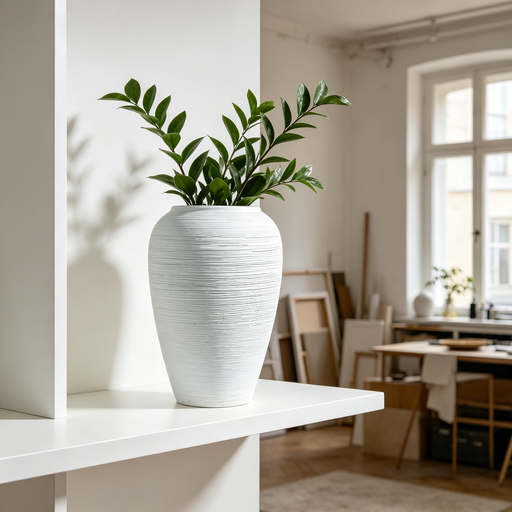
Why this product suits this profile: At around 27 cm high, this vase combines a textured surface with understated white, making it suitable for modern, Japanese-inspired or classic living spaces.
The precise size information helps you plan where to place it. The ceramic surface should be cleaned with a soft cloth; according to the product information, abrasive cleaners are not recommended.
Ceramic material, decorative texture and suitability for fresh, artificial and dried flowers according to the description.
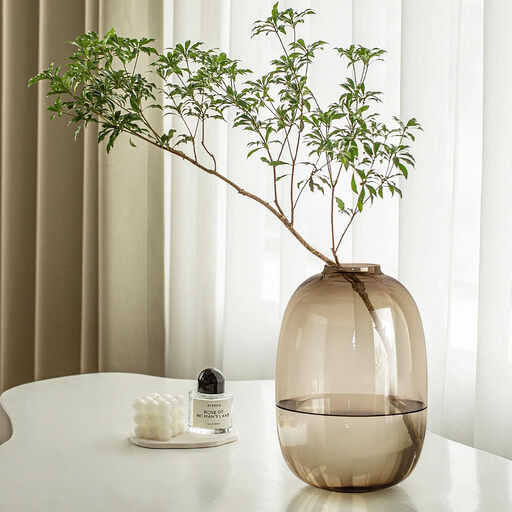
Why this product suits this profile: The 25 cm-high brown glass vase is designed for long stems, branches, eucalyptus, pampas grass, as well as fresh and artificial flowers.
The product description mentions the round shape and thicker base. However, glass remains fragile and should be placed on a stable surface.
Transparent coloured glass, a height of 25 cm and an opening of around 6.35 cm according to the product information.
We have put together a complete, regularly updated list of products that fully meet these strict selection criteria and the safety regulations applicable in the EU.
To extend the service life of your vases, clean them regularly with a soft cloth. When using fresh flowers, change the water regularly and rinse the vase afterwards. For ceramic and porcelain models, check whether the inner surface is explicitly suitable for water.
Glass and ceramic vases should be placed on a level, load-bearing surface. Long branches should not be arranged in a way that places their centre of gravity significantly beyond the rim of the vase. For weddings or larger table decorations, several small vases are often easier to distribute than one tall container.
For pampas grass, choose a vase with sufficient height and an opening that can hold several stems without compressing them too tightly. Depending on your interior, a textured ceramic vase or larger glass vase can be used as a boho or modern vase.
Its lifespan depends on the material, workmanship, location and care. Ceramic and terracotta are resistant to everyday dirt with normal use, but they can break if knocked. Glass should be protected especially from being dropped and from significant temperature fluctuations.
The price depends, among other things, on the material, size, set contents and surface design. A small vase or multi-piece set for table decorations can be more affordable than a large standalone piece. Alongside the price, compare the dimensions, contents, care instructions and intended use.