
Lieferung heute & morgen

Qualitätsgarantie

Willkommens-Angebote freischalten: KOSTENLOSE Lieferung | Bis zu 80 % RABATT | Kostenlose 30-Tage-JoyPlus-Testphase
App herunterladen
Decorative vases can help structure a room, showcase flowers or work as standalone home accessories. However, appearance is not the only factor to consider when buying. A narrow opening may be unsuitable for large bouquets, a heavy design can make repositioning difficult, and a delicate surface may require more care than expected.
When comparing decorative vases, you should therefore watch out for three common buying pitfalls:
Measure the available surface before buying. Small vase models around 10 to 25 cm tall are often suitable for sideboards, windowsills and bedside tables. A large vase measuring 30 to 40 cm in height is generally better suited to the floor, a wide console table or a generously sized dining table.
The opening also affects how the vase can be used:
Also pay attention to the base. A wide base reduces the risk of the vase tipping over, particularly when using a large vase with long branches.
A ceramic vase or a vase made from dolomite often has an opaque, sculptural appearance. Ridges, stepped details and abstract surfaces can make the vase decorative even when it is empty. Many models can be cleaned with a soft, slightly damp cloth. Abrasive cleaners may damage glazes and metallic finishes.
A glass vase adds transparency and is suitable for fresh flowers, provided the product details confirm that it can hold water. For coloured, coated or metallic-accented glass, a dry or soft cloth is often the recommended cleaning method. Metal vases, such as a black iron vase, can make attractive standalone decorations; check whether they are suitable for water before filling them.
Neutral colours such as black, white, beige and grey can be combined with a wide range of home accessories. A gold vase or a model with gold accents, on the other hand, creates a distinct contrast and should complement details already present in the room.
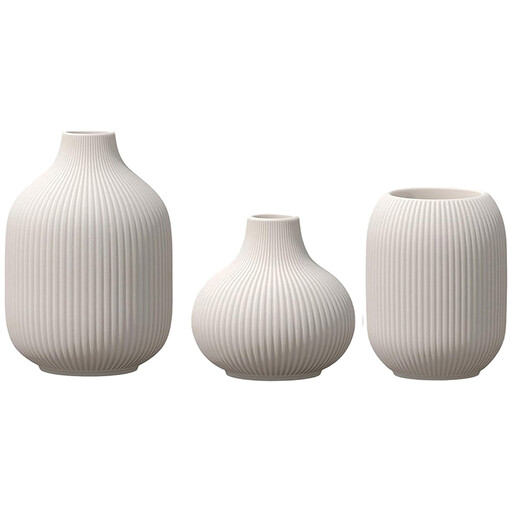
Why this product suits this profile: The set contains three small ceramic vases in different sizes, offering several display options for a shelf, desk or bedside table.
The three sizes make it easier to create a balanced group, rather than combining several mismatched individual pieces. According to the product details, the ribbed surface should be cleaned with a soft, dry cloth.
Three vases, ceramic construction and neutral beige tones; according to the product details, no assembly is required.
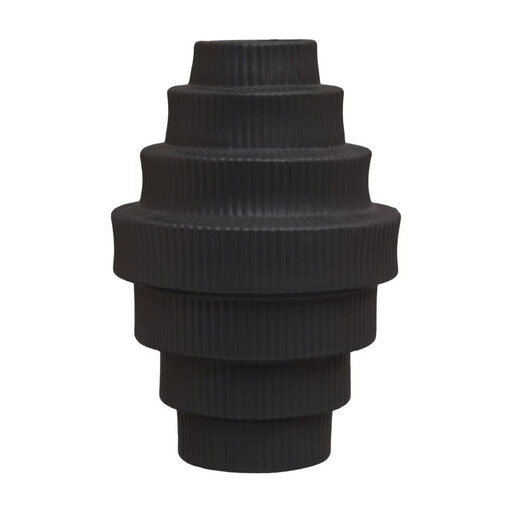
Why this product suits this profile: This 26 cm-high dolomite vase has a stepped, ribbed design and works as a striking standalone piece in modern living spaces.
The product details specify the material, dimensions and a stable 18 × 18 cm base. This makes it easier to check before buying whether the proportions will suit your furniture.
Dolomite, a black finish, stepped texture and a stated capacity of 2,700 ml.
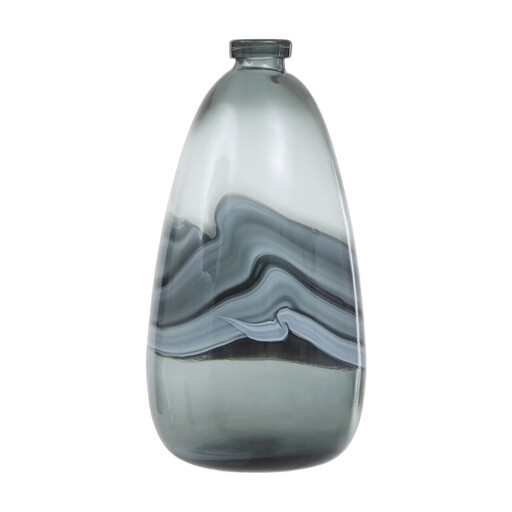
Why this product suits this profile: This 40 cm-high glass vase with a narrow bottle neck is designed for long stems and individual branches. As a large vase, it can help structure an entrance hall or console table.
The narrow neck limits the sideways spread of long flowers. Before use, however, check that the 20 × 20 cm base is positioned securely on a level surface.
Glass construction, a grey colour gradient, 40 cm height and a stated capacity of 12,000 ml.
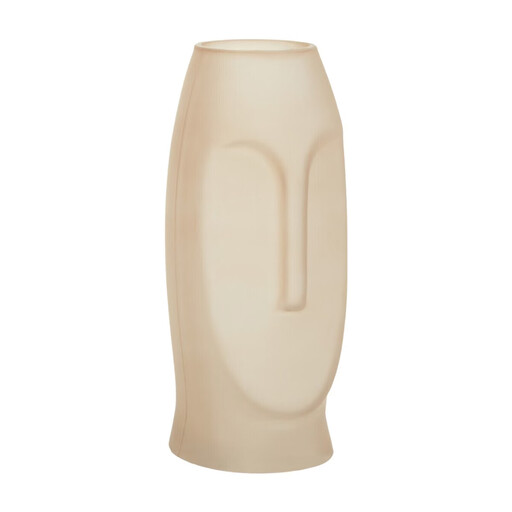
Why this product suits this profile: This 23 cm-high glass vase has a slender shape and sculptural face motif. It fits on smaller surfaces and can be used with a single stem or displayed empty.
The dimensions of 10 × 10 × 23 cm give you a clear idea of the space required. According to the product details, the glass surface should be cleaned with a soft cloth; abrasive cleaners are not recommended.
100 per cent glass according to the product details, a gold-coloured design and a capacity of 1,590 ml.
We have put together a complete, regularly updated list of products that fully meet these strict selection criteria and the safety regulations applicable in the EU.
Before positioning your vase, check that it stands upright and is not placed on an edge. If you have children or pets, choose a location out of their reach. Move glass carefully; ceramic and dolomite can chip if knocked.
For fresh flowers, the following points are useful:
If you want to style different rooms, you can repeat shapes and vary the colours: a black vase in the living room, a small vase in the bedroom and a glass vase in the entrance hall create a cohesive, yet varied look.
A vase for dried flowers should suit the length and weight of the branches. A narrow neck keeps individual stems neatly arranged, while a wider body provides more room for pampas grass or several branches. Dried flowers do not require water; nevertheless, check the care instructions for the specific product.
As a general guide, the vase can be around one third to one half of the visible height of the flowers. For a small table, models measuring 10 to 25 cm are often easier to incorporate. A large vase from around 30 cm upwards is generally better suited to the floor, a console table or a spacious dining table. The available surface, centre of gravity and actual size of the arrangement remain the key considerations.
Their lifespan depends on the material, workmanship, location and how they are handled. Ceramic, dolomite and glass do not have a specified replacement period. Avoid strong impacts, extreme temperatures and unsuitable cleaning products. Safe, dry storage and care in accordance with the manufacturer’s instructions will help ensure that the vase can continue to be used as a flower vase or home accessory for a long time.