
Lieferung heute & morgen

Qualitätsgarantie

Willkommens-Angebote freischalten: KOSTENLOSE Lieferung | Bis zu 80 % RABATT | Kostenlose 30-Tage-JoyPlus-Testphase
App herunterladen
Decorative vases add stylish accents to living rooms, bedrooms, dining rooms and offices. They can hold fresh flowers, keep dried flowers in place or stand alone as a home accessory on a sideboard or shelf. The choice ranges from simple table vases to large vases for pampas grass.
However, not every vase is suitable for every purpose. Marketing terms such as “handmade”, “luxurious” or “suitable for all flowers” reveal little about practical use on their own. The key factors are the material, dimensions, stability and whether the vessel is actually suitable for water.
A vase measuring 20 to 30 centimetres in height may look compact in product images, yet still take up a lot of space on a narrow shelf. Always check the height, width and depth. For a dining table, it is also important to consider whether the vase will obstruct the view between seats.
The opening matters too: a narrow neck keeps individual stems upright, while a wide opening is more practical for large bouquets.
Not every ceramic vase or vase for dried flowers is automatically watertight. Use with water is more likely to be appropriate when the inside is glazed or the manufacturer clearly states this. If there is no relevant information, the vase should initially only be used with dry branches, artificial flowers or pampas grass.
Water is generally intended for use in a glass vase, but cleaning instructions and material thickness should still be taken into account.
Tall, narrow models can become top-heavy when filled with long branches. A wide base and a suitable weight help reduce the risk of tipping, but they do not replace safe positioning. Glass vases should be placed on a stable, level surface and kept out of the reach of children and pets.
With ceramic vases, handmade textures, colour variations or minor irregularities may be part of the design. If you expect a completely uniform surface, compare the product images and description carefully.
A ceramic vase often has a calm, solid and opaque appearance. It is suitable for minimalist, rustic and Scandinavian interiors. Glass keeps the stems and water visible and is particularly well suited to fresh flowers, individual branches or transparent arrangements.
Dolomite is also used for some decorative vases. The material specification should not automatically be taken as an indication of exceptional durability. Also check the care instructions: according to the product details, several of the models mentioned are not dishwasher-safe and should be cleaned with a soft cloth.
For fresh flowers, the opening should be large enough to prevent the stems from being squeezed. With dried flowers, the shape and secure support of the stems are usually more important.
A modern vase with a clean silhouette fits into many rooms. A minimalist vase in white, beige, black or grey is easier to combine with different flowers. A boho vase with ridges, a terracotta shade or an organic texture complements pampas grass and dried grasses.
Bold colours such as green and orange, on the other hand, create a deliberate contrast. With patterned or sculptural vases, adding another bouquet can quickly make the arrangement look busy. These models are often also well suited to being displayed empty as home decoration.
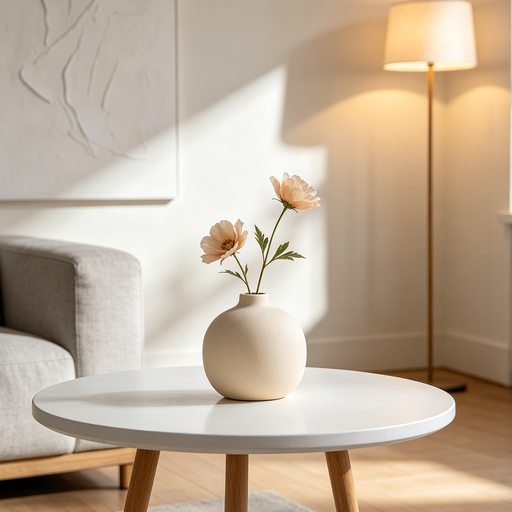
Why this product suits this profile: This compact vase is approximately 10 centimetres wide and 9.5 centimetres high. It takes up very little space and is suitable for a coffee table, bedside table, bathroom shelf or desk.
The precise dimensions help you avoid choosing a vase that is too large for a small space. According to the product description, the inside is sealed and intended for clean water.
Compact round shape, narrow neck and neutral beige colour; according to the description, it is suitable for fresh flowers, dried flowers and pampas grass.
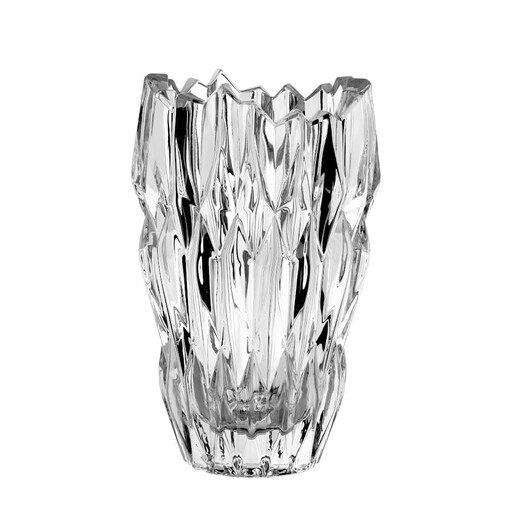
Why this product suits this profile: Measuring 24.5 centimetres in height, this glass vase combines a transparent look with a textured diamond pattern and a wave-shaped rim. It complements modern and Nordic-inspired interiors.
The product description specifies thickened glass and expressly highlights the need for stable placement on a level surface, as well as the risk of breakage. This means safety considerations are not judged by appearance alone.
24.5 centimetres in height, transparent body, diamond texture and wavy rim; according to the description, it is designed for anything from individual stems to larger bouquets.

Why this product suits this profile: At 35 centimetres high, with a stated capacity of 4,100 millilitres, this model is suitable for larger floral arrangements or long branches in living areas.
The height, width and capacity are clearly specified. This allows you to check before buying whether the model will fit on a sideboard or floor and whether it is the right size for your planned arrangement.
White ceramic look, ribbed lower section, smooth upper section and a height of 35 centimetres; according to the manufacturer’s information, clean with a soft, damp cloth.
We have put together a complete, regularly updated list of products that fully meet these strict selection criteria and the safety regulations applicable in the EU.
A decorative vase can also make a thoughtful gift. When choosing a vase as a present, neutral colours, medium dimensions and a versatile shape are generally easier to get right than a strongly style-specific model. If you know the recipient’s interior style, you can choose a boho vase, a rustic terracotta vase or a modern vase with a matt finish.
This depends on the interior coating and the manufacturer’s information. If a ceramic vase is clearly described as watertight, or if it is a glass vase, using it with water is an obvious choice. With a vase intended solely for dried flowers, you should only use water if the product information expressly confirms that it is suitable.
For pampas grass, models with sufficient height and a stable base are a sensible choice. A large vase with a wide base supports long stems more effectively. With particularly narrow vessels, you may need to use fewer stems or add extra weight.
The lifespan depends on the material, workmanship, location and how the vase is handled. Ceramic and dolomite are resistant to everyday signs of use under normal conditions, but they can break if dropped. Glass can remain usable for a long time when handled carefully, although it is more susceptible to impact damage. Safe positioning and following the care instructions are key.