
Lieferung heute & morgen

Qualitätsgarantie

Willkommens-Angebote freischalten: KOSTENLOSE Lieferung | Bis zu 80 % RABATT | Kostenlose 30-Tage-JoyPlus-Testphase
App herunterladen
A high-quality, deep pan is the workhorse of any kitchen. It's perfect for high-heat searing, gentle simmering, and preparing saucy dishes. However, when searching for a deep induction frying pan with lid, many people encounter problems that only become apparent with use. Uneven cooking results, a coating that quickly deteriorates, or a wobbly base on the hob are common frustrations.
As your Joybuy Product Recommendation Officer, I'm here to help you identify the typical pitfalls and make an informed decision. This guide focuses on the objective criteria that separate a great pan from an unsuitable one.
Marketing promises often sound tempting, but the devil is in the details. Pay attention to these three points to avoid making the wrong purchase:
To avoid these traps, you should focus on three core technical features. These determine the performance, durability, and safety of your new pan.
The choice of coating directly impacts the cooking experience and the cleaning process.
For optimal performance on an induction hob, a fully ferromagnetic base is essential.
A deep frying pan is significantly more versatile than a shallow model.
Based on these objective criteria, we have identified a few models that are particularly well-suited for specific user profiles.
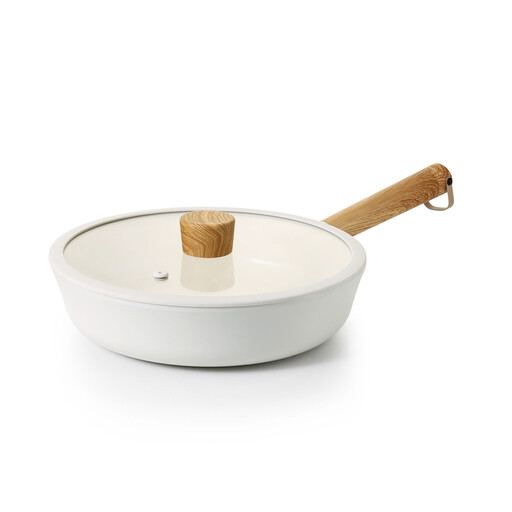
Why it's a match: With its 28 cm diameter and high sides, this pan is ideal for family-sized portions. The clear focus is on healthy cooking, which is underscored by the choice of materials.
The product description explicitly states that the ceramic coating is free of PTFE, PFAS, lead, and cadmium. This directly addresses the pitfall of hidden harmful substances.
The magnetic stainless steel base is designed for all hob types, including induction, and ensures good heat distribution. The smooth non-stick surface makes cleaning easier.
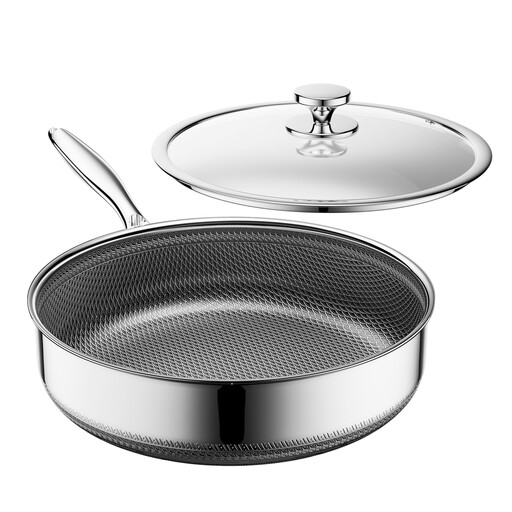
Why it's a match: Anyone who enjoys preparing dishes that are first seared on the hob and then finished in the oven needs a heat-resistant and robust pan. This model meets those requirements.
The three-layer composite structure with an aluminium core counters the "induction trap" of uneven heat distribution. The hybrid technology of stainless steel and ceramic aims for a more durable non-stick effect.
According to the manufacturer, the pan is oven-safe up to 260°C (lid up to 148°C). This allows for versatile cooking methods, moving directly from the hob to the oven.

Why it's a match: For daily use, practical details and straightforward handling are crucial. This model offers a well-thought-out package for everyday life.
This set avoids the trap of a seemingly cheap individual purchase that lacks accessories. With a pan, lid, wooden spatula, and cleaning sponge, it's a complete starter kit with a certified non-toxic (PFAS-free) coating.
The die-cast aluminium construction makes the pan comparatively lightweight. Practical details like the two pouring spouts make it easy to drain liquids without spilling.
We have compiled a complete, up-to-date list of products that fully meet these strict selection criteria and German safety regulations.
The longevity of a ceramic coating heavily depends on proper care. Avoid using metal kitchen utensils; instead, opt for wood, silicone, or plastic. Always let the pan cool down after use before cleaning it with warm water and a soft sponge. Even if some models are listed as dishwasher-safe, hand washing is generally recommended to protect the coating.
A certain amount of weight is often an indicator of a thick, multi-layered base that retains and distributes heat well. A pan that is too light can warp when heated. However, weight alone is not a guarantee of quality. The material composition and the construction of the base are crucial. A well-constructed die-cast aluminium pan with a solid induction base can be lighter than a stainless steel pan and still offer excellent performance.
Yes, as long as the pan, lid, and handles are all declared oven-safe. Be sure to check the maximum allowable temperature in the manufacturer's specifications. Often, the handles or the lid knob are made of plastic and have a lower heat resistance than the pan body itself. Always use oven mitts, as the handles will get hot in the oven.