Quick-breakfast people
You want to defrost a few frozen slices without any fuss, and may also need an appliance for heating other food.


You don’t necessarily need a combination microwave to deal with individual frozen slices of bread: the Federal Centre for Nutrition recommends toasting frozen slices directly in a toaster. A solo microwave may be enough if defrosting and heating matter more to you than browning. A combination grill or oven model may be worth considering if several people sharing the kitchen will genuinely use its extra features, and its size, controls and cleaning requirements suit your needs.
You want to defrost a few frozen slices without any fuss, and may also need an appliance for heating other food.
You want to brown your bread after defrosting and are wondering whether an existing toaster will do, or whether a grill or bread programme in the same appliance would be useful.
You share the controls, cleaning and worktop space with others. Easy-to-understand settings, accessible surfaces and suitable external dimensions may therefore be important.
When choosing an appliance for a shared kitchen, each percentage refers to consumers who rank a particular concern as their top priority.
A good fit if: you mainly want to crisp up individual slices and already have a suitable toaster.
The trade-off: A toaster cannot replace a microwave for heating other food. The Federal Centre for Nutrition recommends shaking off any ice crystals before toasting.
A good fit if: defrosting and heating are enough, and crisp browning isn’t a priority.
The trade-off: There’s no grill or oven function, so you may also need a toaster for crispy slices. CASO Design suggests a solo microwave as an option if you only need to heat or defrost food occasionally.
A good fit if: you want to defrost bread and brown it when needed in the same appliance, without requiring a full oven function.
The trade-off: Programmes and accessories vary by model. Claims that bread programmes produce a crispy result come from manufacturers; they aren’t independent proof of how well they work on individual slices.
A good fit if: people sharing the kitchen want to use the appliance for baking or cooking food from frozen, and there’s enough worktop space.
The trade-off: More features don’t automatically mean better results when defrosting individual slices. The F.A.Z. Kaufkompass also highlighted the space needed for the large MC32DB7746KDE1 combination oven.
| Priority | What to look for when buying | Who it matters most to |
|---|---|---|
| Simply defrost a few slices | Check for a defrost function and easy-to-understand time or power settings for small portions. | If I only defrost a few slices in the morning, I want to find the right setting without having to search for ages. Around 28% of consumers put straightforward defrosting first. |
| Brown bread after defrosting | Check whether the specific model has a bread programme or grill, and which accessories the manual recommends for it. | If I want crispy slices, I need to know whether my toaster will do or if I can brown them in the appliance. Around 22% of consumers rank browning as their top buying priority. |
| Easy to use and clean | Compare programme labels, access to the interior, removable parts and the model’s cleaning instructions. | If different people use the appliance, I want the settings to be easy to understand and any residue simple to remove. Around 22% of consumers prioritise ease of use and cleaning. |
| A suitable place to put it | Check the external dimensions, door opening and installation instructions against the space available. Don’t confuse the oven capacity with the external dimensions. | If the worktop is shared and space is tight, I want to be able to position the appliance and open the door without getting in anyone else’s way. Around 17% of consumers put available space first. |
| Extra features and the effort involved | Agree with everyone sharing the kitchen on whether you’ll use it for baking or heating food as well as bread. Check what’s included, how much care it needs and who to contact about the warranty. | If several people sharing the kitchen genuinely need the extra features, the additional effort involved in using and cleaning the appliance may be worthwhile. Around 11% of consumers weigh up the range of features against the effort involved. |
Defrosting and browning are different things. The Federal Centre for Nutrition recommends using a toaster for frozen slices; claims about how crispy special bread programmes make them come from the manufacturer.
First decide whether you only want to defrost or also brown your bread, then check what the specific model can do.
A large oven capacity doesn’t tell you whether the appliance will fit on a shared worktop or whether you’ll be able to open its door there.
Compare the external dimensions and door design with the space you actually have and the model’s installation instructions.
Being suitable for microwave use doesn’t automatically mean a dish can withstand higher temperatures or other cooking modes. Damaged cookware may need to be replaced.
Check the cookware’s markings and the appliance instructions for the cooking mode you want to use.
Models with a grill or fan oven may be worth considering if people sharing the kitchen want to do more than just defrost food.
Combination models with a grill may be worth comparing if you want automatic defrosting and several power levels.
Models with a grill and fan oven may be relevant if you also use square or rectangular dishes in your shared kitchen.
Models that specifically list a bread-defrost function are one option to compare if you want to defrost and brown bread in the same appliance.
This selection features combination microwaves with a grill and fan oven for households that want to cook in ways beyond simply defrosting food. If you’re buying an electrical appliance newly offered for sale in Germany, you should also check that the specific model has the required CE marking. This is a manufacturer’s declaration, not an independent certification mark.
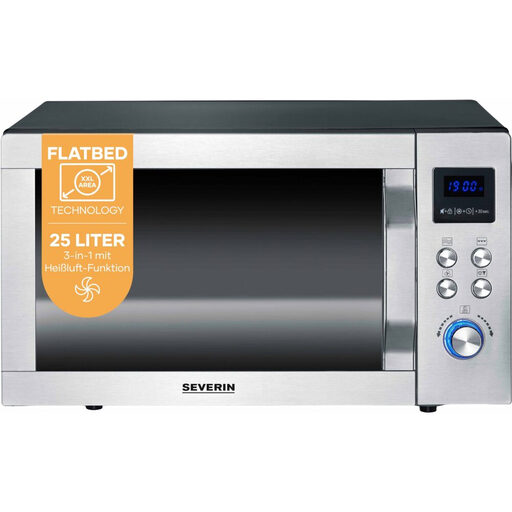 No image available
For a kitchen where you want to grill or use the fan oven as well as defrost food. The product name lists a microwave, grill, fan oven and glass base.
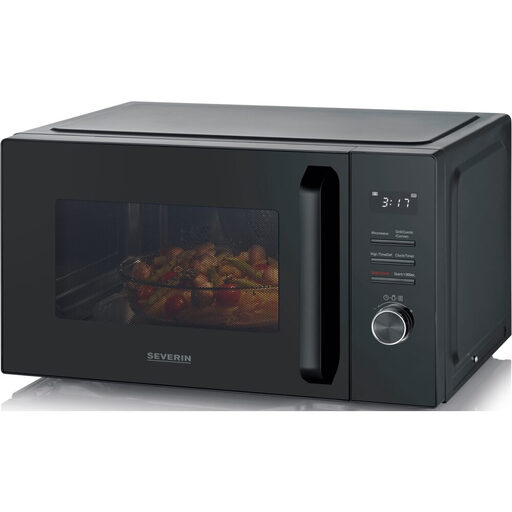 No image available
For people sharing the kitchen who want to use the grill and fan oven as well as defrost food. The product name describes a 3-in-1 appliance with 1000 W.
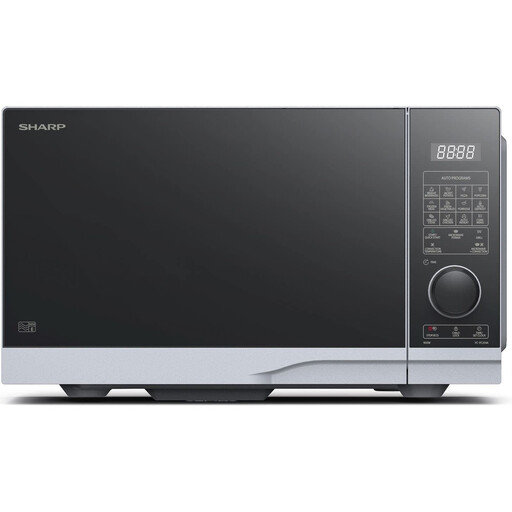 No image available
For a shared kitchen where you want to grill and use the fan oven as well as the microwave. The product name lists a capacity of 25 L.
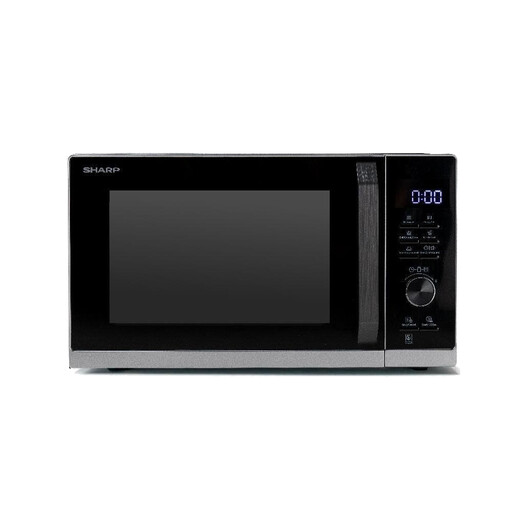 No image available
For small quantities to defrost and other cooking needs in one appliance. The product name lists 900 W microwave power, 1000 W grill power and 2100 W fan oven power.
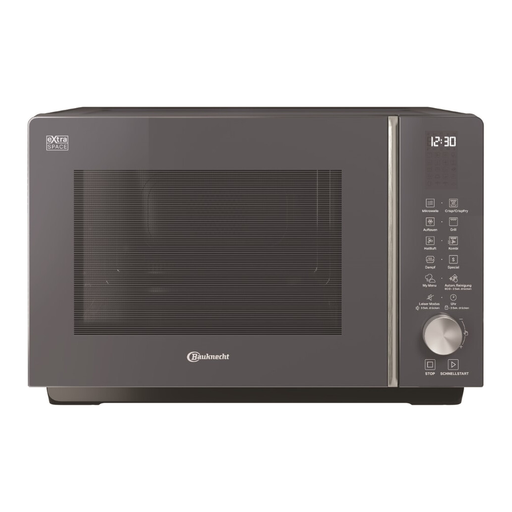 No image available
For people sharing the kitchen who want to use the appliance for other cooking needs as well as defrosting. The product name lists a 25 L capacity, a Crisp function, fan oven, quartz grill and steamer container.
Not necessarily: the Federal Centre for Nutrition recommends toasting frozen slices directly in a toaster. If you also want to heat other food, a microwave is an additional option; you don’t automatically need a grill or oven function for that.
No. Being suitable for microwave use doesn’t automatically mean a dish can withstand higher temperatures or other cooking modes. Follow the temperature and power limits, as well as the appliance instructions, and don’t continue using damaged cookware.
The Federal Office for Radiation Protection says that microwave ovens in good working order pose no health risk from leakage radiation. If the door shows visible damage or signs of wear, have the appliance checked by the service team and repaired or replaced if necessary.
For a consumer purchase in the EU, the seller is your point of contact for the statutory guarantee. According to information from the European Union, it applies for at least two years from the date you receive the goods; an additional manufacturer’s guarantee doesn’t replace it.
Electrical appliances covered by the relevant EU rules must carry the CE marking. It is the manufacturer’s declaration of conformity, not a certificate from a central EU testing body, and on its own it doesn’t prove any particular defrosting performance.