If you want to quickly soften individual frozen slices, a freestanding solo microwave with a defrost function or adjustable power is a good option, especially if you’d also like to use it to heat other food. A toaster is better for crispy bread; the Federal Centre for Nutrition also recommends defrosting bread overnight at room temperature. Before buying a microwave, check the space available, ventilation clearances and controls.
Which option is right for you?
Breakfast without a long wait
If you want to quickly soften frozen slices and heat other food in your holiday apartment, consider a solo microwave with a defrost function. Severin lists a defrost function for the MW 7790; the Federal Centre for Nutrition also explains how to use frozen bread slices in a toaster.
Fitting out a small holiday kitchen
When choosing an appliance for a holiday apartment, it’s important to consider its external dimensions, installation guidance and straightforward controls for guests who change regularly. Bosch lists the external dimensions of the FFL023MW0, and manufacturers offer different types of controls.
Crispy bread rather than soft slices
If you want toasted bread, a toaster you already own is a better choice than a microwave. The Federal Centre for Nutrition lists toasting frozen slices directly as one option.
What should you look for when buying?
When defrosting frozen bread slices in a holiday apartment, your choice will mainly depend on whether you prioritise quick defrosting, crispy bread, a small footprint or simple controls.
Solo microwave
A good choice if: You want to quickly soften slices and also use the appliance to heat other food.
Bear in mind: A microwave won’t toast bread. The external dimensions, ventilation and suitable cookware must all work for the space available.
Toaster
A good choice if: You mainly want crispy frozen slices and already have a suitable toaster.
Bear in mind: A toaster can’t replace a microwave for heating other food. The Federal Centre for Nutrition recommends knocking off any ice crystals before toasting.
Defrosting at room temperature
A good choice if: You can take the bread slices out the night before and don’t want to buy another appliance.
Bear in mind: This option, recommended by the Federal Centre for Nutrition, isn’t suitable for a spontaneous breakfast and won’t toast the bread.
| What matters to you |
What to check when buying |
Who might find this especially useful? |
| Quick, controllable defrosting |
Check that the specific model has a defrost function and selectable power levels. |
If I need to soften individual slices quickly, a controllable defrost function is important to me. Around 36% of consumers prioritise quick defrosting. |
| Space in the holiday kitchen |
Compare the external dimensions and required ventilation clearances with the space available; if it has a turntable, check your cookware too. |
If worktop space is limited, I want to know whether the appliance and my cookware will actually fit. Around 29% of consumers prioritise the space it takes up. |
| Simple controls for guests |
Check whether the dial or display and automatic programmes will be easy for different users to understand. |
If different guests will be using the appliance, I want the controls to be clear without a lengthy explanation. Around 21% of consumers prioritise easy-to-use controls for guests. |
| Crispy bread |
Consider whether you already have a toaster and whether toasting, rather than softening the bread, is your main aim. |
If I want crispy slices, a toaster is more likely than a microwave to give me the result I’m after. Around 14% of consumers prioritise a crispy result. |
Common mistakes when choosing
-
Confusing defrosting with crisp toasting
A microwave defrosts bread but won’t toast it. The Federal Centre for Nutrition recommends using a toaster for crispy slices.
Decide whether you want soft bread or a toasted slice before choosing an appliance. If you’re toasting frozen bread, knock off any ice crystals first.
-
Choosing based only on the capacity
The capacity alone won’t tell you whether the appliance will fit on your worktop. Its external dimensions, installation guidance and the cookware you use all matter too.
Measure the space where you plan to put it and check the installation guidance for the specific model. If it has a turntable, make sure your chosen cookware will fit on it too.
-
Taking conflicting technical specifications at face value
The same Severin MW 7790 manufacturer page gives two different turntable sizes. The specifications for the maximum microwave power of the Panasonic NN-ST21 also conflict.
If either detail is important to your decision, check it against the manual or product information for the exact model before buying.
Relevant brands at a glance
Severin
The freestanding MW 7790 is a solo microwave with a dial, defrost function and 20-litre capacity.
- Severin lists 700 W microwave power, five power levels and a removable turntable.
- The manufacturer’s page gives the turntable size as both 25.5 cm in the description and 24.5 cm in the technical specifications. Check the size if your cookware is a tight fit; this doesn’t indicate better defrosting performance.
Bosch
The freestanding FFL023MW0 is a 20-litre microwave with a display and automatic programmes, making it an option if you prefer preset controls.
- Bosch lists external dimensions of 260 × 442 × 345 mm and seven programmes.
- The stated maximum microwave power of 800 W doesn’t, by itself, show how well it defrosts individual bread slices.
Panasonic
The NN-ST21 is a solo microwave with touch controls, adjustable power levels and several defrost programmes.
- Panasonic lists a 20-litre capacity, a 255-mm turntable and three defrost programmes.
- The product page also lists 900 W in its summary, while the main text and technical specifications state 800 W. Check the figure for the exact model before comparing power.
Sharp
The R-200WW data sheet describes a compact solo microwave with mechanical controls for defrosting, reheating and cooking.
- According to Sharp’s data sheet, the appliance has a 20-litre capacity, five power levels, 800 W power and a glass turntable with a diameter of 25.5 cm.
- This doesn’t confirm a dedicated bread defrost programme or independently measured results for bread slices.
Joybuy products for defrosting bread
This selection from Joybuy includes freestanding solo and countertop microwaves for defrosting frozen bread slices. Check each model’s features and installation guidance.
 No image available
Severin MW 7580 solo microwave
For quick defrosting: the product title lists a defrost function and six power levels.
19 l; 700 W; six power levels; model MW 7580.
View at Joybuy
 No image available
Heinrich’s solo microwave
For frozen slices, the product title lists a defrost function and six power levels.
20 l; 700 W; six power levels; 30-minute timer; turntable.
View at Joybuy
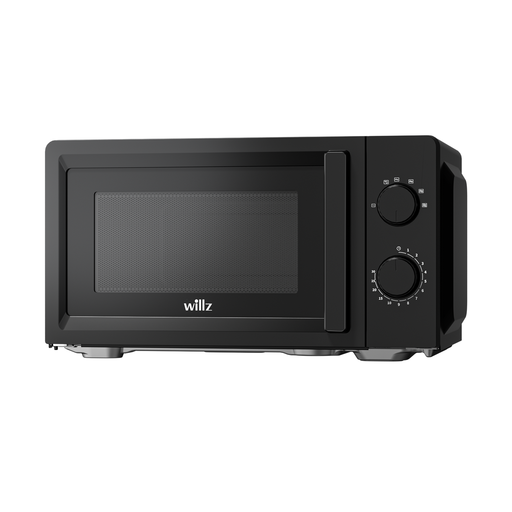 No image available
Galanz 20L Compact Square Microwave Oven
Described as a compact 20-litre microwave for small spaces; check that its dimensions suit the space available.
20 l.
View at Joybuy
 No image available
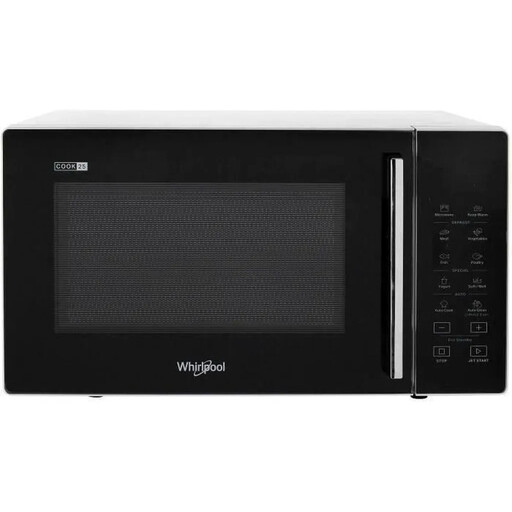
Whirlpool MWP 251 SB solo microwave
For defrosting, the product description lists a defrost function and seven power levels. The touch controls and LED display are most relevant if this style of operation suits you.
25 l; 900 W; model MWP 251 SB.
The installation guidance specifies 10 cm of clearance at the sides and 20 cm above.
View at Joybuy
 No image available
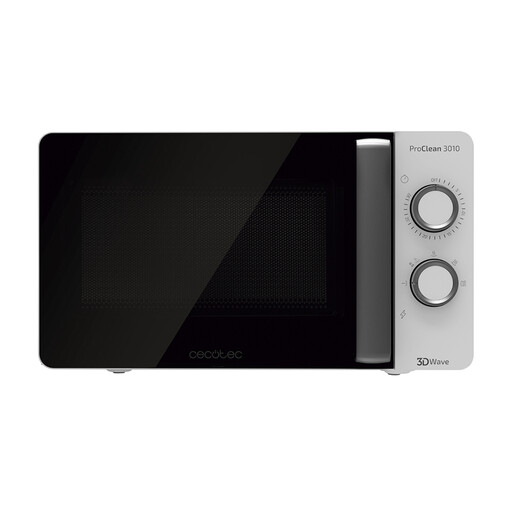
Cecotec Countertop Microwave Oven
For frozen slices, the description lists a defrost function and six power levels.
20 l; 700 W; six power levels.
The installation guidance specifies at least 10 cm of clearance at the back, 5 cm at the sides, 20 cm above and 85 cm from the floor.
View at Joybuy
Frequently asked questions
How can I use frozen bread slices without a microwave?
The Federal Centre for Nutrition recommends defrosting bread overnight at room temperature or toasting it directly in a toaster. Knock off any ice crystals before toasting to prevent water from getting into the toaster.
Can I put bread in its storage container in the microwave?
Only if the container is suitable for microwave use and the temperature and power level you intend to use. Follow the guidance on your cookware; don’t continue using damaged microwave-safe dishes.
What should I do if my microwave door is damaged?
If you notice visible changes or wear to the door, have the appliance checked. The Federal Office for Radiation Protection recommends contacting customer services and, if necessary, having the appliance repaired or replaced.
What should I do with a faulty appliance, and where can I take the old one?
Your statutory rights relating to faulty goods are against the seller; these are separate from any voluntary guarantee. According to the Federal Ministry for the Environment, old electrical appliances should be taken to an authorised collection or take-back point, not put in household waste. Whether a retailer is required to take back an appliance depends on the legal conditions.


