A dehumidifier isn’t automatically necessary after a shower. The German Environment Agency recommends removing spikes in humidity at the source, by ventilating the shower area, and keeping the door to the occupied room closed. If humidity in that room repeatedly remains high despite these measures, choose a unit to suit the room size, temperature and moisture levels. In a shared room, you should also consider operating noise and how practical the unit will be to empty and maintain. Manufacturers’ daily extraction figures are based on specific test conditions and don’t guarantee the same performance in your room.
Who might need a dehumidifier in a shared room?
People responsible for shared showers and communal rooms
You want to stop spikes in humidity from the shower area spreading into an occupied room. The German Environment Agency and consumer advice centres recommend promptly ventilating humid air after showering and taking ventilation at the source into account.
People using a quiet communal room
If the room is occupied while the dehumidifier is running, check that the noise level and position are suitable for conversations and spending time in the room. Model-specific information from manufacturers can help you compare options.
People responsible for operating and maintaining the unit
When a unit is shared, it should be clear who empties the tank, checks any drainage hose and looks after the appliance. Before buying, check whether a hose can be routed somewhere practical.
What should you look for when choosing one?
The German Environment Agency recommends removing spikes in humidity at the source, by ventilating the shower area, and keeping the door to the occupied room closed while ventilating. Afterwards, check whether humidity in the shared room repeatedly remains high before choosing a unit.
| What matters |
What to check before buying |
Who prioritises it? |
| Humidity after showering |
Ventilation options in the shower area, humidity levels over time, and whether the unit’s recommended room size and operating temperature are suitable. |
If humidity repeatedly spreads into the occupied room after showering, I want to first check whether ventilating the shower area and keeping the door closed will be enough. Around 36% of consumers prioritise limiting recurring humidity. |
| Operating noise |
Noise level in dB(A), operating mode and possible position while people are talking or spending time in the room. |
If the room is in use while the unit is running, I want to choose one that causes as little disruption as possible. Quiet operation is a priority for around 29% of consumers. |
| Energy consumption |
Consider the power consumption in watts alongside actual running time; compare the controls and timer with humidity levels over time. |
If I use the unit repeatedly, I want to estimate the running costs based on its power consumption and operating time. Around 21% of consumers prioritise energy consumption. |
| Emptying and maintenance |
Check access to the tank and its capacity, or whether a drainage hose can be fitted; plan a suitable way to drain the water and agree who is responsible. |
If several people use the unit, I want to know who checks the tank and filter, and whether a drainage hose can be used. Around 14% of consumers prioritise ease of maintenance. |
Which buying mistakes should you avoid?
-
Letting steam spread into the occupied room and relying on the unit alone
The German Environment Agency recommends removing spikes in humidity at the source and keeping the door to the occupied room closed while ventilating.
First, work out how to ventilate the shower area, then monitor humidity in the occupied room.
-
Assuming the highest litres-per-day figure reflects performance in your room
Manufacturers’ figures may be based on specific test conditions. For example, De’Longhi gives the DEX210SF a rating of 10 l/24 h at 30 °C and 80% relative humidity. This figure is not a measurement taken in your room.
Compare the test conditions, operating temperature and stated room size. Don’t choose a refrigerant or desiccant dehumidifier based on its litres-per-day figure alone.
-
Overlooking the tank and responsibilities when sharing a unit
The models listed vary in tank capacity and drainage options. A hose connection is only practical if the water can be drained appropriately.
Check where the unit will go and agree who is responsible for checking the tank, drainage and maintenance.
Which brands offer suitable models to compare?
De’Longhi
The range includes more compact refrigerant dehumidifiers. For an occupied room, model-specific details such as noise level, power consumption and drainage can help you narrow down your options.
- For the Tasciugo AriaDry DEX210SF, De’Longhi gives a rating of 10 l/24 h at 30 °C and 80% relative humidity, 36 dB(A), 250 W input power and continuous drainage.
- These manufacturer figures apply to this model and its stated conditions. They don’t prove how it will perform in your particular occupied room or whether the brand as a whole is suitable.
Meaco
The range includes both refrigerant and desiccant dehumidifiers. This can be useful when comparing a heated room with one that is genuinely cold.
- Meaco gives the Arete One 12L a rated extraction capacity of 12 l/day and a noise level of 38 dB(A). The manufacturer states that DD8L desiccant models operate from 0 °C.
- Several of the refrigerant models listed are rated for use from 10 °C. The temperature range and rated extraction capacity apply to specific models and don’t prove how they will perform in your particular room.
Trotec
The TTK 66 E is an example of a higher-capacity refrigerant option with an adjustable target humidity.
- Trotec gives the TTK 66 E a capacity of up to 24 l/24 h, coverage of up to 50 m² or 125 m³, a 3-l tank and an adjustable target humidity.
- Whether this capacity is right for you depends on measured humidity, room size and how the space is used. These are manufacturer figures, not the results of an independent test.
Wood’s
Wood’s describes the MRD20GW as suitable for heated living spaces. Remote control and a hose connection may be useful when sharing a unit, provided the position and drainage arrangements are suitable.
- The manufacturer gives the MRD20GW a capacity of up to 20 l/day, a 3.8-l tank and Wi-Fi connectivity.
- The capacity figure is a manufacturer claim. Wi-Fi doesn’t replace checking whether the unit is suitable for the room or agreeing who is responsible for emptying and maintenance.
Dehumidifiers at Joybuy
These Joybuy products are dehumidifiers designed to manage indoor humidity. Compare their stated room sizes, operating noise and emptying options with the conditions in your shared room.
 No image available
Comfee MDDO-10DEN7
Could be worth considering for a room that repeatedly gets damp, if its stated room coverage is suitable.
10 l/day; rated for around 40 m³ (16 m²); 2.5-l water tank; 36 dB in sleep mode; 24-hour timer.
View at Joybuy
 No image available
Bosch Dry 4000
Check whether its stated room size is suitable and whether its noise level is acceptable while the shared room is in use.
Up to 16 l/day; up to 75 m³; 2.5-l water tank; 40 dB; two fan speeds. According to the product details, a hose for continuous drainage is not included.
View at Joybuy
 No image available
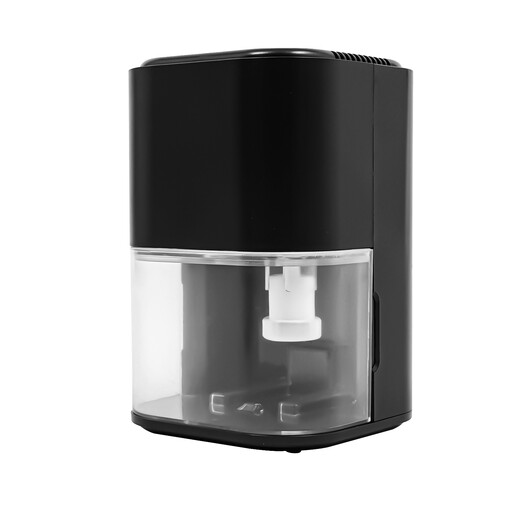
Mini dehumidifier with 2-l tank
Its compact design could be useful if space is limited where you plan to put it. Check that its stated moisture extraction capacity meets your needs.
42 W; two modes, including sleep mode; 17.6–21.12 fl oz/24 h according to the product details.
View at Joybuy
 No image available
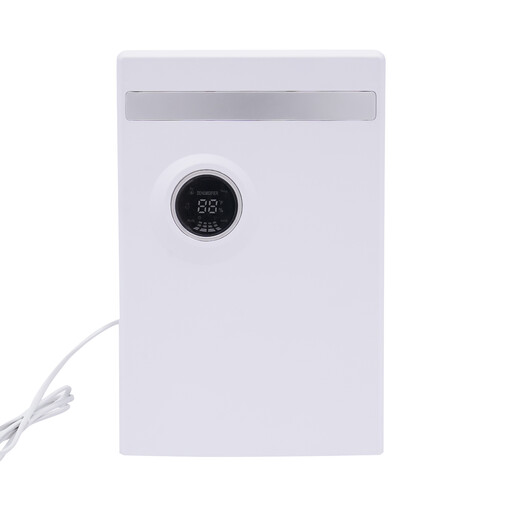
Portable dehumidifier, 100 W
Check that its stated room size is suitable for the shared room and that emptying the tank will be practical to organise.
100 W; 2,200-ml tank; rated for up to 30 m². The product description states a moisture extraction rate of 350–500 ml per day.
View at Joybuy
 No image available
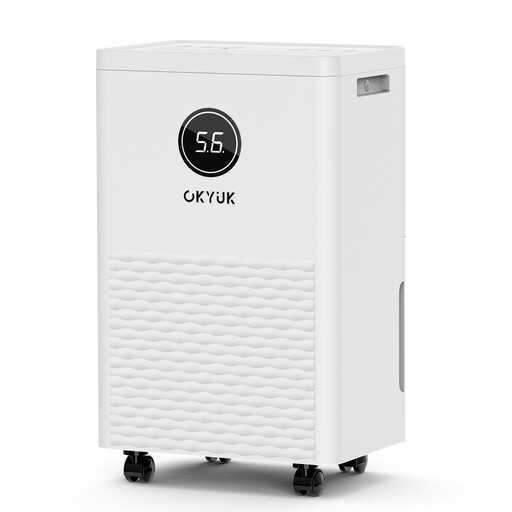
OKYUK D036D-12L
Could be worth considering if humidity is a recurring problem, provided its stated room size and operating mode suit the shared room.
Up to 12 l/day; rated for up to 30 m²; 35 dB; sleep mode; 2.5-l tank.
View at Joybuy
Frequently asked questions
Does a dehumidifier need to run in the occupied room after every shower?
No, not just because someone has had a single shower. The German Environment Agency recommends removing spikes in humidity by ventilating the shower area straight away and keeping the bathroom door closed while doing so. Also check whether humidity in the occupied room repeatedly remains high.
What humidity level should I monitor?
Consumer advice centres recommend a relative humidity of around 40 to 60% as a guide for living spaces, and suggest using a thermo-hygrometer. Look at humidity levels over time rather than just the brief peak immediately after a shower.
What should I consider when positioning and maintaining a dehumidifier in a shared room?
Position the unit according to the manufacturer’s instructions and the layout of the room. The Federal Institute for Occupational Safety and Health points out that the safety of electrical products also depends on how they are used and maintained. Make sure you also agree who will check the tank, drainage and filter.
What are the rules in Germany on statutory warranty and disposing of the unit?
Consumer advice centres distinguish between the statutory warranty provided by the seller and a voluntary manufacturer’s guarantee. The German Environment Agency advises that waste electrical equipment must be collected separately and must not go in ordinary household waste.


