After showering, use a squeegee to remove water from surfaces and first clear the peak in humidity by ventilating the room properly. A dehumidifier can help if moisture keeps lingering. If there’s a significant amount of moisture, it’s worth considering a suitably sized compressor dehumidifier rather than a mini or moisture-absorbing granule device, provided you have a safe place to put it. Manufacturers’ litres-per-day figures are based on specific test conditions and don’t predict how much water a single shower produces.
Who might need a dehumidifier after showering?
People whose bathroom takes a long time to dry out
If moisture keeps lingering after you shower, first check your ventilation and use of a squeegee before considering active dehumidification. The German Environment Agency recommends clearing peaks in humidity by ventilating the room thoroughly.
People in small, noise-sensitive homes
You’ll need to consider the space available, noise rating, tank and where you plan to use the appliance together. Manufacturers’ noise and performance figures relate to the specific model and aren’t necessarily directly comparable.
Buyers without a safe place to put an appliance in the bathroom
Before buying, make sure you know where an electrical appliance can be placed safely, away from the shower and bath. The VDE advises keeping electrical appliances away from showers and baths.
What should you look for when buying?
First check whether ventilation and using a squeegee reliably reduce moisture. Then consider a safe location and the day-to-day effort involved.
| What matters |
What to check before buying |
Who it matters most to |
| Moisture after showering |
Compare the dehumidification method, suitable room size and test conditions for the l/24-h figure. A maximum figure doesn’t measure the moisture produced by a single shower. |
If moisture returns despite ventilation and using a squeegee, my priority is removing water from a suitably sized room. Around 36% of consumers are likely to be primarily concerned with these peaks in humidity. |
| Safe location |
Check the space, socket and appliance instructions; keep electrical appliances away from showers and baths. |
If I can’t find a suitable place in the bathroom away from water, an electrical appliance isn’t an option there. Around 29% of consumers are likely to need guidance on placing an appliance safely as their main priority. |
| Space and noise |
Compare appliance dimensions and noise ratings, including the measurement used; a very small appliance may have a lower stated water extraction rate. |
If space is limited and I’m sensitive to noise, I want to know in advance whether the appliance will fit where I plan to use it. Around 21% of consumers are likely to care most about space and noise. |
| Ongoing effort |
Consider power consumption, running time, access to the tank and any refill materials you may need. |
If I want to limit electricity use, tank maintenance or refills, the ongoing effort should suit how I plan to use the appliance. Around 14% of consumers are likely to have this as their main consideration. |
Common buying mistakes
-
Assuming 10 l/day means it can remove the moisture from a shower
For the Comfee MDDN-10DEN7, the manufacturer’s figure of 10 l/24 h applies at 30 °C and 80% relative humidity. Different room conditions and a shorter running time won’t necessarily result in the same amount of water being removed.
Compare models with their stated test conditions in mind, and check whether the moisture actually goes down after you ventilate the room.
-
Choosing mini or moisture-absorbing granule devices just because they’re small
The Pro Breeze mini device we reviewed is rated at up to 0.25 l/day. For the UHU refill we reviewed, the manufacturer states that it absorbs around 0.5 l of water over approximately three months. These figures don’t show that the devices can adequately clear a peak in humidity after a shower.
If moisture lingers after showering, first clear it by ventilating the room and using a squeegee. Then compare the devices’ stated water extraction rates.
-
Focusing only on room size
A suitable room-size rating doesn’t tell you whether an electrical dehumidifier can be placed safely in your particular bathroom. The VDE advises keeping electrical appliances away from showers and baths.
Before buying, check where you’ll put it, where the socket is and what the chosen model’s instructions say.
-
Assuming a dehumidifier will fix building problems
Persistently wet areas or visible mould may point to a structural problem. The German Environment Agency recommends identifying the cause first if you find mould.
Have the cause investigated rather than simply buying a larger appliance if the damp persists.
Brands and models to help guide your choice
Comfee
The MDDN-10DEN7 is a compressor dehumidifier with published specifications for rooms up to 16 m² or 40 m³.
- The German manufacturer’s datasheet states 10 l/24 h at 30 °C and 80% relative humidity, and a 2,1-l tank.
- The test conditions and stated sound power level of 54 dB(A) aren’t directly comparable with the amount of water removed after a shower or with noise ratings measured differently.
Bosch
According to the manufacturer, the Dry range includes the Dry 1000 for rooms up to 17 m², the Dry 2000 for up to 24 m² and the Dry 4000 for up to 33 m².
- Bosch states up to 10 l/day and 34 dB(A) for the Dry 1000, and up to 16 l/day and 38 dB(A) for the Dry 4000. These figures relate to different models.
- These manufacturer figures aren’t comparative measurements taken in your own bathroom. The room-size rating alone also doesn’t tell you whether there’s a safe place to put the appliance.
Pro Breeze
The range includes the OmniDry 12L compressor dehumidifier and a much smaller thermoelectric mini dehumidifier.
- According to the manufacturer, the OmniDry 12L version we reviewed has a 2-l tank, humidity control and a maximum extraction rate of 12 l/day.
- The mini device we reviewed has a 500 ml capacity and is rated at up to 0.25 l/day. Make sure you distinguish between models and versions when comparing them.
Meaco
Options to consider include compressor models in the Arete range and desiccant models such as the DD8L Zambezi.
- The German manufacturer’s overview states that the Arete Two 10L operates from 10 °C and the DD8L Zambezi from 0 °C. This may be relevant for rooms kept at different temperatures.
- These temperature figures are from the manufacturer, not comparative measurements taken in a bathroom. The Arete Two instructions also require, among other things, a stable position and dry electrical components.
Trotec
The manufacturer recommends the TTK 33 E for small rooms up to 15 m² or 37 m³, including bathrooms.
- For this model, Trotec states up to 14 l/24 h, a 1,5-l tank, 43 dB(A) and a hose connection.
- Calling it especially quiet isn’t the same as an independent comparison with other noise ratings.
Joybuy product options for smaller rooms
These Joybuy listings include electric dehumidifiers for smaller living spaces. Check the stated room size, tank and safe location for each model.
 No image available
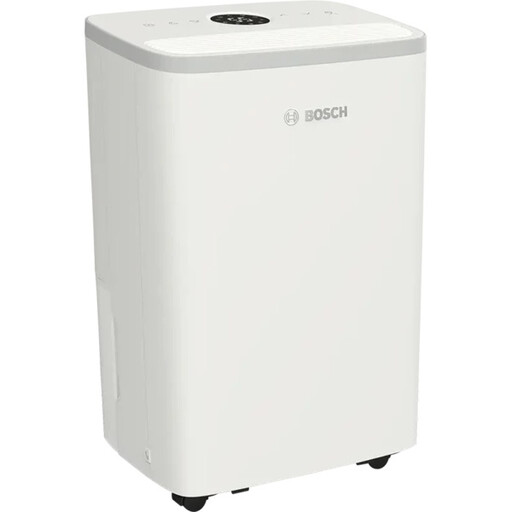
Comfee MDDO-10DEN7 dehumidifier
For recurring damp in a small room, the product title gives a room size of around 16 m².
10 l/day; 2,5-l water tank; night mode; automatic shut-off when the tank is full.
Keep electrical appliances away from showers and baths, and check the instructions to make sure you have a suitable place for it.
View at Joybuy
 No image available
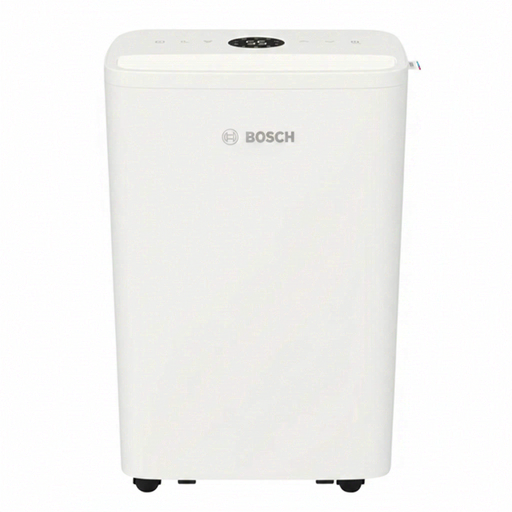
Bosch Dry 2000 dehumidifier
The stated room size of up to 55 m³ can help you check whether this model is suitable for your intended space.
12 l/day; up to 55 m³; 2,5-l water tank; 38 dB; hose drainage.
Keep electrical appliances away from showers and baths, and check the instructions to make sure you have a suitable place for it.
View at Joybuy
 No image available
Bosch dehumidifier, 10 l/day
For a small room, the product title gives a floor area of up to 17 m².
10 l/day; up to 17 m²; 2,5-l water tank; 36 dB; drain hose.
Keep electrical appliances away from showers and baths, and check the instructions to make sure you have a suitable place for it.
View at Joybuy
 No image available
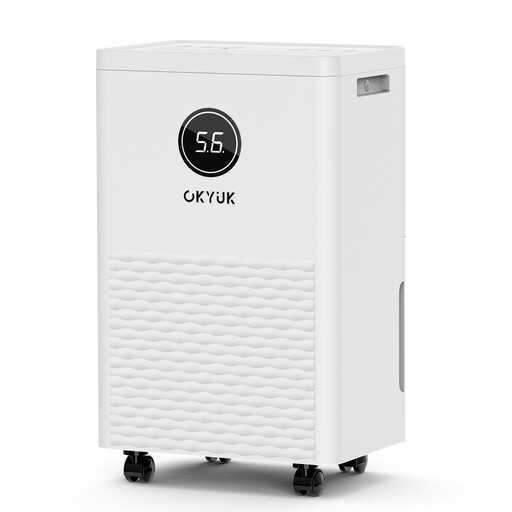
OKYUK D036D-12L dehumidifier
The product title and description identify this as a compressor dehumidifier for rooms up to 30 m².
12 l/day; up to 30 m²; 2,5-l tank; sleep mode.
Keep electrical appliances away from showers and baths, and check the instructions to make sure you have a suitable place for it.
View at Joybuy
 No image available
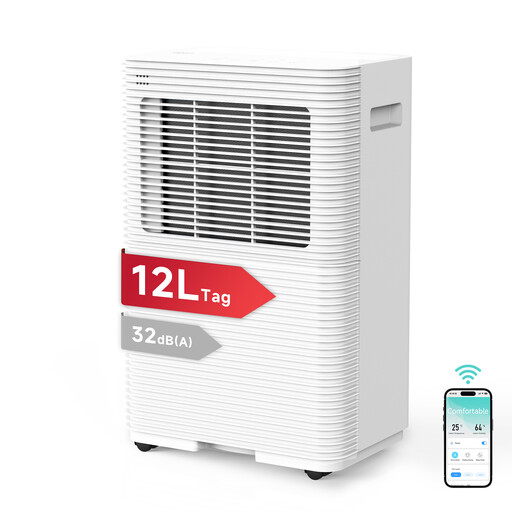
VINO 12L Smart dehumidifier
For rooms up to 24 m², the product title gives an extraction rate of 12 l/day.
1,8-l water tank; sleep mode; app control and scheduling according to the product description.
Keep electrical appliances away from showers and baths, and check the instructions to make sure you have a suitable place for it.
View at Joybuy
Frequently asked questions about dehumidifiers after showering
At what humidity level do I need an appliance after showering?
One high reading immediately after a shower isn’t enough reason to buy an appliance. Check whether the humidity falls again after you ventilate the room and use a squeegee. The German Environment Agency notes that readings above 60% relative humidity that persist for days or weeks can be a problem; the exact pattern also depends on the building.
Can I put the dehumidifier next to the shower?
Don’t assume that this will be suitable. The VDE advises keeping electrical appliances away from showers and baths. Check the proposed location against the appliance instructions, and consult a qualified electrician if you have questions about electrical installations. A residual current device doesn’t make contact with water safe.
What should I bear in mind when using and cleaning it?
Place an electrical appliance on a stable surface and keep the air inlets clear. Empty and clean the tank according to the instructions for your model. With passive moisture-absorbing granule devices, emptying the container and replenishing the granules are part of the ongoing upkeep.
How can I estimate the ongoing costs before buying?
To work out electricity costs, you’ll need the power consumption of your chosen model, its actual running time and your electricity tariff. Granule devices also need refill materials. Check that the tank is easy to access and empty for the way you plan to use the appliance.


