
Lieferung heute & morgen

Qualitätsgarantie

Willkommens-Angebote freischalten: KOSTENLOSE Lieferung | Bis zu 80 % RABATT | Kostenlose 30-Tage-JoyPlus-Testphase
App herunterladen
By the Joybuy Product Recommendation OfficerPublished July 28, 2026
Condensation on the windows, a musty smell in the basement, or laundry that's slow to dry indoors—excessive humidity is a common problem in many households. An electric dehumidifier promises a quick fix. However, the market is crowded, and many devices fail to live up to their advertising claims. Before you make a decision, it's crucial to understand the common pitfalls to avoid a costly mistake.
This guide will help you correctly interpret technical specifications and find a unit that perfectly matches your needs, whether for preventing mould or helping with laundry drying.
Many purchasing decisions are based on marketing promises that disappoint in practice. Pay close attention to these three points to avoid falling into the same trap:
To effectively lower the high humidity, you should base your selection on objective criteria. The following three parameters are crucial for a unit's performance and practical usability.
The unit's operating principle is the most important factor for its intended application.
The dehumidification capacity, measured in litres per 24 hours, must be appropriate for the room and the moisture problem.
A good electric dehumidifier is distinguished by thoughtful details that make operation easier.
Instead of presenting an overwhelming list, we have selected models that meet specific user profiles and avoid the pitfalls mentioned earlier.
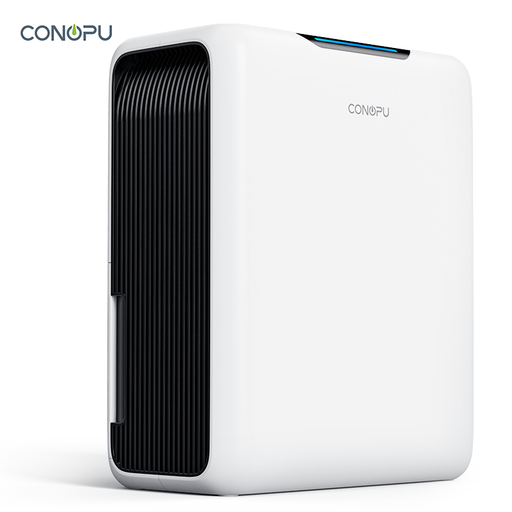
Why It's a Good Fit: Ideal for users looking for a compact and quiet unit for the bedroom, a small bathroom, or a home office (up to 20 m?). Its Peltier technology allows for very quiet operation that won't disturb sleep or concentration.
The unit is clearly positioned for small rooms and moderate humidity, setting no false expectations for high performance. The noise level of approx. 30 dB is a realistic value for quiet operation.
The 24-hour timer and low energy consumption enable cost-effective, automated operation. With moderate humidity, the large 3-litre tank only needs to be emptied every few days.
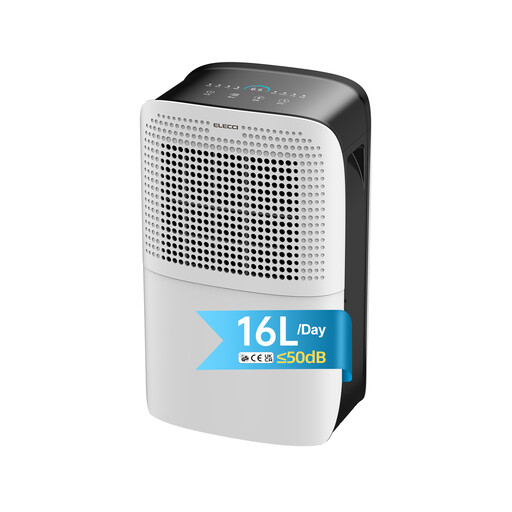
Why It's a Good Fit: A powerful compressor dehumidifier for demanding tasks. Perfect for homeowners who need a reliable unit for the basement, laundry room (up to 32 m?), or for quickly drying clothes.
Thanks to its compressor technology, the unit delivers reliable performance even in cooler environments, avoiding the trap of Peltier devices that fail in basements. The included drain hose allows for maintenance-free continuous operation.
Four operating modes, including a dedicated drying mode and a smart humidity sensor, offer maximum flexibility and efficiency for various applications, from mould prevention to laundry care.
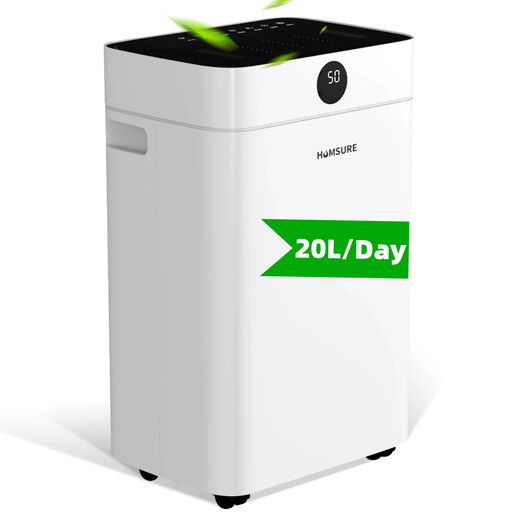
Why It's a Good Fit: The solution for large living areas, open-plan layouts, or basements heavily affected by moisture. With a 20-litre-per-day capacity, this model offers enough performance reserves to effectively dehumidify even demanding environments up to 50 m?.
The clear specification of its high dehumidification capacity, combined with the appropriate room size (50 m?), avoids the trap of underpowered units. The smart humidity control ensures that its power is used efficiently.
The combination of high performance, automatic control, and a continuous drain option makes it a "set-and-forget" solution. Despite its size, the 360° casters ensure easy mobility between rooms.
We have compiled a complete, up-to-date list of products that fully meet these strict selection criteria and safety standards.
1. What are the running costs of an electric dehumidifier? The cost depends on the power consumption (in watts), the daily operating hours, and your electricity rate. A 200-watt (0.2 kWh) model running for 8 hours a day will consume 1.6 kWh. At an electricity price of 30 cents/kWh, that would be about 48 cents per day. Units with a hygrostat are more economical as they only switch on when needed, reducing their runtime.
2. Where is the best place to position a dehumidifier? For optimal air circulation, place the unit as centrally in the room as possible. Maintain a distance of at least 20–30 cm from walls, furniture, and curtains to ensure the air inlets and outlets are not blocked. In rooms with an acute moisture problem, such as a damp wall, positioning it near the affected area can be beneficial.
3. How long does it take for a dehumidifier to lower the humidity? This depends on the room size, the initial humidity level, the room temperature, and the unit's performance. In a moderately damp room, a noticeable reduction in humidity can occur after just a few hours. However, to achieve a consistently low level, especially in a basement, it may take 24 hours or more. For long-term control, automated operation via a hygrostat is recommended.