
Lieferung heute & morgen

Qualitätsgarantie

Willkommens-Angebote freischalten: KOSTENLOSE Lieferung | Bis zu 80 % RABATT | Kostenlose 30-Tage-JoyPlus-Testphase
App herunterladen
Damp windows, a musty smell in the basement, or dark spots in the corners of a room—these are all tell-tale signs of excessive humidity. A dehumidifier can be an effective solution to improve your indoor climate and protect both your health and the building's structure. However, the market offers a bewildering variety of models. A poor choice not only leads to unnecessary costs but often fails to solve the actual problem.
As your Joybuy Product Recommendation Officer, I'll help you understand the crucial factors and steer clear of common buying traps.
Many buyers are swayed by marketing claims or price tags, overlooking critical details in the process. You should avoid these three mistakes:
To avoid a bad purchase, you should focus on objective technical data. These three parameters are fundamental to your decision.
The dehumidification capacity, measured in litres per day (L/day), is the most important metric. It describes how much water the unit can extract from the air within 24 hours. This value is typically measured under lab conditions (e.g., 30°C and 80% relative humidity).
The method of water disposal determines the user convenience.
Modern devices offer more than just basic dehumidification.
Here are some models tailored to specific use cases that help you avoid the pitfalls mentioned.

Why it's a great fit: Ideal for targeted dehumidification in bathrooms, small bedrooms, or home offices up to 25 m?. Its compact design makes it easy to place in tight areas.
The clear specification for room size (up to 25 m?) prevents the performance trap of an undersized unit. The 24-hour timer helps control operation and, consequently, electricity costs.
It offers both a 3.8-litre tank and a connection for continuous drainage, providing flexibility for various scenarios in this class.
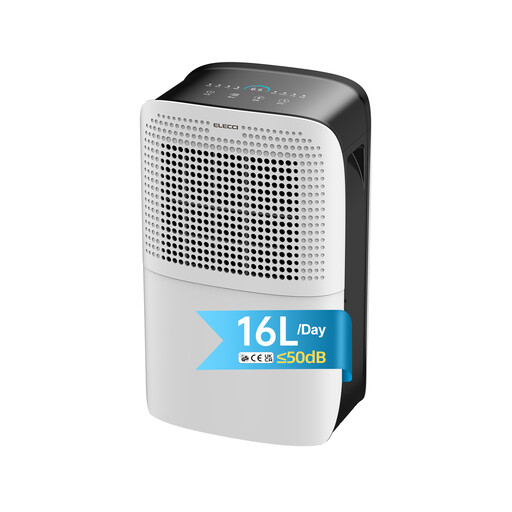
Why it's a great fit: A versatile unit for medium to large living spaces up to 32 m?. Its different modes, including a laundry drying and sleep mode, make it an all-rounder for daily family life.
The dedicated sleep mode directly addresses the noise trap, allowing for use in living rooms or bedrooms. The automatic humidity control optimises energy consumption.
Four smart operating modes (Standard, Rainy, Drying, Sleep) provide tailored performance for different situations, from everyday dehumidification to rapid laundry drying.
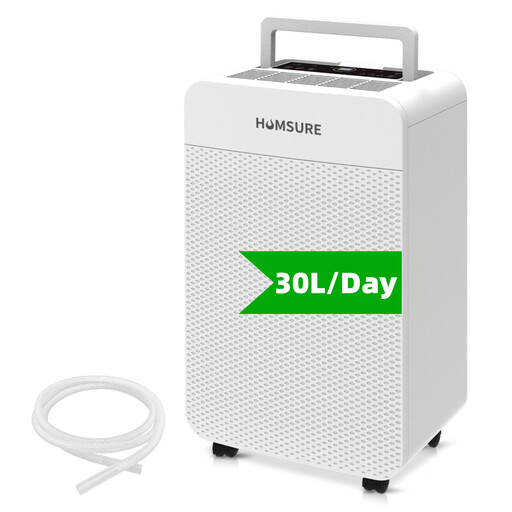
Why it's a great fit: With its high capacity, this unit is designed for the most demanding tasks, such as keeping large basements, garages, or entire residential units up to 50 m? dry.
The high dehumidification capacity of 30 L/day solves the problem of undersizing in large or very damp rooms. The auto-defrost function ensures reliable operation even in cool basements.
The combination of high performance, a large 5.3-litre water tank, and the option for continuous drainage offers maximum flexibility and efficiency for intensive use.
We have compiled a full list of products that meet our selection criteria and are suitable for use in a wide range of homes.
Yes, a dehumidifier against mould is a very effective preventive measure. Mould fungi need high humidity (usually above 60%) to grow. By reducing the air's moisture to a level of 40–50%, a dehumidifier removes mould's life source and prevents new growth. However, any existing mould infestation must be removed separately and professionally.
The costs depend on the unit's power consumption (Watts), its daily runtime, and your electricity rate. A modern, energy-efficient unit rated at 200 watts (0.2 kW) that runs for an effective 8 hours a day thanks to its humidistat will consume 1.6 kWh. At an electricity rate of 35 cents/kWh, that would be about 56 cents per day. Devices without smart controls or with higher power ratings can cost correspondingly more.
The ideal runtime depends on the moisture level and the desired target humidity. In a very damp room, it may be necessary to run the unit continuously for several days at first. Once the target value is reached, a device with a Humidistat will automatically switch the compressor off and on only as needed. This is the most efficient mode of operation.