
Lieferung heute & morgen

Qualitätsgarantie

Willkommens-Angebote freischalten: KOSTENLOSE Lieferung | Bis zu 80 % RABATT | Kostenlose 30-Tage-JoyPlus-Testphase
App herunterladen
High humidity often shows itself through misted-up windows, condensation on cold walls or a musty smell in cupboards and cellars. The right dehumidifier for your home can remove excess moisture from the air effectively. However, a model with a high stated litre capacity will not automatically deliver the right results.
Before buying, consider the room size, temperature, water drainage and noise level together. A small bedroom has different requirements from a cold cellar or a utility room where wet washing is regularly dried.
Figures such as “20 litres per day” usually refer to specific test conditions, such as a higher room temperature and high relative humidity. In a cooler German cellar, the actual dehumidification performance may be lower. You should therefore also check the room size recommended by the manufacturer.
A model with high dehumidification performance and a small tank may need emptying frequently in damp weather. A dehumidifier with a drain hose is more convenient, provided a suitable drain is available. Without continuous drainage, tank capacity, the water-level indicator and automatic shut-off are important considerations.
The stated decibel level should ideally be considered for the operating mode you plan to use. A bedroom dehumidifier should have a specified sleep mode or a low sound level. Compressor models may also be audible when starting up, even if their average noise level is moderate.
Performance is usually stated in litres per 24 hours. However, choosing the right model also depends on the floor area, ceiling height, temperature and source of the moisture.
A dehumidifier for preventing mould does not replace an investigation into the cause. If damp keeps returning, water is getting in or visible mould is present, the structural causes and appropriate professional measures must also be addressed.
A removable tank makes emptying and cleaning easier. For continuous operation, a hose connection is important. The drain hose must be routed to the drain without kinks and with a sufficient downward gradient. A washable filter can reduce ongoing maintenance, but it still needs to be cleaned regularly and dried completely.
Power consumption in watts provides an indication of running costs. A simple example calculation is:
Power consumption in kW × operating hours × electricity price = electricity costs
A dehumidifier with a timer can limit the operating time. Sensor control, adjustable target humidity and automatic shut-off prevent the appliance from running for longer than necessary. A Wi-Fi dehumidifier offers additional convenience, but it is only worthwhile if you will genuinely use the app in everyday life.
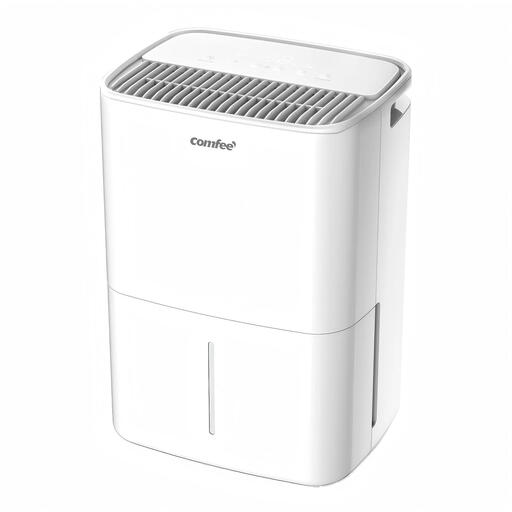
Why this product suits this profile: According to the product specifications, this model is designed for rooms of around 16 m² or 40 m³ and features a timer, child lock and castors.
The stated room size makes the choice easier to understand than relying on an isolated litre figure. The 2.5-litre tank has a fill-level indicator and automatic shut-off.
10 l/24 h, three operating modes, a 24-hour timer and a specified sleep mode at 36 dB(A).
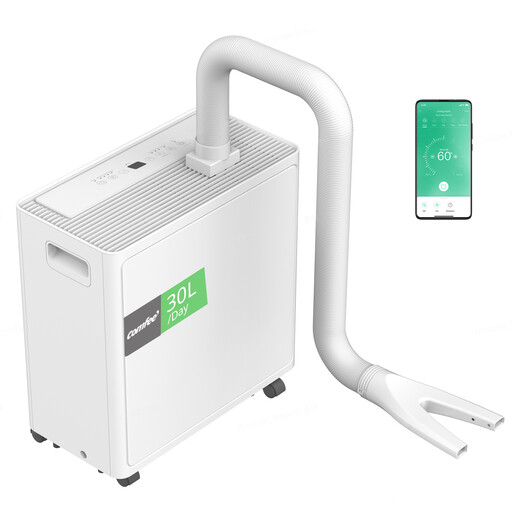
Why this product suits this profile: According to the manufacturer, this model offers several control and drainage options for larger living areas, cellars or utility rooms.
The specifications state both the performance conditions and the recommended area of around 58 to 73 m². Continuous drainage reduces the need to empty the tank frequently.
30 l/24 h under the stated conditions, 3.2-litre tank, drain hose, four modes, Wi-Fi and a 24-hour timer.
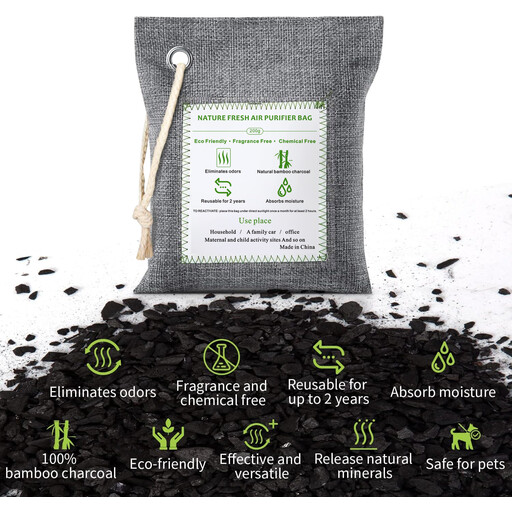
Why this product suits this profile: These bags do not require electricity and can be placed in cupboards, vehicles, shoe cabinets or small storage areas.
The bags are intended for small, enclosed areas and are not a replacement for an electric dehumidifier in large rooms. This makes their intended use clearer.
Unscented bamboo charcoal, hanging facility, no electricity required and, according to the product description, reusable by drying in the sun each month.
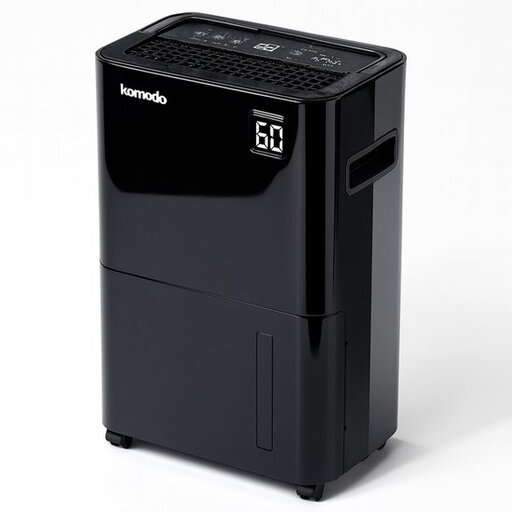
Why this product suits this profile: For households that do laundry frequently and need to use the appliance in different locations, the product description lists a laundry-drying function, castors and continuous drainage.
The 2.5-litre tank can be drained through a hose. Automatic defrosting is specified for operation at lower temperatures.
20 l/24 h, three settings, timer, stated noise level of 40–45 dB and washable filter.
We have put together a complete, regularly updated list of products that fully meet these strict selection criteria and the safety regulations applicable in the EU.
An electric dehumidifier is suitable for rooms with consistently high humidity, such as cellars, bedrooms, utility rooms or living areas. It often measures the humidity and can maintain a set target level over extended periods.
Moisture absorber bags containing calcium chloride, on the other hand, are designed for cupboards, small storage areas or vehicles. They do not require electricity, but are usually single-use products and must be replaced when the collection chamber is full. If liquid leaks out, contact with textiles, furniture and electronic devices should be avoided.
A bamboo charcoal odour absorber is another option for odours and small, enclosed areas. It should not be equated with the dehumidification performance of a compressor model. Scented versions such as lavender may mask odours, but do not solve structural damp problems.
The appliance should stand on a level, stable surface. The air inlet and outlet must remain unobstructed; maintain the clearance specified in the instructions around the appliance. Doors and windows can be closed while it is running to reduce the amount of damp outdoor air entering the room. Before switching on a compressor model that has been transported or tilted, leave it standing upright for several hours, depending on the instructions.
Its service life depends on operating time, dust levels, filter maintenance, room temperature and proper use. Cleaning the filter regularly, emptying the tank correctly and keeping the airflow unobstructed all support reliable operation. A warranty period, such as two years for some of the models mentioned, does not automatically represent a general guarantee of service life.
Running costs depend on power consumption, operating time and your individual electricity tariff. A 300-watt appliance theoretically uses 3 kWh over ten hours of operation. Sensor operation, a timer and a suitable target level can limit the running time. The key consideration is therefore not just maximum dehumidification performance, but also whether the model is suitable for the actual room size and moisture levels.