
Lieferung heute & morgen

Qualitätsgarantie

Willkommens-Angebote freischalten: KOSTENLOSE Lieferung | Bis zu 80 % RABATT | Kostenlose 30-Tage-JoyPlus-Testphase
App herunterladen
Condensation on windows, musty smells or wet laundry indoors are all typical signs of high humidity. A dehumidifier can remove excess moisture from the air and help create a more comfortable indoor climate. However, it is no substitute for regular ventilation or for fixing structural problems such as water ingress or a leaking pipe.
Three factors are particularly likely to lead to the wrong choice: a high capacity in litres is often assessed without taking the measurement conditions into account, small water tanks need emptying frequently, and a low decibel rating does not necessarily apply to every operating mode. This guide explains what households in Germany should look out for.
A “20 litres per day” rating usually describes maximum performance in warm, very humid conditions. In a cooler basement, the amount of water collected may be considerably lower. That’s why you should always consider capacity alongside the intended room volume or floor area.
A 20L dehumidifier may be a good choice for large rooms or particularly damp areas. However, it could be more than you need for a small bedroom. Also check whether the manufacturer gives the capacity in litres per 24 hours, and the temperature and humidity conditions under which it was measured.
A quiet dehumidifier won’t be equally quiet in every mode. Fan speed, the compressor and the display all affect noise levels. Sleep mode often reduces fan speed or display brightness. This can make the appliance more comfortable to use, but may also increase the time it takes to dehumidify a room.
For bedrooms, consider not only the decibel rating but also whether the appliance has a sleep mode, an auto-off function and a clear display.
A dehumidifier with a water tank will usually stop automatically when the tank is full. However, in very humid conditions, a small tank can fill quickly. If you plan to use the appliance in a basement, utility room or while drying laundry, look for a dehumidifier with a drainage hose for continuous drainage.
For a dehumidifier for a basement, the daily capacity isn’t the only thing to consider. The temperature where you plan to place it and whether it can run continuously also matter. Compressor models using R290 refrigerant are available in several models. R290 is flammable, so follow the manufacturer’s safety instructions, keep the appliance away from heat sources and ensure there is an unrestricted air supply.
When choosing a dehumidifier for large rooms, don’t look at the manufacturer’s room-volume rating in isolation. Furniture, open doors and the actual amount of moisture in the air can all affect performance. For a single room, a model with a suitable capacity is usually a better choice than simply opting for the most powerful appliance available.
A 2,5 to 3 litre tank is practical for many living spaces. Check whether the tank is easy to remove, fits securely back into place and is easy to clean. An automatic shut-off when the tank is full stops the appliance from running without collecting any more water.
A hose connection is useful in persistently damp basements. The drainage hose must be attached correctly, and the water must be able to flow continuously downhill from the outlet. Check regularly that the hose hasn’t kinked or become blocked.
A dehumidifier with a timer lets you set how long it runs, for example, for a few hours while drying laundry. A dehumidifier with sleep mode can reduce noise and light at night. Models with a humidity sensor switch on or off automatically according to the target humidity level. This can help avoid unnecessary running time, but it’s still important to check the actual indoor climate.
Also compare power consumption in watts. A dehumidifier with a higher capacity may use more electricity, but it doesn’t need to run continuously on its highest setting in every room.
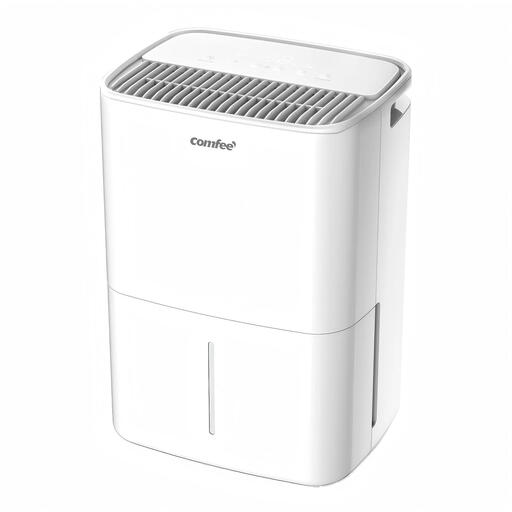
Why it suits this profile: This model is specified for rooms up to around 40 m³ or 16 m². It offers three operating modes, a 24-hour timer and an automatic shut-off when the tank is full.
The room-size rating and tank capacity make it easier to choose for smaller spaces than a maximum-capacity figure on its own.
10 l/24 h, 2,5-litre tank, 36 dB in sleep mode and a laundry-drying mode, according to the product details.
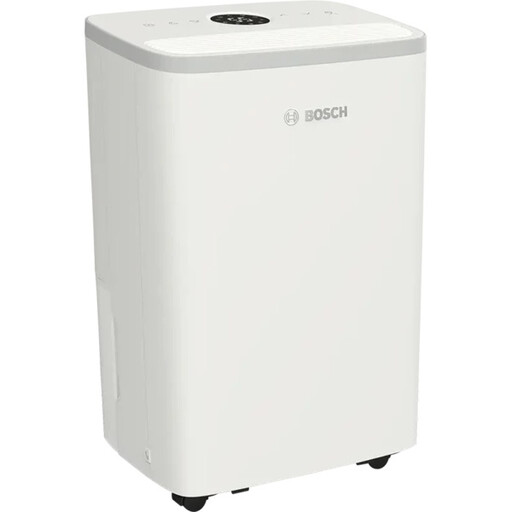
Why it suits this profile: This dehumidifier combines automatic, night and laundry modes with a touchscreen display, carry handle and castors, making it easy to move between the living room, bathroom and utility room.
The stated 38 dB noise level, two fan speeds and tank-full alert make it easier to assess its suitability for longer periods of use.
12 l/day, suitable for spaces up to 55 m³, 2,5-litre tank, night and laundry modes, and automatic shut-off.
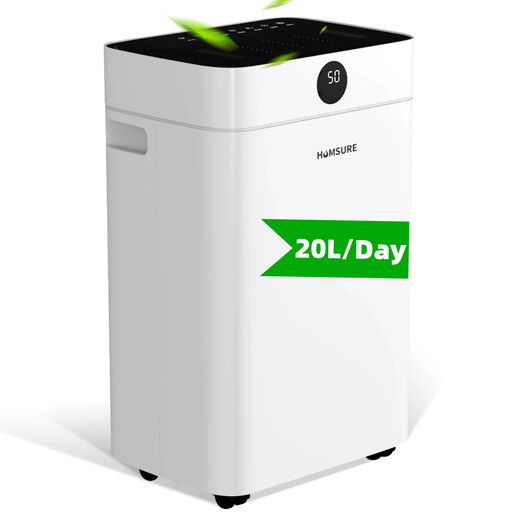
Why it suits this profile: With a capacity of 20 l/day, a 2,8-litre tank, a drainage hose and a Dry mode, this model is designed for basements, larger living spaces and frequent laundry drying.
The choice between using the tank and continuous drainage means you won’t need to empty it manually as often.
20 l/day, suitable for spaces up to 50 m², auto defrost, washable filter and a 1,2-m drainage hose included.
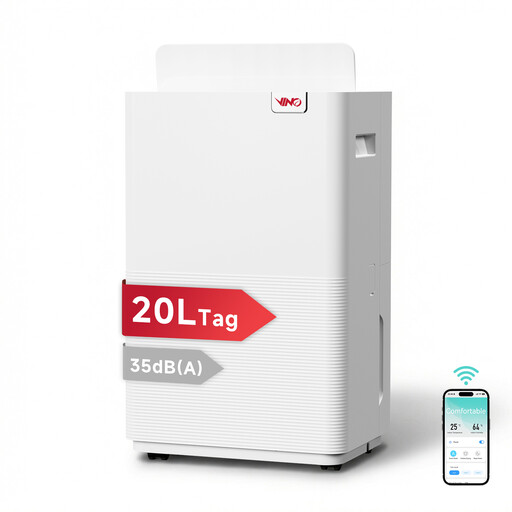
Why it suits this profile: App control, scheduling and sleep mode make this a good fit if you want to manage the appliance remotely and on your own schedule.
The technical details list separate noise levels for normal operation and sleep mode, giving you a more realistic idea of what to expect.
20 l/day, Wi-Fi control, 24-hour scheduling, 2,5-litre tank and continuous drainage, according to the product description.
We’ve put together a complete, regularly updated list of products that meet these strict selection criteria and fully comply with the safety regulations in force in the EU.
A dehumidifier for tackling mould and damp can reduce humidity, but it won’t remove existing mould or fix the underlying structural cause. If stains keep returning, there’s a strong smell or you can see damp patches, it’s worth arranging a professional building inspection.
Place it somewhere with plenty of space around it, not right next to a wall or behind furniture. Keep doors and windows closed while it’s running, unless the instructions say otherwise. If you’re using a drainage hose, it needs a continuous downward slope towards the drain.
This depends on the appliance’s power consumption, how long it runs, the room temperature, humidity and operating mode. Multiply the stated power consumption in kilowatts by the number of hours it runs and your electricity tariff. A timer and target humidity setting can help limit running time.
There’s no set lifespan that can be guaranteed. Regular filter cleaning, a dry and safe position, and following the maintenance instructions all help keep the appliance running reliably. If you notice unusual noises, smells or smoke, switch it off and contact customer service.