
Lieferung heute & morgen

Qualitätsgarantie

Willkommens-Angebote freischalten: KOSTENLOSE Lieferung | Bis zu 80 % RABATT | Kostenlose 30-Tage-JoyPlus-Testphase
App herunterladen
High humidity often shows up as steamed-up windows, musty smells or laundry that takes ages to dry. The right dehumidifier can help manage the moisture in your home, but it won’t replace regular ventilation or fixing the underlying cause of damp. If you’re planning to buy one, don’t base your decision on a high litres-per-day figure or extra app features alone.
Figures such as 20L dehumidifier or 30L dehumidifier usually refer to specific temperature and relative humidity conditions. The actual extraction rate may be much lower in a cool cellar. So, as well as the daily extraction rate, check the recommended operating temperature, room size and airflow.
A high-capacity unit can fill a two- to three-litre tank quickly. This may not be a problem if you’re only using it occasionally in a bedroom. In a cellar, bathroom or when drying laundry, a dehumidifier with continuous drainage may be more practical. You’ll need to connect the drain hose properly and make sure the water can flow away reliably.
Compare decibel ratings only when they’ve been measured under similar conditions. A compressor dehumidifier may be audible while running, even if the manufacturer quotes a low figure. If you’re looking for a dehumidifier for the bedroom, also consider a night mode, timer and adjustable target humidity.
Choose a model that suits the level of moisture in the space:
Treat the stated room size as a guide. High outdoor humidity, cold walls, poor insulation or penetrating damp can all increase the capacity you need.
Look for a removable tank with a visible water-level indicator and an automatic shut-off when the tank is full. For unattended use, continuous drainage via a hose is usually more convenient. Make sure the drain hose isn’t kinked and runs lower than the connection on the unit.
A washable filter can help reduce ongoing costs. Clean it regularly as directed by the manufacturer, and make sure it’s completely dry before putting it back in. Unplug the unit before moving or cleaning it.
Power consumption is an important figure to compare. A 345-watt unit uses 3.45 kilowatt-hours over ten hours of operation in theory. Your actual running costs depend on how long you use it, its power consumption and your electricity tariff:
Electricity cost = power in kW × operating time in hours × price per kWh
A humidistat, timer or app control can help prevent unnecessary running time. App control for a dehumidifier is particularly useful if you want to check humidity levels or operate the unit from another room. However, you’ll still need to check the tank, hose and filter.
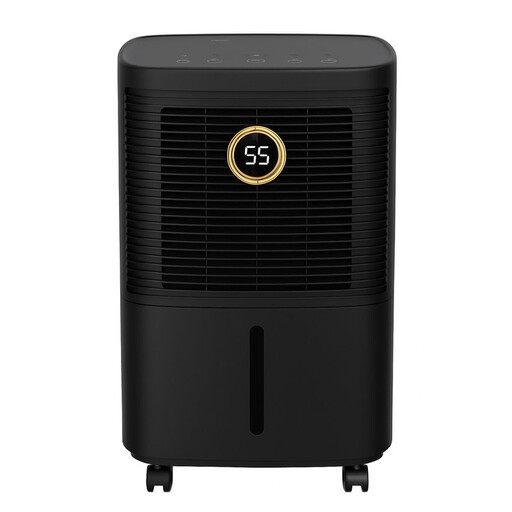
Why it suits this type of user: With an extraction rate of 16 litres per day, a 1.8-litre tank and a stated suitability for rooms up to 70 m², this model is designed for small to medium-sized living spaces, bedrooms or bathrooms.
The choice takes into account more than just the extraction rate, including tank size, continuous drainage, a timer and automatic shut-off.
40–45 dB according to the product listing, three operating modes, washable filter, automatic defrost and laundry-drying function.
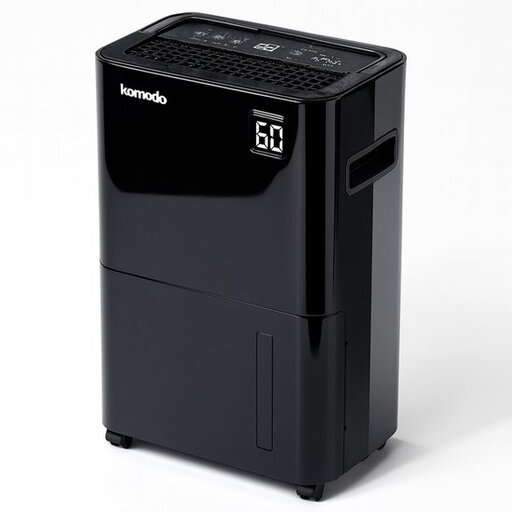
Why it suits this type of user: This model combines a stated extraction rate of 20 litres per day with a 2.5-litre tank, and is listed as suitable for rooms up to 100 m².
The larger tank and built-in hose connection mean less frequent emptying when the unit is running for longer periods.
345 watts, 40–45 dB according to the product listing, adjustable humidity, three settings, timer and automatic defrost.
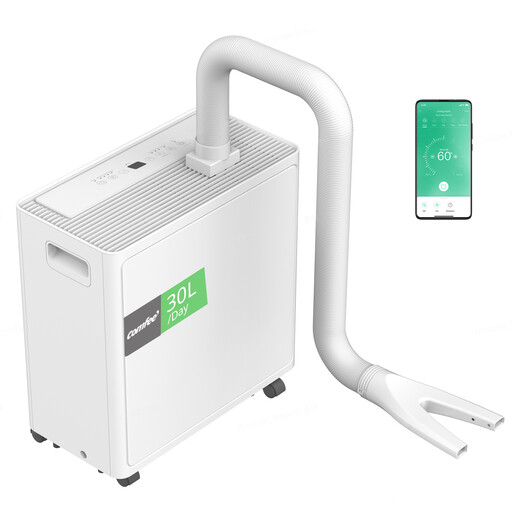
Why it suits this type of user: With an extraction rate of 30 litres per 24 hours under the stated conditions, a 3.2-litre tank, app control and continuous drainage, this model is designed for larger rooms and frequent use.
The specific extraction conditions of 30 °C and 80 % relative humidity are stated, making it easier to put the figure into context.
Four operating modes, 24-hour timer, Wi-Fi app, two fan speeds, castors, washable filter and an operating temperature of 5–32 °C according to the product details.
For enclosed or smaller spaces, moisture absorber bags are a space-saving alternative to electrical appliances. Hanging bags containing calcium chloride don’t need a power socket and are suitable for wardrobes, garages, offices and areas of the cellar, as well as for cars and motorhomes.
Hang them upright and leave enough space around them to protect nearby items. The collected liquid mustn’t drip onto electronics, clothing or furniture. Dispose of the bag when the collection chamber is full; according to the product details, it isn’t designed to be opened or reused. These bags generally won’t have enough capacity for an entire cellar or to deal with persistently high humidity.
We’ve put together a complete, regularly updated list of products that meet these strict selection criteria and fully comply with the safety regulations in force across the EU.
It depends on the size of the room, the initial humidity and the appliance. It’s best to set the unit using its humidistat rather than leaving it running continuously without a target level. Keep doors and windows closed as far as possible while it’s operating. Once the target humidity is reached, the compressor may pause automatically.
Running costs depend on the power consumption and how long the unit is used. A 640-watt model uses 3.2 kilowatt-hours over five hours of operation in theory. For a realistic estimate, use your current electricity unit rate and bear in mind that the compressor doesn’t necessarily run continuously.
A dehumidifier can reduce humidity and may form part of a damp-management plan. However, it won’t fix leaking pipes, thermal bridges or structural water damage. Visible mould should be assessed and removed by a professional. Good ventilation, adequate heating and finding the source of the damp remain essential.