
Lieferung heute & morgen

Qualitätsgarantie

Willkommens-Angebote freischalten: KOSTENLOSE Lieferung | Bis zu 80 % RABATT | Kostenlose 30-Tage-JoyPlus-Testphase
App herunterladen
Condensation on the windows, a musty smell in the cellar or laundry that takes ages to dry indoors: a dehumidifier can help manage the air in your home. But not every appliance is right for every room. Overstated performance figures, an undersized water tank or an inconvenient drainage system can all lead to unnecessary expense and frustration.
This buying guide explains what households in Germany should look for, and which models suit different needs.
A figure of ‘20 litres per day’ sounds clear-cut, but it usually refers to specific test conditions with high temperatures and humidity. In a cool cellar, the actual dehumidifying capacity is often lower. So you should also check the recommended room size or room volume.
A 10L dehumidifier may be enough for a bedroom or small bathroom. For larger living areas, damp cellars or frequent laundry drying, models with a daily capacity of 16L, 20L, 25L or 30L may be more suitable.
Noise levels are given in dB(A). A level of around 30 to 36 dB can be relatively unobtrusive for overnight use, while more powerful settings may be more noticeable. Check whether the stated figure applies to sleep mode or the highest fan setting.
A larger water tank means you won’t have to empty it as often. However, a dehumidifier with a drain hose is more convenient when humidity remains high. The hose must be connected securely, and the water needs to be able to drain away with a sufficient downward slope. A built-in pump isn’t included as standard, so check that it’s specifically listed in the product details.
Always compare the capacity with the space where you plan to use the appliance:
Manufacturers’ room-size recommendations are a useful guide. Open doors, cold external walls, poor ventilation and damp caused by the building itself can all affect results. A dehumidifier can help manage moisture in the air, but it won’t replace an investigation into the cause of water ingress, leaks or persistent structural problems. A dehumidifier for mould and condensation won’t remove existing mould either.
Useful essentials include:
A hose connection is particularly useful for a cellar dehumidifier if you can’t check it every day. In a bathroom, keep the appliance protected from splashes and place it on a stable, dry surface.
A quiet dehumidifier should offer a sleep or night mode as well as a low dB rating. A timer, an automatic mode with adjustable target humidity and automatic defrosting are also useful for everyday use. A laundry-drying function increases the airflow or running intensity, so it’s best to keep the room closed while it’s in use.
Wi-Fi or app control is convenient, but it’s no substitute for checking the tank, positioning the appliance safely and cleaning the filter regularly. Also check whether the filter can be removed and washed.
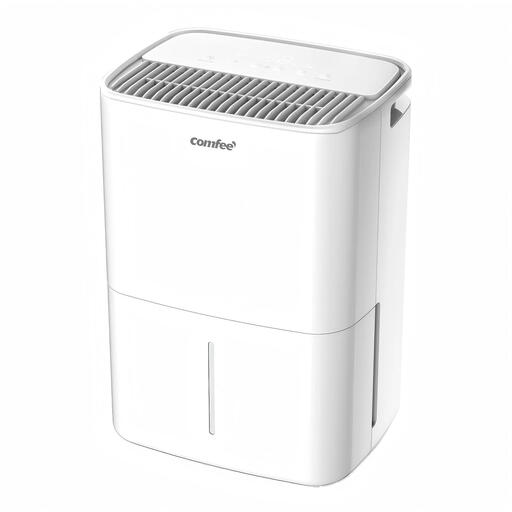
Why this product suits this profile: According to the product details, this model is designed for rooms of up to around 40 m³ or 16 m², and offers a timer, automatic mode and laundry-drying function.
The stated automatic shut-off when the tank is full reduces the risk of overflow. According to the product description, sleep mode runs at 36 dB(A).
Maximum dehumidifying capacity of 10 L/24 h, 2.5-litre tank, timer and four castors.
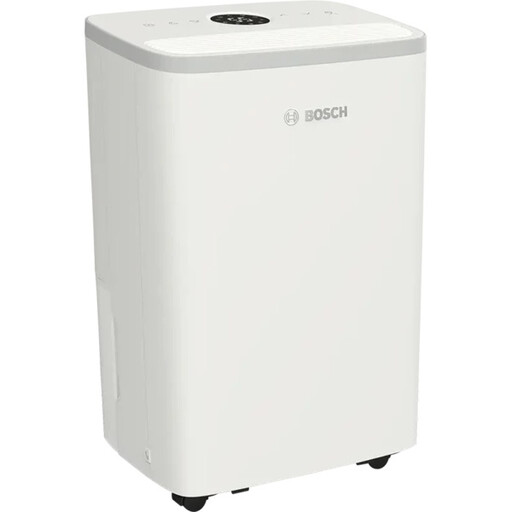
Why this product suits this profile: According to the product details, this appliance combines a capacity of up to 12 L per day with Auto, Night and Laundry modes, for rooms of up to 55 m³.
Night mode dims the display, helping to address the noise and light issues that can be a concern in a bedroom. A full-tank indicator and automatic shut-off are also listed.
38 dB, two fan speeds, touch display, castors and the option to connect a drain hose.
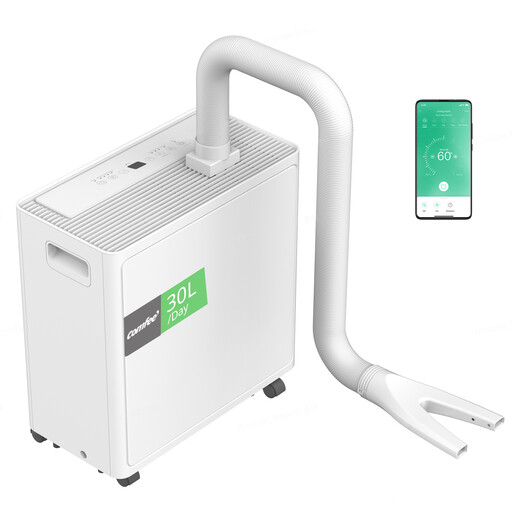
Why this product suits this profile: With a capacity of up to 30 L/24 h and a recommended room size of around 58 to 73 m² according to the product details, this model is designed for large rooms, cellars and frequent laundry drying.
The 3.2-litre tank, hose connection and tank overflow protection mean you’ll need to empty it manually less often. Actual performance still depends on room temperature and humidity.
30 L/24 h, four modes, 24-hour timer, Wi-Fi app and automatic defrosting.
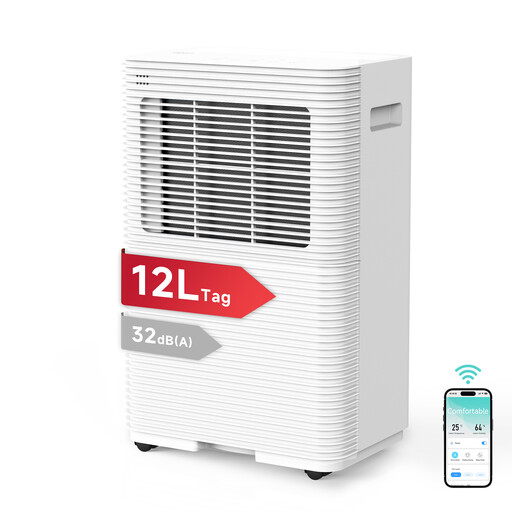
Why this product suits this profile: According to the product description, this model is designed for rooms of up to 24 m² and combines app control with sleep and laundry-drying modes.
The listed dual-drainage option lets you use either the tank or a drain hose. The low sleep-mode rating of 32 dB applies specifically to that mode.
12 L/day, app control, 24-hour scheduling, child lock and automatic shut-off.
We’ve put together a complete, regularly updated list of products that meet these strict selection criteria and fully comply with the safety regulations in force in the EU.
Place the dehumidifier on a level, stable surface and leave plenty of space around the air inlet and outlet. Keep doors and windows closed as much as possible while it’s running. After moving or tilting the appliance, leave it upright for several hours before switching it on, depending on the model.
An automatic defrost function is important for cold cellars. Check the stated temperature range, as compressor dehumidifiers may defrost more often at low temperatures and temporarily remove less moisture as a result. Clean the filter regularly, and unplug the appliance before carrying out maintenance or cleaning, or connecting the hose.
For a typical bedroom, 10L to 12L per day may be enough, provided the room isn’t unusually damp or very large. The key factors are room volume, temperature, air circulation and the actual source of moisture.
Running costs depend on the power consumption, how long the appliance is used and your electricity tariff. As a rough guide, use this calculation: power consumption in kW × operating hours × electricity price per kWh. An automatic mode can limit running time once the target humidity is reached. Exact savings can’t be guaranteed across the board.
Its lifespan depends on operating hours, filter care, where it’s placed and how well it’s used. Regular cleaning, keeping the airways clear and avoiding splashes all help it run properly. If you notice unusual noises, smells or smoke, or the cable is damaged, switch the appliance off and contact customer services.