
Lieferung heute & morgen

Qualitätsgarantie

Willkommens-Angebote freischalten: KOSTENLOSE Lieferung | Bis zu 80 % RABATT | Kostenlose 30-Tage-JoyPlus-Testphase
App herunterladen
Indoor damp often shows up as condensation on windows, musty smells or laundry that takes a long time to dry. The right dehumidifier can help manage indoor humidity, but it’s no substitute for regular ventilation or fixing structural problems such as water ingress or cold bridges.
Three common marketing traps can lead to the wrong choice:
The figure in litres per 24 hours tells you how much water the appliance can remove from the air under specified conditions. For the Comfee' MDDA-30DEN7-SD, the manufacturer states an extraction rate of 30 l/24 h at 30 °C and 80 % relative humidity. That doesn’t mean it will perform at the same rate in a cellar at 15 °C.
Use these points to help you choose:
An anti-mould dehumidifier won’t remove existing mould. It can only reduce humidity, making it one part of managing damp. If you can see mould or suspect a structural problem, seek a professional assessment.
Check the size of the water tank and whether the appliance has a hose connection. A dehumidifier with a drain hose can send water to a suitable drain. Make sure the hose is securely connected and slopes downwards from the appliance so the water can drain reliably.
Other useful features include:
Unplug the appliance before cleaning, servicing or moving it. Keep electrical appliances away from sources of splashing water and place them on a stable, level surface.
Noise levels are particularly important for a bedroom dehumidifier. The models featured here have stated sound pressure levels of around 40 to 47 dB(A). How loud they seem will depend on the room’s acoustics, how far away you are and the selected operating mode.
Power consumption should also factor into your decision. Depending on the model, the appliances listed use 240 W, 345 W or 640 W. Actual running costs depend on how long the appliance runs, your electricity tariff, the target humidity and the level of damp in the room. A Wi-Fi app can make the appliance easier to control, but won’t automatically reduce energy use.
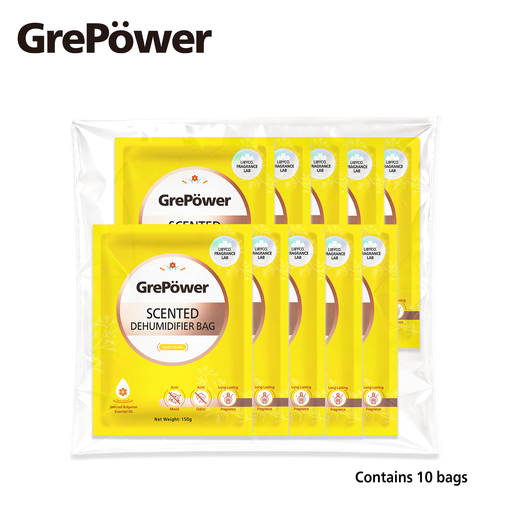
Why this product suits this profile: These passive moisture absorbers are suitable for cupboards, small storage areas, motorhomes or garages without a power socket.
Use isn’t dependent on an unrealistic room-size claim. Replace the bag when its collection area is full.
10 bags per pack, a hanging design and no electricity use. Don’t hang above delicate items.
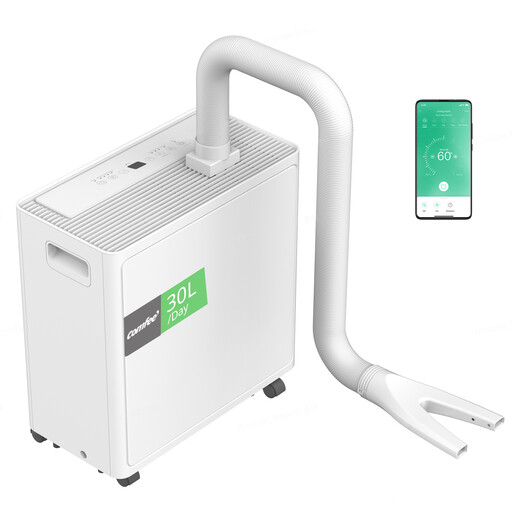
Why this product suits this profile: This model combines a stated extraction rate of 30 l/24 h with app control, four operating modes and continuous drainage.
The stated extraction rate specifies the test conditions of 30 °C and 80 % relative humidity. You can also use the tank or hose drainage.
3.2-litre tank, Wi-Fi app, 24-hour timer, automatic defrost and two fan speeds. Stated sound pressure level: 45.3–47 dB(A).
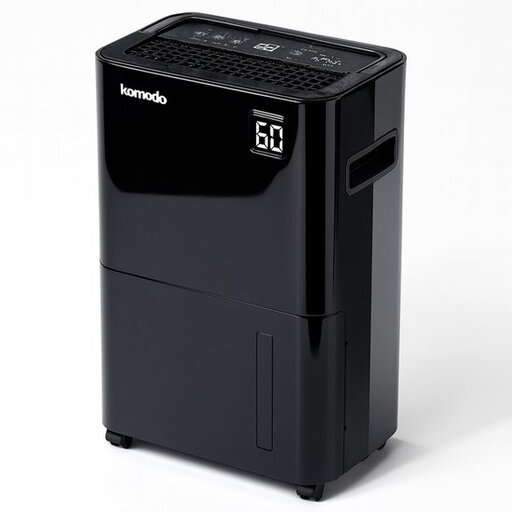
Why this product suits this profile: Designed for rooms up to the stated size, this appliance also has a laundry-drying mode for households that wash clothes regularly.
The performance figures are accompanied by details of tank capacity, noise level and power consumption. The hose connection means less frequent emptying during continuous use.
20 l/day, 2.5-litre water tank, 40–45 dB, three settings, timer, automatic defrost and washable filter.
We’ve put together a complete, regularly updated list of products that meet these strict selection criteria and the safety requirements in force across the EU.
Place the appliance on a level, stable surface and keep the air inlet and outlet clear. Keep doors and windows closed while it’s running, where possible. In the bathroom, don’t place it where it could be splashed. After moving or tilting the appliance, you may need to wait before switching it on, depending on the manufacturer’s instructions.
Its lifespan depends on how often it’s used, dust levels, filter care and correct positioning. Clean the filter regularly, empty the tank promptly and don’t move the appliance while it’s running. If you have a compressor model, check its stated operating temperature, especially when using it in a cellar.
You can estimate the cost using this calculation: power consumption in kW × operating hours × electricity price. A 345 W appliance uses 0.345 kWh for each hour it runs. Automatic humidity control, a timer and a suitable target setting can help prevent unnecessarily long running times.