A dehumidifier can be a useful addition to a small flat if the air remains damp despite heating and ventilating appropriately, and the appliance is suited to the room you actually use. It won’t identify or fix the cause of damp building materials, a leak or mould. When comparing models for living rooms and bedrooms, focus on noise levels, performance figures and their test conditions, as well as the tank and drainage options.
Who might need a dehumidifier?
People who find their windows are damp
If you repeatedly notice condensation on the windows in the morning, check the humidity and consider what might be causing it. The Baden-Württemberg Consumer Advice Centre explains that warm indoor air can condense on cold surfaces.
People using a bedroom
If you plan to place an appliance near where you sleep, consider its noise and footprint in relation to your room and your personal tolerance.
People drying laundry indoors
If you regularly dry laundry indoors, look for a laundry-drying function and a suitable way to drain the water when comparing models. The German Environment Agency recommends clearing peaks in humidity by ventilating thoroughly.
What should you look for when buying?
First, check whether the moisture is actually coming from the air in the room. Then choose a model to suit the space you use, and consider how its noise and drainage options will fit into your day-to-day life.
| What you need |
What to check before buying |
Who is this most important to? |
| Cause of damp and level of need |
Measure the humidity and base your choice on the space you actually use, rather than the total floor area of the flat. The Consumer Advice Centre’s energy advice gives 40–60 % relative humidity as a guide; this does not rule out condensation on cold surfaces. |
If I keep seeing wet windows despite heating and ventilating, I want to understand the cause and how much dehumidification I actually need first. Around 33 % of consumers put identifying the cause and controlling moisture first. |
| Noise and footprint |
Compare the noise rating and, where applicable, the operating setting for the specific model; check its dimensions against the space available. |
If I’m putting the appliance in my bedroom, its noise and size need to work for me day to day. Around 38 % of consumers prioritise whether it is suitable for use in a bedroom. |
| Moisture from laundry and drainage |
Check the laundry-drying function, tank capacity and hose connection for the exact model. Only plan to use continuous drainage if there is a suitable drain and you can route the hose safely. |
If I regularly dry laundry indoors, I don’t want to have to empty the water tank more often than necessary. Around 29 % of consumers prioritise moisture from laundry and water drainage. |
Common buying mistakes
-
Thinking a dehumidifier will fix damp walls or a leak
If water is getting in or there is mould, simply drying the air in the room won’t be enough; you need to identify the cause.
Get damp building materials or existing mould assessed by a professional rather than relying on the appliance alone.
-
Assuming the highest litres-per-day rating will apply in your home
Dehumidification performance depends on the conditions used by the manufacturer when stating the figure. For example, De’Longhi rates the DEX210SF at 10 l/24 h at 30 °C and 80 % relative humidity.
Compare the test conditions and the recommended room size, and measure the humidity in your own room too.
-
Choosing a larger appliance without considering where you sleep, the tank and drainage
Models vary in their noise ratings, power consumption and drainage options. A high daily capacity on its own doesn’t tell you whether the appliance is right for a small bedroom.
Check the specifications for the exact model and where you plan to put it. Only use a hose drain if the connection and hose routing are suitable for that location.
Brands and models at a glance
Trotec
Trotec describes the TTK 33 E as a refrigerant dehumidifier for a single small room.
- According to Trotec, the model can remove up to 14 l/24 h and is rated for spaces up to 15 m² or 37 m³. The manufacturer lists a 1,5-l tank, a hose connection and a noise level of 43 dB(A).
- Bear the stated room size and small tank in mind if you have a larger open-plan living area or expect to run the appliance for longer periods. These specifications apply to the TTK 33 E, not to the brand as a whole.
Meaco
The Arete One 12L is a refrigerant option for heated rooms. Meaco also offers desiccant models for cooler spaces.
- Meaco lists the Arete One 12L at 12 l/day and 38 dB(A).
- Meaco’s product page gives conflicting coverage figures of 50 and 55 m² for this model. Don’t base your choice on the floor area alone; check that the model suits the specific room and temperature requirements.
De’Longhi
The documented DEX210SF and DDSX220 models differ in rated output and their stated operating figures.
- De’Longhi rates the DEX210SF at 10 l/24 h at 30 °C and 80 % relative humidity, with a noise level of 36 dB(A), power consumption of 250 W and continuous drainage.
- For the DDSX220, De’Longhi lists 20 l/24 h at 30 °C and 80 % relative humidity, 470 W and 42–47 dB(A). These are manufacturer figures for specific models and conditions, not independent measurements or general figures for the brand.
Wood’s
Wood’s describes the MRD10 as a compact dehumidifier for small, heated rooms, particularly bathrooms.
- For the MRD10, Wood’s lists a capacity of up to 10 l/day, a 2-l tank, a hose connection and IPX4.
- These specifications apply to this model. Follow the manufacturer’s guidance on where to use it and on using it in heated rooms.
Related products at Joybuy
The Joybuy products below include models with sleep or laundry settings and humidity control, as well as a dehumidifier described as a basement model. Check that the stated room size is suitable for the space where you plan to use it.
 No image available
Comfee’ MDDO-10DEN7
Worth considering for a room within the stated size range if sleep or laundry settings are important to you.
The product title lists 10 l/day, a 2,5-l tank, 36 dB in sleep mode and a room size of around 40 m³ (16 m²). It also lists three modes and a 24-hour timer.
View at Joybuy
 No image available
Bosch Dry 4000
The room-size, night-mode and laundry-drying specifications can help you decide whether it is right for the space where you plan to use it.
The product title lists 16 l/day, coverage of up to 75 m³, a 2,5-l tank and 40 dB. It also lists two fan speeds, automatic night and laundry-drying modes, and an LED display.
View at Joybuy
 No image available
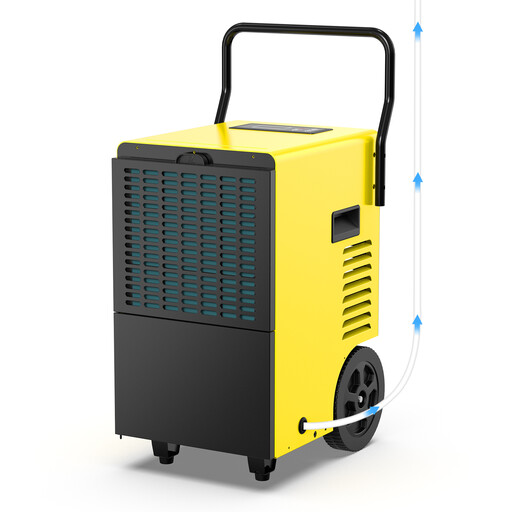
DAHTEC Basement Dehumidifier
The name describes this model as a basement dehumidifier. Check that it suits the space where you plan to use it and that its stated capacity meets your needs.
The product title lists a dehumidification capacity of 50 l/day and an integrated pump.
View at Joybuy
 No image available
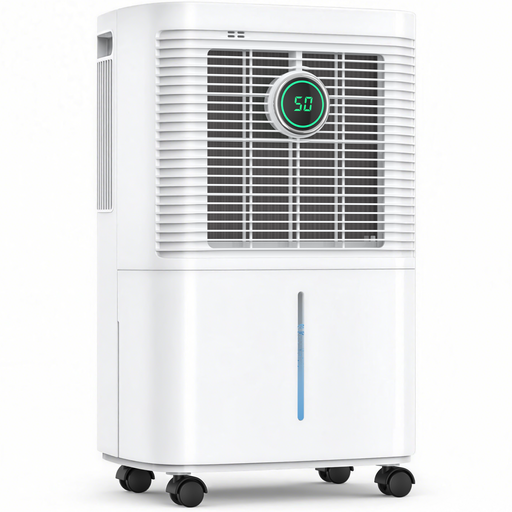
Ateroll dehumidifier
Could be worth comparing if you’re looking for automatic humidity control and a laundry-drying mode; make sure it suits the room where you plan to use it.
The product title lists 16 l/day, 36 dB in sleep mode, automatic humidity control, a laundry-drying mode and automatic defrosting.
View at Joybuy
 No image available
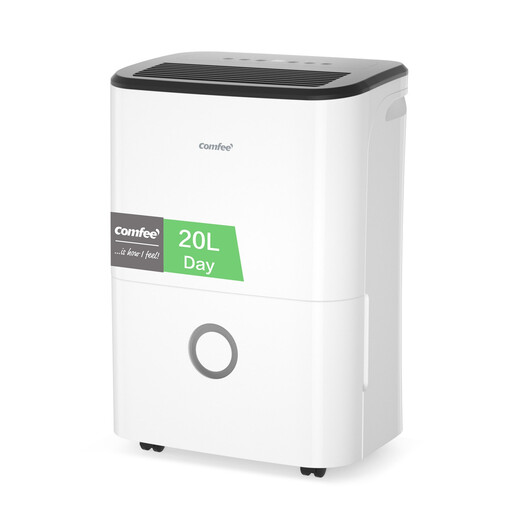
Comfee’ MDDF-20DEN7
The stated room size and laundry-drying function are useful points to compare if drying laundry adds moisture to the room.
The product title lists 20 l/day, a 3-l tank, continuous drainage, three modes and a 24-hour timer. It also lists R290, automatic defrosting and a room size of around 100 m³ (40 m²).
View at Joybuy
Frequently asked questions
Will a dehumidifier help if the windows are only wet in the morning?
It can help if there is genuinely too much moisture in the air. Warm indoor air can condense on cold windows, so first check humidity levels, heating, ventilation and the window reveal. A wet window on its own doesn’t tell you what size appliance you need or what is causing the condensation.
What should I do about excess moisture after showering or cooking?
The German Environment Agency recommends clearing excess moisture straight away by opening the windows wide, while keeping the bathroom or kitchen door closed. A dehumidifier is no substitute for changing the air.
What does ‘litres per day’ mean when comparing models?
The figure is only meaningful when considered alongside the test conditions. De’Longhi lists 10 l/24 h for the DEX210SF at 30 °C and 80 % relative humidity; you can’t assume it will collect the same amount of water each day in your home.
What running costs and maintenance should I allow for?
Electricity costs depend on power consumption, how long you run the appliance and your electricity tariff. Also check how often you’ll need to empty the tank and what filter care is recommended in the manual for your chosen model.
What are the rules on online returns and disposal in Germany?
The Consumer Advice Centre says online purchases generally come with a 14-day right to cancel; exceptions and the terms of your particular contract should be checked. Electrical appliances must not go in household waste. The Federal Environment Ministry lists return options at retailers, through manufacturers or at recycling centres; the applicable option depends on the legal requirements in each case.


