What should you look for when buying?
When choosing a dehumidifier for drying laundry in a large living room, the main considerations are room and laundry-drying capacity, humidity control, how usable the room will remain, electricity use and the effort involved in emptying the tank.
| What matters to you |
What to look for when buying |
Who this matters most to |
| Room and laundry-drying capacity |
Compare your room’s floor area and volume with the model’s specifications. Only compare extraction figures alongside their test conditions. Bosch says the Dry 4000 is suitable for rooms of around 33 m² or 75 m³. De’Longhi states that the DDSX220 extracts 20 l/24 h at 30 °C and 80% relative humidity. |
If I regularly dry large loads of laundry in my living room, the stated room capacity needs to match the actual size of the space. Around 33% of consumers prioritise room and laundry-drying capacity. |
| Humidity control |
Monitor humidity with a thermo-hygrometer and continue to ventilate as needed. The Consumer Advice Centre recommends taking measurements, while the German Environment Agency advises regular ventilation when drying wet laundry indoors. |
If humidity stays high while clothes are drying on an airer, I want to measure it and take steps to reduce it, rather than simply assuming I’m preventing mould. Around 27% of consumers prioritise humidity control. |
| A peaceful living room |
Check the noise rating and operating mode of the specific model. Bosch states 38 dB(A) for the Dry 4000 and De’Longhi gives 42–47 dB(A) for the DDSX220. Without comparable test conditions, these manufacturers’ figures aren’t a direct comparison of noise levels. |
If I’m still using my living room while the dehumidifier is running, I want to know how much the noise and running time will bother me. Around 20% of consumers prioritise a quiet room. |
| Electricity use and water drainage |
To estimate the cost, multiply the kWh used by your own electricity tariff. Check the tank capacity and whether you can use a drainage outlet where you plan to put the appliance. The European Commission explains that no EU energy efficiency class has been defined for dehumidifiers. |
If the appliance will be running often, or I don’t want to empty the tank frequently, I’ll check its electricity use and drainage options before buying. Around 20% of consumers prioritise running costs and ease of use. |
Joybuy products
This selection includes dehumidifiers with a stated drying or laundry mode. The key thing is to check that each model’s stated room capacity is suitable for your living room.
 No image available
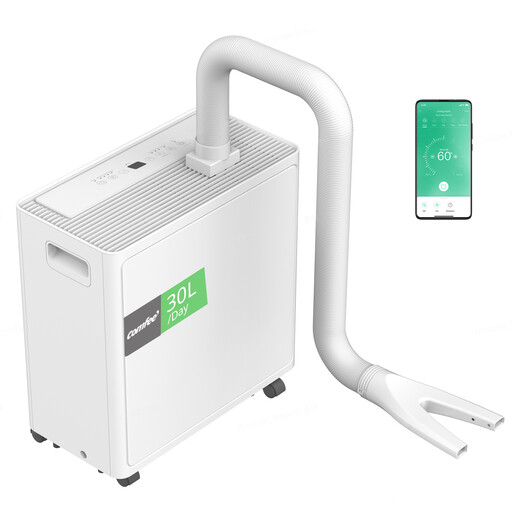
COMFEE MDDA-30DEN7-SD dehumidifier, 30 l/day
Could suit a larger room, provided its actual floor area is within the stated room capacity.
The product title lists around 73 m² or 130 m³, a 3.2-l tank, continuous drainage and a laundry mode. According to the product description, the 30 l/24 h figure applies at 30 °C and 80% relative humidity.
View on Joybuy
 No image available
Bosch Dry 4000 dehumidifier, 16 l/day
More suitable if the area you need to dehumidify is no larger than the manufacturer’s stated capacity of around 33 m² or 75 m³.
The product title lists 16 l/day, a 2.5-l tank, and night and laundry modes. Bosch states that the Dry 4000 is suitable for rooms of around 33 m² or 75 m³.
View on Joybuy
 No image available
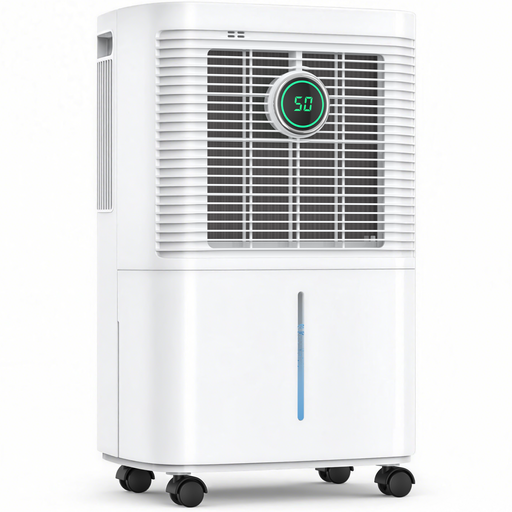
Ateroll dehumidifier with automatic humidity control and laundry-drying mode
Could be an option if you want a laundry-drying mode and automatic humidity control. Before buying, check that the room coverage stated for the specific product is suitable for your living space.
The product title lists 16 l/day and a sleep mode with a noise level of 36 dB. According to the description, the capacity figure applies at 35 °C and 90% relative humidity.
View on Joybuy
 No image available
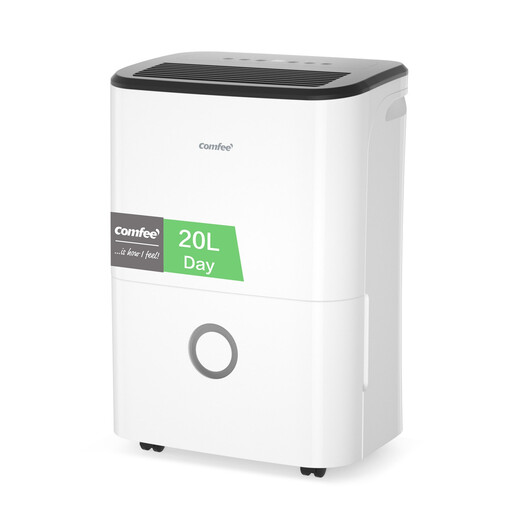
COMFEE MDDF-20DEN7 dehumidifier, 20 l/day
The stated room capacity may suit medium-sized living areas. Compare it with the dimensions of the space you actually need to dehumidify.
The product title lists around 40 m² or 100 m³, a 3-l tank, continuous drainage and a drying mode. According to the product description, 20 l/24 h is a maximum extraction rate; the drain hose is listed as not included.
View on Joybuy
 No image available
CONOPU CS10B dehumidifier, 16 l/day
Could be worth considering if a humidity display and laundry-drying mode would be useful. Check the specific model’s stated room capacity against the size of your living space.
The product title lists a 2.5-l tank, a 24-hour timer, automatic mode, a humidity display and a laundry-drying mode.
View on Joybuy
Frequently asked questions
Will 16 or 20 litres per day be enough for my large living room?
The litres-per-day figure isn’t the only thing that matters. Compare the actual floor area and room volume with the model’s specifications, and check the test conditions. Bosch says the Dry 4000 is suitable for rooms of around 75 m³ or 33 m²; De’Longhi’s 20 l/24 h figure for the DDSX220 applies at 30 °C and 80% relative humidity.
Do I still need to ventilate when using a dehumidifier?
Yes. The German Environment Agency advises taking particular care to ventilate regularly when drying wet laundry in the living room. A thermo-hygrometer can help you monitor changes in humidity.
How can I work out the electricity costs, and is there an EU energy label?
Multiply the kWh measured during your use by your electricity price per kWh. The European Commission explains that no EU energy efficiency class has been defined for dehumidifiers, so the energy class for a tumble dryer can’t be applied to a dehumidifier.
How should I position and maintain the appliance?
Follow the instructions for your specific model on positioning, the tank and the filter. For example, the Meaco DD8L Zambezi instructions require a stable, level surface, keeping the appliance away from standing water and checking the filter regularly. These requirements are specific to that model and aren’t general instructions for every appliance.
What CE requirements apply to a new electric dehumidifier in Germany?
For new electrical equipment covered by Germany’s 1. ProdSV, including appliances with a rated voltage of 50 to 1,000 V AC, an EU Declaration of Conformity and CE marking are required following a successful conformity assessment. Check the documentation for the specific appliance to confirm whether it meets these requirements.


