Who might benefit from a desiccant dehumidifier?

People who regularly dry laundry indoors

If you often hang laundry to dry in a small flat, it’s important to consider both the moisture in the room and regular ventilation. The German Environment Agency identifies damp laundry as an additional source of moisture and recommends ventilating regularly.

People with a cool drying room

If your drying area stays cool for long periods, it’s worth considering desiccant technology and checking the temperature range of the specific model. Trotec notes that the amount of water collected by desiccant models also depends on the surrounding conditions.

People with limited space for drying

If your clothes airer is near your living or sleeping area, consider more than just the appliance’s size. You should also allow for clear airflow, the positioning clearances stated in the instructions and operating noise.

What should you look for when buying?

Desiccant dehumidifier

May be a better fit if: Your drying room regularly stays cool for long periods and there’s a safe space for an electric appliance next to the clothes airer.

Bear in mind: The amount of water collected still depends on temperature and humidity. You should also factor in running costs, noise and heat output.

Compressor dehumidifier

May be a better fit if: Your drying room is mostly heated and you want to compare models suitable for that room temperature.

Bear in mind: Trotec says that the dehumidifying performance of many compressor models can decrease as the room temperature drops. When comparing models, make sure the conditions are relevant to how you plan to use them.

Clothes airer and ventilation

May be a better fit if: You only dry laundry indoors occasionally and can ventilate the drying area as needed.

Bear in mind: This alone may not be enough if humidity remains high or ventilation is limited. The German Environment Agency recommends avoiding drying laundry indoors where possible and ventilating more when you do.

Buying priority What to look for when buying Who it matters most to
Moisture from laundry Check the humidity controls, laundry mode and tank shut-off or drainage options on the specific model. A maximum daily extraction rate is not a guaranteed drying time. If I regularly dry laundry indoors, I want to keep an eye on the room’s humidity while continuing to ventilate. Around 33% of consumers put humidity control first.
Cool drying room Compare the specific model’s permitted temperature range with the conditions in your drying area. Trotec gives the TTR 57 E an operating temperature starting at 1 °C; this figure does not automatically apply to other models. If my drying area stays cool for long periods, I pay particular attention to whether the appliance is designed to operate at that temperature. Around 27% of consumers prioritise suitability for cool rooms.
Space and noise As well as the appliance’s size, consider the clearances stated in the instructions, unobstructed airflow and the noise level for your preferred operating mode. If the clothes airer and appliance are in my living or sleeping area, I need enough safe space and want to take operating noise into account. Around 20% of consumers prioritise space and quiet operation.
Ongoing electricity costs Compare the power consumption at each setting and the actual running time for similar use. The daily extraction rate alone won’t tell you what it will cost to use the appliance in your home. If I use the appliance repeatedly, I want to estimate electricity costs based on the setting I choose, the hours it runs and my tariff. Around 20% of consumers focus primarily on ongoing costs.

Common misconceptions about drying laundry

  • Assuming “litres per day” tells you how long a load of laundry will take to dry

    The amount of water collected in practice depends on factors including temperature, humidity and any additional moisture entering the room. Trotec notes that a stated maximum daily extraction rate doesn’t guarantee a particular drying time in your home.

    Compare performance figures alongside the conditions under which they were measured, and monitor humidity in your own drying area.

  • Assuming a small appliance needs little space when in use

    Your clothes airer could block airflow or allow water to drip onto an electrical appliance. In addition to the appliance’s footprint, you’ll need to allow for the clearances specified in the instructions for that model.

    Measure the full space available and keep the required clearances and air inlets and outlets unobstructed.

  • Assuming desiccant models are always cheaper to run than compressor models

    The fact that a model may work at lower temperatures doesn’t prove that it will use less electricity for the same drying task. Power consumption, the setting selected and running time vary between appliances and uses.

    Compare power consumption and actual running time in room conditions that are as similar as possible.

  • Buying a dehumidifier to solve an existing mould problem

    An appliance that helps with drying laundry won’t identify the cause of an existing damp problem. The German Environment Agency recommends finding and addressing the causes of excess moisture that have led to mould.

    Treat help with drying laundry separately from investigating and resolving a damp problem.

Key brands at a glance

Trotec

The manufacturer lists the TTR 57 E as a desiccant model with a laundry-drying function, suitable for rooms up to 20 m².

  • For the TTR 57 E, Trotec specifies a 5-l tank, an extraction rate of up to 9 l in 24 hours and operation from 1 °C.
  • The maximum daily extraction rate doesn’t guarantee how much water the appliance will collect, or how long drying will take, in your home. You’ll also need to allow enough space for it.

Meaco

The range includes desiccant models such as the DD8L Junior and DD8L Zambezi, with features that vary by model.

  • Meaco specifies a laundry mode, a 2-l tank and a full-tank shut-off for the DD8L Junior. For the Zambezi, the manufacturer lists a display and timer.
  • Don’t assume that features or temperature specifications are the same across models or versions of the instructions. Manufacturer claims about running time or energy use are no substitute for an independent comparison under the same conditions.

EcoAir

The manufacturer describes the DD1 Simple MK3 as a desiccant dehumidifier with adjustable humidity settings.

  • For the MK3, EcoAir specifies an extraction rate of up to 7.5 l per day, a 2-l tank and optional continuous drainage.
  • Check the MK3 product details against the instructions for the specific model on offer. Information about a product range doesn’t automatically confirm the terms of delivery in Germany.

Pro Breeze

The manufacturer describes the PB-D-10 as a 10-l desiccant dehumidifier for cooler rooms.

  • For this version, Pro Breeze specifies 220–240 V and a 3-l tank.
  • These details apply to the PB-D-10. If buying a model offered in Germany, check the specific version and its delivery, plug and warranty terms. A manufacturer’s claim isn’t proof of independently measured drying performance.

Dehumidifiers with a laundry mode at Joybuy

The Joybuy models below are described as dehumidifiers with a laundry or clothes-drying mode. This feature doesn’t tell you how the appliance dehumidifies the air: check whether the specific model uses desiccant or compressor technology before buying. For mains-powered appliances in Germany, you should also check the CE marking and ensure that the specific model delivered comes with the required clear German-language safety and user information. The Federal Network Agency lists these as market surveillance criteria.
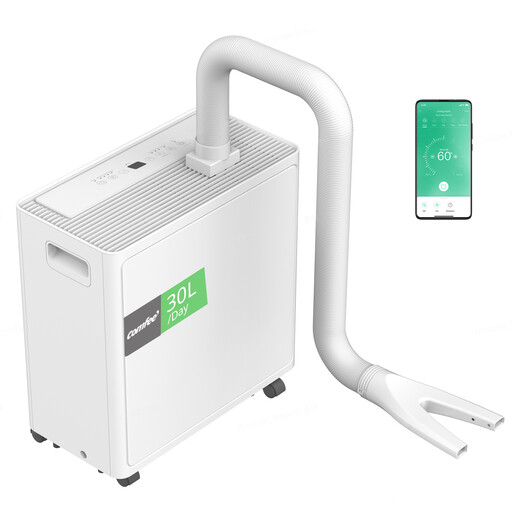
Comfee MDDA-30DEN7-SD dehumidifier

Comfee MDDA-30DEN7-SD

The stated drying mode may be useful for drying laundry; check that the dehumidification method suits your room.

Stated extraction rate of 30 l/day; 3.2-l tank; four modes and a 24-hour timer.

App control and continuous drainage are listed in the product name. Stated room size: approximately 130 m³ (73 m²).

View at Joybuy

Comfee MDDO-10DEN7 dehumidifier

Comfee MDDO-10DEN7

The product name lists a laundry-drying mode. For a cool drying area, check the permitted temperature range and the dehumidification method.

Stated extraction rate of 10 l/day; 2.5-l tank; three modes and a 24-hour timer.

Sleep mode at 36 dB, automatic defrosting and a stated coverage area of approximately 40 m³ (16 m²).

View at Joybuy

Bosch Dry 4000 dehumidifier

Bosch Dry 4000

A laundry mode is listed. Before choosing this appliance, check that its dehumidification method and capacity suit your needs and the size of your drying room.

Stated extraction rate of 16 l/day; 2.5-l tank; two fan speeds.

Stated room volume of up to 75 m³ and noise level of 40 dB. The product information says a hose is required for continuous drainage; it isn’t included.

View at Joybuy
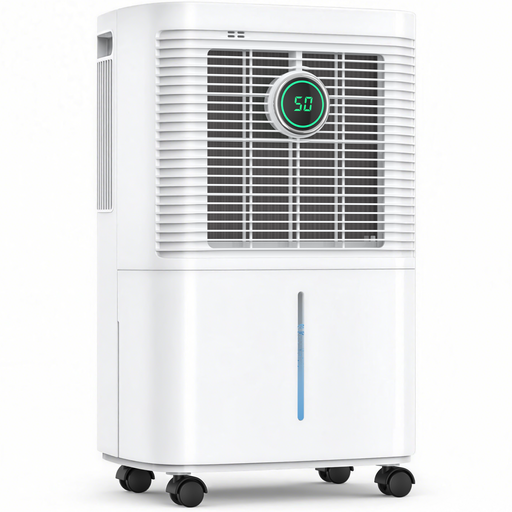
Ateroll dehumidifier with humidity control and laundry mode

Ateroll dehumidifier with automatic humidity control

The product name lists a laundry mode and automatic humidity control; check that the dehumidification method is suitable for your drying area.

Stated extraction rate of 16 l/day; sleep mode at 36 dB.

Automatic defrosting is also listed in the product name.

View at Joybuy
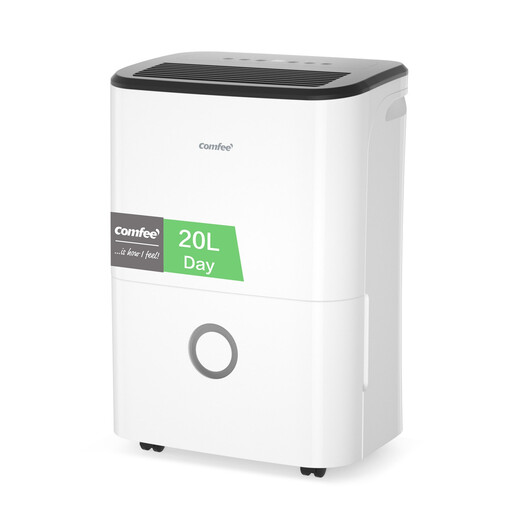
Comfee MDDF-20DEN7 dehumidifier

Comfee MDDF-20DEN7

The product name lists a drying mode for clothes; check that the dehumidification method suits the conditions in your drying area.

Stated extraction rate of 20 l/day; removable 3-l tank; three modes and a 24-hour timer.

Stated coverage area of approximately 100 m³ (40 m²). The product information says a hose is required for continuous drainage; it isn’t included.

View at Joybuy

Frequently asked questions

Do I still need to ventilate when using a dehumidifier?

Yes, it’s still important to ventilate as needed. The German Environment Agency recommends avoiding drying laundry indoors where possible and ventilating more when you do. A dehumidifier won’t identify the underlying cause of excess moisture.

Where should I place the appliance next to wet laundry?

Follow the clearances in the instructions for your specific model, and keep the air inlet and outlet and electrical connections clear of dripping laundry. The Meaco DD8L Junior instructions available online specify a minimum clearance of 40 cm from adjacent curtains or furniture; this doesn’t automatically apply to other appliances.

How should I care for the tank and air filter?

Empty the tank as needed, and check the instructions for your model version for filter care and any drainage options. Meaco specifies a washable dust filter and a 2-l tank for the DD8L Junior.

What are my consumer rights and disposal options in Germany?

According to the consumer advice centre, online orders generally come with a 14-day right to cancel, starting from receipt of the goods. Your statutory rights and a voluntary warranty are different. Conditions apply to the return of old appliances, so ask the retailer about the specific take-back options available.

What should I check to make sure an electrical appliance sold in Germany complies with requirements?

Check the identity of the specific model, its CE marking and that it comes with the required clear German-language user and safety instructions. The Federal Network Agency lists these as market surveillance criteria; a shop description alone doesn’t confirm which markings and documents will come with the appliance you receive.