Start by measuring the temperature and humidity, then check whether heating and targeted ventilation are enough to deal with the damp. A dehumidifier is no substitute for fresh air or fixing water damage. For recurring damp in a heated room, a suitable compressor dehumidifier may be an option. If the room is genuinely cool, check the approved operating temperature for the specific model. A manufacturer’s stated daily extraction rate is no guarantee of how much water the appliance will remove from your flat.
Who might need a dehumidifier?
People dealing with recurring damp indoors
If humidity stays high even after brief spikes, a thermo-hygrometer can help you monitor levels and decide whether to ventilate or use an appliance suited to the room. If you can see mould, you also need to address the cause. The Consumer Advice Centre and the Federal Environment Agency recommend considering sources of damp and ventilation.
People sensitive to noise
If the appliance will be in your living room or bedroom, check its noise rating, operating modes, footprint and potential running times. A decibel figure on its own can’t tell you how disruptive it will be where you plan to put it.
People who dry laundry indoors
Wet laundry adds moisture to the air. As well as ventilation, a laundry mode and a practical way to deal with water in the tank may be useful. The Federal Environment Agency recommends paying particular attention to regular ventilation when there are additional sources of moisture.
What should you look for when buying?
First, keep track of when the damp occurs. Then compare your room, temperature, noise requirements and emptying preferences with the specifications for the particular model.
| What you need |
What to check before buying |
Who is this important for? |
| Recurring damp |
Check humidity levels over time, room floor area or volume, operating temperature and the conditions used to calculate the specific model’s daily extraction rate. |
If damp keeps coming back, I want to choose an appliance suited to my room rather than relying on a litres-per-day figure alone. Around 29% of consumers prioritise effective dehumidification suited to their room. |
| Noise and placement |
Check the noise rating alongside the operating mode, dimensions and required clearances. |
If the appliance is near my bedroom or living area, I want to know whether its running times and position will work for me. Around 23% of consumers prioritise quiet operation. |
| Drying laundry indoors |
Check for a laundry mode, tank capacity, automatic shut-off when the tank is full and, if needed, a suitable hose drain. |
If I regularly dry laundry indoors, I need a suitable operating mode and a practical way to empty the water. Around 18% of consumers say moisture from drying laundry is their main concern. |
| Electricity and ongoing effort |
Consider power consumption and actual running time on a like-for-like basis; check that any filters you want are available. |
If I use the appliance regularly, I want to factor in running time, electricity use and the amount of hands-on maintenance required. Around 18% of consumers put ongoing effort at the top of their list. |
| A cool location |
Measure the room temperature and compare it with the instructions for the exact model you’re considering. |
If the location is genuinely cool, I need a model with a suitable operating temperature range. Around 12% of consumers prioritise suitability for a cool room. |
Avoiding buying pitfalls
-
Buying a dehumidifier to fix structural damage or visible mould
An appliance reduces humidity in the air, but it won’t fix a structural problem or damp building materials. The Consumer Advice Centre recommends finding and dealing with the cause of mould.
Monitor humidity levels and investigate the cause. For larger areas of mould, the Consumer Advice Centre recommends seeking professional help.
If the cause isn’t dealt with, damp and damage to the building can persist even while the appliance is running.
-
Assuming the stated daily extraction rate is what you’ll get at home
Manufacturers state daily extraction rates and suitable room sizes for each model. The actual conditions in your room and the operating temperature also matter when choosing an appliance.
Compare your room’s floor area or volume and temperature with the specifications for the particular model. Don’t treat the litres-per-day figure as a guaranteed amount for your home.
-
Overlooking the tank, drainage and optional filters
Tank capacities vary, and some filters may be sold separately. Bosch says the filter for the Bosch Dry 4000 is sold separately.
Check how the water is drained and which of the parts you need are actually included.
Without a suitable drain, you’ll need to empty the tank regularly. Any extra accessories or replacement filters may also mean more maintenance.
-
Assuming a low dB(A) rating means an appliance is suitable for a bedroom
Manufacturers’ noise ratings and operating modes don’t tell you how disruptive the appliance will feel where you plan to put it.
Check which mode the noise rating applies to, follow the placement instructions and, if necessary, plan to run the appliance outside your sleeping hours.
Relevant brands at a glance
Bosch
The German Dry range includes models with different manufacturer-stated room sizes.
- Bosch rates the Dry 1000 for rooms up to 17 m², the Dry 2000 for rooms up to 24 m² and the Dry 4000 for rooms up to 33 m².
- For the Dry 4000, Bosch lists a hygrostat-controlled automatic mode, night and laundry modes, a 2,5-l tank and an optional drain.
- The filter is sold separately. The stated room sizes don’t prove that a model will perform the same way in every home.
Meaco
Meaco offers compressor dehumidifiers in the Arete-One range and desiccant dehumidifiers in the DD8L range.
- Meaco states that several Arete-One models operate from 10 °C, while DD8L models operate from 0 °C.
- An older DD8L Junior manual gives an operating range of 1–37 °C. Check the manual for the exact version you’re considering; manufacturer specifications aren’t an independent efficiency comparison.
Trotec
The TTK 33 E is a compressor dehumidifier that Trotec rates for rooms up to 15 m² or 37 m³.
- For this model, Trotec lists 14 l/24 h, a 1,5-l tank, a hose connection and 43 dB(A).
- If you’ll be dehumidifying frequently, plan for regular tank emptying or a suitable drain. A manufacturer’s noise rating can’t guarantee how comfortable it will be for you.
Stadler Form
Lukas little is a compressor dehumidifier with laundry and night modes.
- Stadler Form lists 10 l/day, 220 W power consumption, a 3-l tank and 34–43 dB(A) for Lukas little.
- A HEPA filter is optional. These figures apply to Lukas little and can’t be compared directly without consistent testing conditions.
Pro Breeze
According to the manufacturer, this compact 12-l compressor dehumidifier is designed for rooms up to 20 m².
- Pro Breeze lists a 2-l tank, 42 dB, a drainage option and an operating temperature range of 5–32 °C.
- Manufacturer claims about running costs or drying times aren’t comparisons based on consistent conditions.
Dehumidifiers at Joybuy
This selection includes appliances for small living spaces, with options including night or laundry modes and different stated room sizes and extraction rates.
 No image available
Comfee' MDDO-10DEN7
For rooms with a stated size of around 16 m²; the laundry mode may be useful for drying clothes indoors.
10 l/day; around 16 m² or 40 m³; 2,5-l tank; smart mode with 45–55 % humidity; laundry mode and 24-hour timer. Automatic shut-off when the tank is full and automatic defrost are listed; a drain hose is offered as an alternative.
Joybuy
 No image available
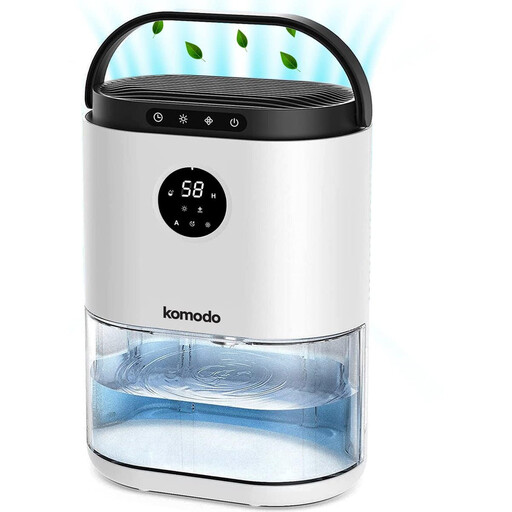
Komodo Small
For a localised damp problem, provided the stated extraction rate meets your needs.
Compressor dehumidifier; 800 ml extraction per day; automatic mode and hygrometer; automatic shut-off when the tank is full; sleep mode with a stated noise level of 32–34 dB.
Joybuy
 No image available
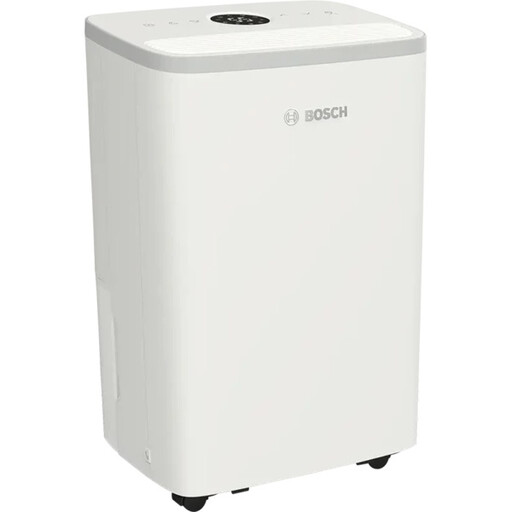
Bosch Dry 2000
For a room within the stated size range; the night and laundry modes may be useful, depending on how you plan to use it.
Up to 12 l/day; up to 55 m³; 2,5-l tank; 38 dB; two fan speeds and auto, night and laundry modes. The product description says a hose for continuous drainage is not included.
Joybuy
 No image available
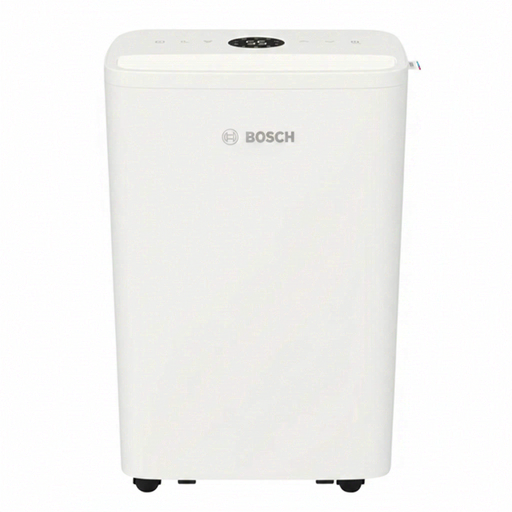
Bosch dehumidifier, 10 l/day
For rooms up to the stated size of 17 m²; the laundry mode may be useful if you regularly dry clothes indoors.
10 l/day; up to 17 m²; 2,5-l tank; 36 dB on the highest setting; night, laundry, defrost, continuous and automatic modes. A drain hose and full-tank indicator are listed.
Joybuy
 No image available
Bosch Dry 4000
For recurring damp in a room within the stated size range; automatic and laundry modes are listed as operating options.
Up to 16 l/day; up to 75 m³; 2,5-l tank; 40 dB; two fan speeds and auto, night and laundry modes. The product description says a hose for continuous drainage is not included.
Joybuy
Frequently asked questions
What humidity level should I measure before buying?
The Consumer Advice Centre gives a relative indoor humidity of around 40–60 % at approximately 18–22 °C as a guide, and recommends using a thermo-hygrometer. Temperature, the time of year and particularly cool patches on walls are all important when interpreting readings; a single measurement won’t automatically explain the cause of damp.
What should I do about visible mould instead of simply buying an appliance?
You need to find and deal with the cause of the damp; a dehumidifier won’t remove mould. For infestations covering more than half a square metre, the Consumer Advice Centre recommends getting professional help.
Can I put a dehumidifier right next to laundry or underneath furniture?
Follow the instructions for your specific appliance when choosing where to put it, and keep the air inlets and outlets clear. For example, the Meaco DD8L Junior manual requires space around the appliance and warns against water dripping onto it from laundry. These instructions don’t automatically apply to other models.
Is CE marking an independent quality seal for dehumidifying performance?
No. Under relevant EU regulations, the manufacturer uses the CE marking to declare that the product complies with applicable requirements. It isn’t an independent assessment of dehumidifying performance. The European Union points out that there is no central EU body that awards a CE certificate as a performance rating.
How should I dispose of an old electric dehumidifier?
In Germany, electrical appliances must not go in household waste. The Federal Environment Agency lists municipal recycling centres and suitable retail take-back points as disposal options.


