
Lieferung heute & morgen

Qualitätsgarantie

Willkommens-Angebote freischalten: KOSTENLOSE Lieferung | Bis zu 80 % RABATT | Kostenlose 30-Tage-JoyPlus-Testphase
App herunterladen
Condensation on windows, musty rooms and laundry that takes a long time to dry are all signs of high humidity. The right dehumidifier for your home can help reduce moisture in a room. However, models vary considerably in their dehumidifying capacity, noise levels, energy consumption and ease of use.
If you focus only on a high litres-per-day figure, you could end up buying a model that isn’t right for your room. Three common pitfalls are:
The figure in litres per 24 hours is useful for comparing models. You should also consider the room’s volume in cubic metres. A 10L dehumidifier, for example, is generally better suited to smaller rooms, while a 20L dehumidifier, or a 25L or 30L model, may be suitable for larger living areas, utility rooms or damp cellars.
Some manufacturers’ figures are based on conditions such as 30 °C and 80% relative humidity. In a cooler UK cellar, the actual amount of water collected may be lower. To choose the right model, consider not just the floor area but also the ceiling height, temperature and source of the moisture.
A dehumidifier with a humidistat measures relative humidity and can automatically adjust its operation when it reaches your chosen target level. That’s more practical for everyday use than a model that runs continuously at full power.
Useful features include:
A timer is no substitute for checking that the appliance is safe to use. Before switching it on, make sure the air inlet and outlet are clear. Place the unit on a flat, stable surface and keep it away from splashes.
A tank holding between 1.4 and 4.8 litres affects how often you’ll need to empty it. A smaller tank is often sufficient for occasional use in a bedroom. A dehumidifier for a cellar or a model used regularly to dry laundry will be more convenient with a drain hose or a larger tank.
For continuous drainage, the hose must slope downwards along its entire length. Also check whether the hose is included, as some models require you to buy one separately. Automatic shut-off when the tank is full remains an important safety feature, even on models with a drainage connection.
The models below have been matched to different situations based on objective specifications such as capacity, recommended room size, noise level, tank size and drainage options.
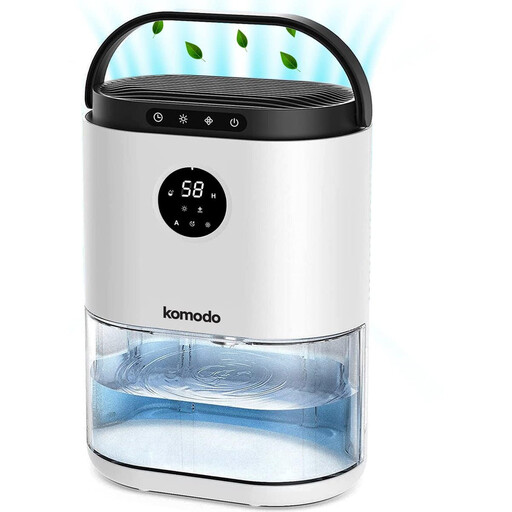
Why it suits this type of buyer: This compact model is rated for rooms up to around 30 m², making it suitable for individual rooms, small offices or occasional spikes in humidity.
The specifications include a tank-full shut-off, hygrometer, timer and three operating modes. This means you’re not limited to running it continuously without any controls.
According to the product specifications, it removes 800 ml of moisture per day, has a 2.3-litre tank, operates at 32–34 dB and uses 65 W of power.

Why it suits this type of buyer: Designed for living spaces up to 75 m³, this model offers automatic, night and laundry-drying modes, as well as the option of continuous drainage.
The recommended room size is given as a volume of 75 m³. You can also connect a drain hose if emptying the tank frequently would be inconvenient.
According to the product description, it removes up to 16 litres per day, operates at 40 dB, has a 2.5-litre tank and offers two fan speeds.
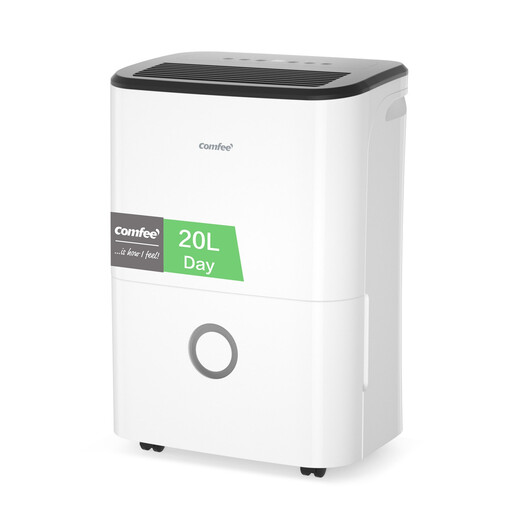
Why it suits this type of buyer: With a capacity of 20 litres per day and a recommended room volume of up to 100 m³, this model is designed for larger rooms, cellars and regular laundry drying.
The 3-litre tank can be complemented by a drainage connection. This means you won’t need to rely as much on emptying it by hand during longer periods of use.
According to the product specifications, it removes 20 litres per 24 hours and features a 46 dB noise level, LED display, timer and removable tank.
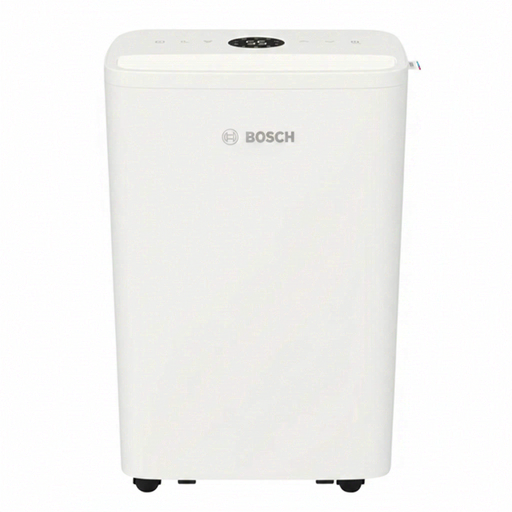
Why it suits this type of buyer: The specifications give a noise level of 36 dB on the highest setting and recommend it for rooms up to 17 m². This makes it worth considering for smaller bedrooms or home offices.
The noise rating is explicitly given for the highest setting. This helps you judge how it may compare with the setting you intend to use while sleeping.
According to the product description, it removes 10 litres per day and has a 2.5-litre tank, night and laundry-drying modes, and a drain hose.
An energy-efficient dehumidifier isn’t defined by a low wattage alone. Running time, room humidity and automatic controls also matter. A model with a humidistat can switch off the compressor once it reaches the target humidity. For a rough estimate, use:
Power consumption in kW × operating hours × electricity price = running costs
Clean the filter regularly, following the manufacturer’s instructions. A blocked airflow path can affect performance. Switch off the unit and empty the tank before moving it. Models that use R290 refrigerant must not be opened or have their refrigerant circuit altered, as the refrigerant is flammable.
A dehumidifier can reduce high humidity, but it won’t identify or fix the underlying cause. If water continues to get in, pipes are leaking or there are structural problems, have the cause assessed by a professional and make sure you ventilate the space as well.
We’ve put together a complete, regularly updated list of products that meet these strict selection criteria and fully comply with the safety regulations in force in the EU.
It depends on the room size, starting humidity and target level. A model with a humidistat can pause automatically. When drying laundry, people often use a dedicated mode that runs for longer.
A relative humidity of around 40 to 60 per cent is often used as a guide. Readings can vary depending on the sensor’s position and where it is in the room. A separate hygrometer can help you compare readings, but it should be positioned correctly too—not right next to a window, radiator or air outlet.
A dehumidifier can lower humidity in a room and reduce conditions that may encourage mould growth. However, it won’t remove existing mould or fix an underlying structural problem. If you see mould, notice damp damage or have recurring condensation, you’ll need to find and address the cause.