Measure humidity where the clothes are stored and find out what is causing persistent dampness. A dehumidifier is no substitute for adequate ventilation or fixing the source of a damp problem. For a normally heated shared space, a suitably sized compressor dehumidifier with humidity control may be a good choice. If the room really does stay cool, a desiccant dehumidifier specifically rated for those temperatures is an alternative. Noise in the intended operating mode, tank emptying or drainage, and room temperature are all important factors to consider.
Who this guide is for
People sharing a space where clothes are kept
You store clothes in a shared space and want to keep an eye on humidity where they are kept, rather than relying solely on smells or a high litres-per-day rating. The German Environment Agency recommends identifying and addressing the cause of dampness.
People sensitive to noise
You use the same room to spend time in, so you need to balance operating noise, where the unit is placed and how long it runs with its humidity control. Manufacturers’ noise ratings and operating modes can help guide you, but they don’t automatically tell you how loud a unit will seem where you place it.
People responsible for running the appliance
You empty the tank or arrange for condensate to drain away. Agree with the other users who will look after it, and set up the appliance according to the manufacturer’s instructions for that model.
What to look for when buying
Compressor dehumidifier
A good fit if: The room is normally heated and measured humidity remains a problem despite suitable ventilation.
Things to weigh up: Noise, electricity use and looking after the tank or drainage are all part of day-to-day use.
Desiccant dehumidifier
A good fit if: The room really does stay cool and the specific model is rated for that temperature.
Things to weigh up: Check the features of the specific appliance. Its type alone doesn’t prove it will perform better overall or deliver a particular drying rate.
| What matters |
What to check when buying |
Who it matters most to |
| Protecting the clothes where they are stored |
Measure humidity with a hygrometer in the relevant area and check for sources of dampness; compare humidity controls and manufacturer’s guidance for the room size. |
If I store clothes there, I want to measure humidity where they are kept and find out what is causing persistent dampness, rather than relying on smells or a litres-per-day rating. Around 40% of consumers prioritise protecting clothes where they are stored from damp. |
| Considering other people using the room |
Check the noise rating and operating mode, the space needed and the airflow; agree operating times with the other users. |
If I use the room to spend time in as well, I want to plan when the appliance runs so its noise doesn’t clash with how the room is being used. Around 25% of consumers prioritise being considerate of others in a shared space. |
| Maintenance and electricity use |
Check the tank, full-tank shut-off, drainage options and the specific model’s stated electrical power. |
If I can’t check regularly whether the tank is full, I need someone to be clearly responsible or a suitable drainage option. Around 18% of consumers prioritise manageable maintenance and electricity use. |
| Suitability for cool rooms |
Check the actual room temperature and compare it with the stated operating range of the specific model variant. |
If the room I use stays cool for long periods, I want to choose an appliance with a stated operating range that suits it. Around 17% of consumers prioritise suitability for low room temperatures. |
Avoiding common buying mistakes
-
Assuming the highest litres-per-day rating reflects performance in your room
Manufacturers may quote these figures under specific temperature and humidity conditions. For example, De’Longhi states that the DEX210SF removes 10 l/24 h at 30 °C and 80 % relative humidity; conditions in your shared space may be different.
Compare performance figures alongside the test conditions they’re based on, and take room size, temperature and measured humidity into account.
-
Dehumidifying the air when there’s a damp problem to fix
An appliance won’t automatically remove the cause of excess moisture. The German Environment Agency advises that the cause must be identified and addressed.
Check where the clothes are stored and look for possible sources of dampness. Don’t treat a dehumidifier as a remedy for damp damage; any existing damage may need to be dealt with professionally.
If the cause remains, the damp problem may persist too.
-
Not assigning anyone to empty the tank or manage drainage in a shared space
An overflow safeguard doesn’t remove the need for maintenance: once the tank is full, the appliance can’t keep dehumidifying indefinitely.
Agree who will empty the tank before you buy. Also check whether drainage can be routed safely and suitably from the intended location.
Brands and model ranges to consider
Bosch
The Dry range includes the Dry 4000, which Bosch rates for rooms up to around 75 m³ or 33 m².
- Bosch lists automatic humidity control, plus Night and Laundry modes, for the Dry 4000. Its stated dehumidification capacity is up to 16 l/day, and the manufacturer quotes 38 dB(A).
- These are manufacturer’s figures, not measurements taken in your specific shared space. An additional Dry Filter is available separately.
Meaco
The MeacoDry Arete One 12L is a compressor appliance for living spaces, which the manufacturer describes as both a dehumidifier and an air purifier.
- Meaco quotes 12 l/day and 38 dB(A) for this model.
- The rated figures don’t guarantee a particular level of performance or noise at your chosen location. The manufacturer’s room-size guidance assumes a ceiling height of 2.5 m.
Trotec
According to the manufacturer, the TTK 66 E is among other things intended for living spaces and has a hygrostat and a Laundry mode.
- Trotec quotes up to 24 l/24 h, a 3-l tank and adjustable target humidity from 35 to 85 % in 5-% increments.
- The maximum dehumidification figure isn’t a prediction of performance in a typical living space. Follow the operating instructions for placement and maintenance.
De’Longhi
The Tasciugo AriaDry DEX210SF is a compressor appliance with a laundry function and, according to the manufacturer, the option of continuous drainage.
- De’Longhi quotes 10 l/24 h at 30 °C and 80 % relative humidity, and 36 dB(A).
- The test conditions don’t necessarily match the temperature and humidity in a shared space.
eeese
The Thor desiccant dehumidifier is a possible alternative if a room is genuinely cool; the manufacturer says it can operate down to 0 °C.
- eeese quotes a maximum capacity of 8 l/day and automatic shut-off when the tank is full.
- Thor doesn’t have a stated clothes-drying mode. The product page gives different tank capacities of 2.0 and 2.5 l, so check the specific version before buying.
Dehumidifiers at Joybuy
The following Joybuy products include appliances with a laundry-drying mode, as well as portable models for smaller areas. Compare their stated room size and operating features with the conditions in your shared space.
 No image available
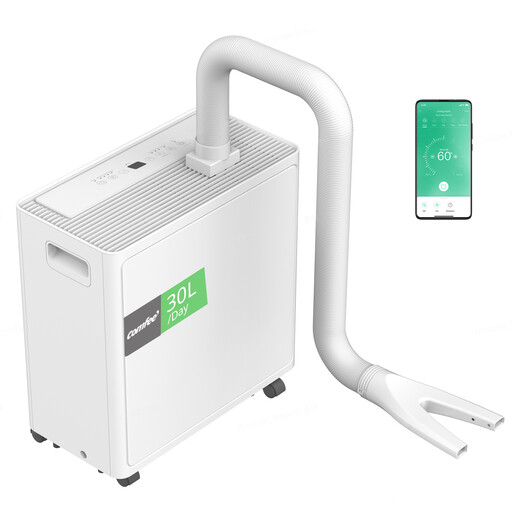
Comfee' MDDA-30DEN7-SD, 30 l/day
For a room where you need a laundry-drying mode as well as dehumidification.
Four operating modes; 3.2-l tank with overflow protection and continuous drainage. The stated room size is around 130 m³; the noise level is rated at 45.3–47 dB(A).
View at Joybuy
 No image available
Comfee MDDO-10DEN7, 10 l/day
For a smaller room where humidity control and a dedicated laundry-drying mode are useful.
2.5-l tank, Smart mode with a stated humidity range of 45–55 % and a separate Laundry-Drying mode. The stated room size is around 40 m³; Night mode and continuous drainage are also listed.
View at Joybuy
 No image available
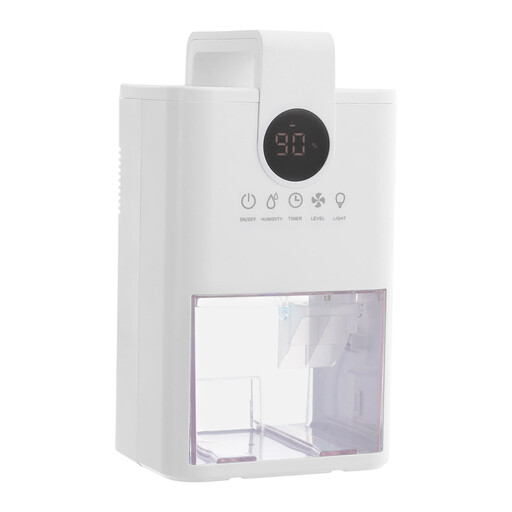
Portable dehumidifier, 200 ml/day
For smaller areas where a portable appliance with a humidity display is useful; the stated dehumidification capacity is 200 ml per day.
1-l tank with automatic shut-off when full, three fan speeds and a timer. The appliance stops when the tank is full.
View at Joybuy
 No image available
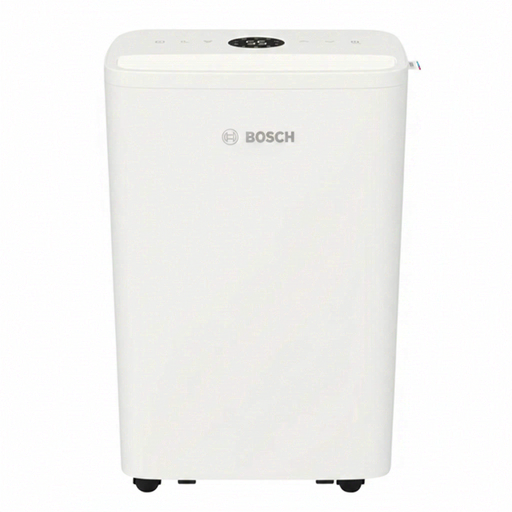
Bosch dehumidifier, 10 l/day, up to 17 m²
For a smaller room where you want to use a dedicated laundry-drying mode as well as dehumidification.
2.5-l tank, adjustable humidity range and Night mode. The description quotes 36 dB on the highest setting and includes a drainage hose; the stated room size is up to 17 m².
View at Joybuy
 No image available
Bosch Dry 4000, 16 l/day
For a room where you need automatic humidity control and a laundry-drying mode.
2.5-l tank with a full-tank warning and shut-off, plus continuous drainage. Product details state a room volume of up to 75 m³ and list Auto, Night and Laundry modes.
View at Joybuy
Frequently asked questions
What humidity level is a useful starting point for a room you spend time in?
The German Environment Agency gives 40 to 60 % relative humidity indoors as a guide to reducing the risk of mould. Use a hygrometer to measure humidity in the relevant area, and also take account of cold surfaces and the humidity where clothes are actually stored. This range isn’t a legal requirement for appliances.
Can a dehumidifier replace ventilation or repairs?
No. A dehumidifier is no substitute for adequate ventilation or identifying the cause of dampness. The German Environment Agency recommends finding and addressing the cause of excess moisture.
What should I bear in mind when setting up and maintaining a dehumidifier in a shared space?
Agree who will empty the tank, and follow the instructions for your specific model on placement, cleaning and safe operation. Continuous drainage is only helpful if the hose can be routed suitably from where the appliance is placed.
How should I factor in electricity use?
Take account of the electrical power for the operating mode you’ll use and how long the appliance will actually run. A maximum litres-per-day rating doesn’t tell you how much electricity it will use in a shared space.
What are the rules in Germany for electrical appliances and their disposal?
According to the European Commission, the manufacturer is responsible for conformity assessment and CE marking under the applicable EU requirements for a new electrical appliance placed on the market. The German Environment Agency says that end-of-life electrical appliances must not go in household waste. They should be taken to the appropriate separate collection point, such as a recycling centre or an authorised take-back point.


