After showering, first limit moisture by ventilating thoroughly and wiping down wet surfaces. Then check whether dampness persists in your conservatory. If you need a dehumidifier, its stated operating temperature must suit the actual temperature in the room: a suitable compressor dehumidifier may be an option for sufficiently warm rooms, while very cold rooms call for an adsorption model specifically rated for those conditions. If the shower is in the same room, make sure you have a safe place to position the appliance before buying.
Who might need a dehumidifier?
Anyone dealing with shower moisture on cold windows
If you notice recurring condensation after showering, first check whether thorough ventilation and wiping down wet surfaces reduce the moisture peak. The German Environment Agency recommends removing these moisture peaks immediately by ventilating.
Owners of an unheated conservatory
The actual measured room temperature is key: it must fall within the operating range of the specific appliance. Manufacturers’ claims about suitability for cold conditions apply to particular models.
Anyone planning to use a dehumidifier regularly
If dampness keeps returning, you’ll need an appliance that suits the room and a practical way to dispose of the water. The tank, any automatic shut-off and the drain should all suit how you plan to use it.
What should you look for when choosing one?
Start by ventilating and removing water from surfaces. If dampness persists, compare the measured temperature and room volume with the specifications for the specific model, and check how the condensate is disposed of.
| Your concern |
What to check before buying |
Who this matters most to |
| Moisture peaks after showering |
Compare humidity readings before and after ventilating with a hygrometer; check whether condensation keeps returning on the windows. |
If your first priority is to find out whether ventilation and wiping down wet surfaces are enough, the main concern is shower moisture. Around 36 % of consumers have this as their primary concern. |
| Suitability for a cold conservatory |
Measure the minimum temperature where you plan to position the appliance and compare it with the operating range of the specific model variant. |
If you use your conservatory during colder months, you need an appliance with a stated temperature range that suits the conditions. Around 29 % of consumers prioritise suitability for cold conditions. |
| Regular use and water disposal |
Check the tank capacity, whether the appliance switches off when the tank is full, the drain connection and whether a hose is included. |
If you plan to run the appliance frequently, easy emptying and suitable controls matter. Around 21 % of consumers have this as their main concern. |
| A safe position near the shower |
Consider the shower’s location and the splash zone; check the instruction manual and the position of the socket. |
If the shower is in the same room, you’ll need to identify a suitable, dry position before buying. Around 14 % of consumers prioritise where to place the appliance. |
Common selection mistakes
-
Assuming the stated daily capacity will apply in your conservatory
Manufacturers’ maximum dehumidification figures don’t automatically apply at the temperature and humidity levels in your room.
Compare the specific model’s operating range and the conditions used for its performance rating with the readings where you plan to position it.
Under different conditions, it may need to run for longer than expected.
-
Comparing only the tank capacity or the hose connection
Emptying the tank and using a continuous drain meet different everyday needs. A drain connection doesn’t necessarily mean a hose is included.
Check the tank shut-off, drainage route and what’s included separately.
If a suitable hose isn’t included, you may need to buy additional accessories for continuous drainage.
-
Relying on a dehumidifier instead of investigating the cause
Recurring condensation or mould can also be linked to ventilation and structural issues.
Reduce the amount of steam entering the room, ventilate and get any problem areas checked rather than relying on an appliance alone.
Relevant brands at a glance
Bosch
Compressor dehumidifiers for rooms of different sizes; suitability depends on the conditions where the appliance is positioned and on the specific model.
- Bosch states that the Dry 4000 can remove up to 16 l per day and is suitable for a room volume of around 75 m³. It has automatic humidistat control, a 2,5-l tank and the option of hose drainage.
- Compare these manufacturer’s specifications with your room temperature and volume. The maximum capacity isn’t a guarantee of performance in every conservatory.
Meaco
The range includes compressor and adsorption models, including appliances designed for lower temperatures.
- Meaco states that its listed DD8L adsorption models operate from 0 °C.
- The temperature rating applies to the specific model range. Check the details of the exact appliance and make sure its operation suits your needs.
Trotec
The TTK 66 E is a compressor dehumidifier for rooms within its stated operating range.
- Trotec states that the TTK 66 E operates at 5–32 °C, covers up to 50 m² or 125 m³, has a 3-l tank and can remove up to 24 l per 24 hours.
- Performance and suitability depend on the actual conditions. The manufacturer’s specifications alone can’t predict how quickly a conservatory will dry out.
Stadler Form
The Lukas compressor dehumidifier offers features for buyers looking for controls and a way to drain the water.
- Stadler Form states that Lukas operates down to 5 °C, removes up to 20 l per day and comes with a drainage hose.
- These specifications apply to Lukas and don’t necessarily apply to other appliances from the brand. Check that its operating conditions suit your conservatory.
Dehumidifiers at Joybuy
This selection is for households looking to manage dampness in their conservatory when it persists after ventilating.
 No image available
Bosch Dry 4000
For recurring dampness, the stated room size and water drainage are worth considering when choosing an appliance.
Up to 16 l per day; stated room volume up to 75 m³; 2,5-l tank. The drain hose is not included.
View at Joybuy
 No image available
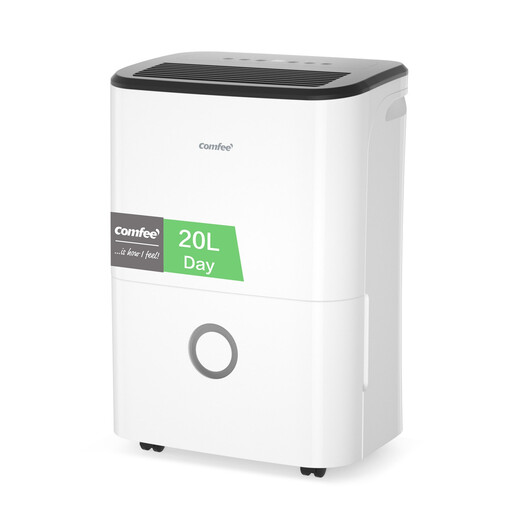
Comfee' MDDF-20DEN7
If you’ll be using it regularly, factor the tank and the option of continuous drainage into your decision.
Up to 20 l per day; 3-l tank; stated room volume around 100 m³. The hose for continuous drainage is not included.
View at Joybuy
 No image available
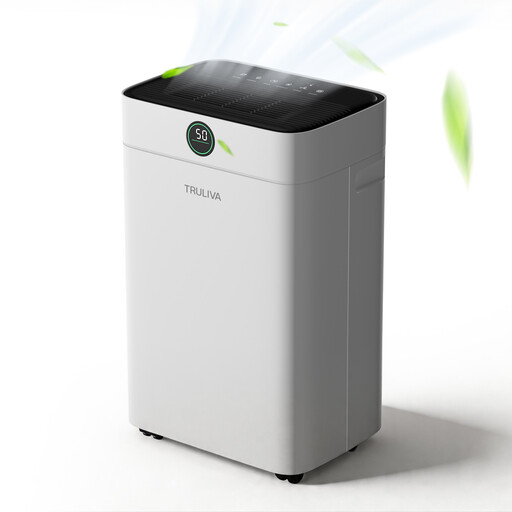
TRULIVA 25L/Day Dehumidifier
The tank and hose drainage are worth considering if the appliance will be collecting water regularly.
Up to 25 l per day at 90 % relative humidity and 95 °F; 2,8-l tank; a drain hose is listed as included.
View at Joybuy
 No image available
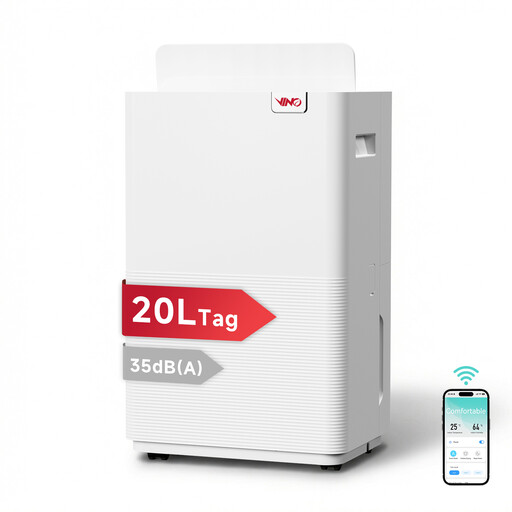
VINO 20L Smart Dehumidifier
The stated temperature range and the conditions behind the performance rating should suit your conservatory.
Operating range 5–32 °C; up to 20 l per day at 30 °C and 80 % relative humidity; 2,5-l tank.
View at Joybuy
 No image available
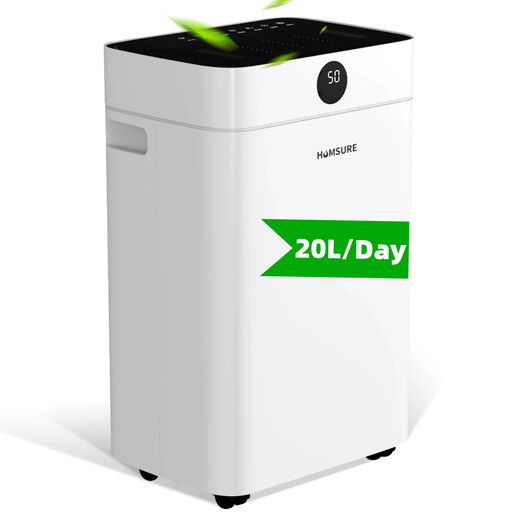
HUMSURE 20L/Day Dehumidifier
If you’ll be using it more often, the tank, target humidity and option of continuous drainage may all matter.
Up to 20 l per day at 86 °F and 80 % relative humidity; stated room size up to 50 m²; 2,8-l tank. A drain hose is listed as included.
View at Joybuy
Frequently asked questions
Is ventilating after showering enough, or do you need a dehumidifier?
Ventilating should be your first step: the German Environment Agency recommends removing moisture peaks immediately by opening the windows wide. You can assess whether you also need an appliance by checking whether dampness keeps returning and how the hygrometer readings change.
Which dehumidifier is suitable for a cold conservatory?
The key question is whether the actual temperature where you plan to position the appliance falls within the stated operating range of the specific model. Meaco states that its listed DD8L adsorption models operate from 0 °C; Trotec gives the TTK 66 E compressor dehumidifier an operating range of 5–32 °C. Compare these specifications with the measured temperature and the exact model variant.
Can you put a portable dehumidifier right next to the shower?
Not necessarily: the position and electrical installation must be suitable for your specific situation. The VDE explicitly advises keeping electrical appliances away from showers and baths. A general statement that an appliance is suitable for a room doesn’t mean it’s approved for use in the splash zone.
How do you dispose of the water collected by a dehumidifier?
You can empty the tank as instructed in the manual or set up hose drainage if the model supports it. Before buying, check whether a hose is actually included and whether you can arrange a suitable drainage route.


