A dehumidifier can help if indoor humidity is repeatedly high, but it won’t replace ventilation or investigating possible building damage. First, measure the humidity and room temperature. If a dehumidifier still seems useful, compare the room size it’s designed for, its noise level in the mode you’ll actually use and its power consumption.
Who might benefit from a dehumidifier?
Students who regularly find condensation on their windows
If condensation keeps appearing, it’s important to distinguish between indoor humidity, ventilation and possible structural causes. The Verbraucherzentrale recommends checking humidity with a thermo-hygrometer, while the Umweltbundesamt advises airing rooms by opening the windows wide for a short time.
Students who sleep in the same room
If you plan to run the dehumidifier at night, consider its noise level and display lighting in the mode you’ll use. Manufacturers’ noise ratings and night-mode features relate to specific models, so compare them like for like.
Students keeping an eye on running costs
If you’ll be using the appliance regularly, consider its power consumption, how long it will actually run and how often you’ll need to empty it. Trotec and Stadler Form publish power and tank specifications for specific models, but these figures alone won’t tell you what your electricity bill will be.
What should you look for when choosing one?
First, check whether ventilation and investigating the cause will be enough. The Umweltbundesamt recommends airing the bedroom by opening the windows wide before bed and in the morning, while the Verbraucherzentrale advises checking humidity with a thermo-hygrometer.
| Concern |
What to look for |
Who is this important to? |
| Condensation and its cause |
Measure room temperature and relative humidity; consider ventilation and any signs of damp beyond the window pane. |
If water regularly collects on my window, I want to find out first whether indoor humidity, ventilation or possible building damage is a factor. Around 36% of consumers say recurring condensation is their top priority when buying. |
| A peaceful night’s sleep |
Compare the noise rating for the relevant operating mode; check for a night mode and dimmable display. |
If I run the appliance in my bedroom, I want to know how loud the specific mode is and whether I can dim the display. Around 29% of consumers put a peaceful night’s sleep first. |
| Ongoing electricity costs |
Consider power consumption in watts and expected running time; calculate energy use in kWh using watts × operating hours ÷ 1000. |
If I use the appliance often, I want to estimate its electricity use based on how long I actually run it. Around 21% of consumers say ongoing costs are their top priority when buying. |
| Drying laundry in the room |
Check whether it has a laundry mode; consider tank capacity and operating noise. |
If I regularly dry laundry in my room, I want to factor in the extra moisture and the need to run the appliance. Around 14% of consumers prioritise drying laundry in their room. |
Common mistakes when choosing
-
Assuming a dehumidifier alone will solve condensation
High indoor humidity, poor air circulation and moisture caused by building damage can all have different causes. An appliance won’t fix structural damage or replace ventilation.
Measure the humidity, heat and ventilate appropriately, and investigate the cause if you notice further signs of building damage.
-
Assuming a mini dehumidifier is the same as a room-sized model
Trotec rates its TTP 10 E Peltier dehumidifier for areas of up to 10 m² and a capacity of 750 ml per day. Figures for larger appliances relate to different models and aren’t the result of a direct comparative test.
Compare the technology, stated room size and dehumidification capacity. A manufacturer’s maximum figures don’t guarantee how much water the appliance will actually collect in your room.
If the appliance isn’t powerful enough for the room, you may need another model with a more suitable capacity.
-
Comparing noise ratings without checking the operating mode
A single noise rating doesn’t necessarily describe every setting. Bosch rates the Dry 4000 at 38 dB(A), while the product listing at Joybuy states 40 dB; the measurement and operating conditions aren’t specified in the same way.
Check the specifications and operating modes for the exact model. Don’t assume the quietest mode will also provide the level of dehumidification you need.
Brands and model ranges to consider
Bosch
The Dry range includes models for rooms of different sizes. Bosch rates the Dry 1000 for up to 17 m², the Dry 2000 for up to 24 m² and the Dry 4000 for around 33 m².
- Bosch lists automatic operation with a humidistat, night and laundry modes, and a 2,5-l tank for the Dry 4000.
- Bosch rates the Dry 4000 at 38 dB(A), while the product listing at Joybuy states 40 dB. Check the figures and operating mode for the specific version.
Trotec
The range includes larger compressor dehumidifiers such as the TTK 66 E, as well as compact Peltier models such as the TTP 10 E.
- Trotec rates the TTK 66 E at up to 24 l/24 h for areas of up to 50 m², with a 3-l tank. The manufacturer rates the TTP 10 E for areas of up to 10 m² and a capacity of 750 ml per day.
- These are maximum ratings for different models, not a performance comparison measured under the same conditions. Check that the appliance is suitable for your room size and circumstances.
Stadler Form
Lukas little is a compressor model with target humidity control, plus night and laundry modes.
- Stadler Form lists a capacity of 10 l per day, a 3-l tank, 220 W and a noise range of 34–43 dB(A). In night mode, the appliance runs on setting 1 and dims its LEDs.
- The noise range shows that the lowest figure doesn’t represent the appliance’s noise level in every setting. These are manufacturer’s figures, not independent measurements.
Meaco
Meaco offers compressor and desiccant models. According to Meaco Deutschland, its compressor models can be used from 10 °C, while its desiccant models can be used from 0 °C.
- Meaco rates the Arete One 12L at 12 l per day and 38 dB(A).
- When choosing, check the stated room size for the specific model and the assumed ceiling height. Noise and running costs also vary by model.
Dehumidifiers for living spaces at Joybuy
The dehumidifiers below are described for different living-space needs. Compare the stated room size, features and noise rating with your room and the operating mode you plan to use.
 No image available
Comfee' MDDO-10DEN7
The stated night and automatic functions may be useful if you plan to run the appliance in a room you use regularly.
10 l/day; rated for rooms up to around 40 m³ (16 m²). Smart mode with 45–55 % humidity, sleep and laundry modes, a 2,5-l tank and a 24-hour timer.
View at Joybuy
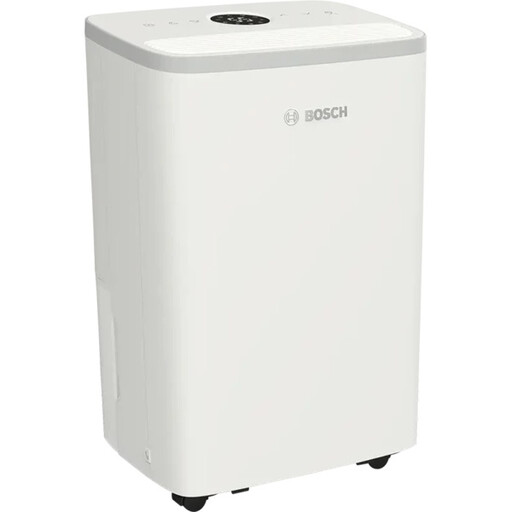 No image available
Bosch Dry 2000
The stated room size can help you compare the appliance with the dimensions and ceiling height of your student room.
Up to 12 l/day; rated for rooms up to 55 m³. 2,5-l tank, 38 dB, two fan speeds, plus auto, night and laundry modes.
View at Joybuy
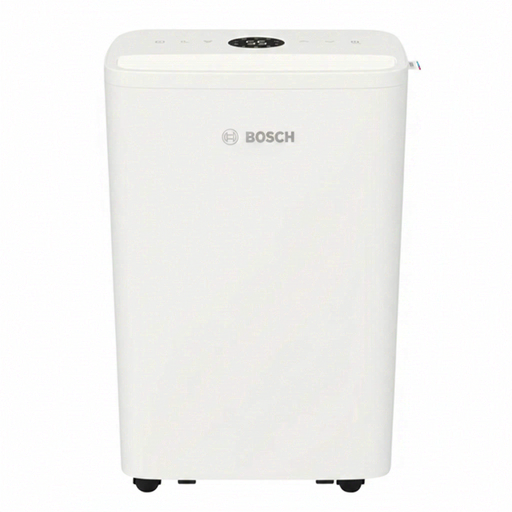 No image available
Bosch dehumidifier, 10 l/day
The stated suitability for rooms up to 17 m² gives you a size guide to compare with your room.
10 l/day; 2,5-l tank, two fan speeds, plus night, laundry and automatic modes. The product listing states 36 dB.
View at Joybuy
 No image available
Bosch Dry 4000
The stated night and laundry modes may be useful if you use the same room for both living and sleeping.
Up to 16 l/day; rated for rooms up to 75 m³. 2,5-l tank, 40 dB, two fan speeds, plus auto, night and laundry modes.
View at Joybuy
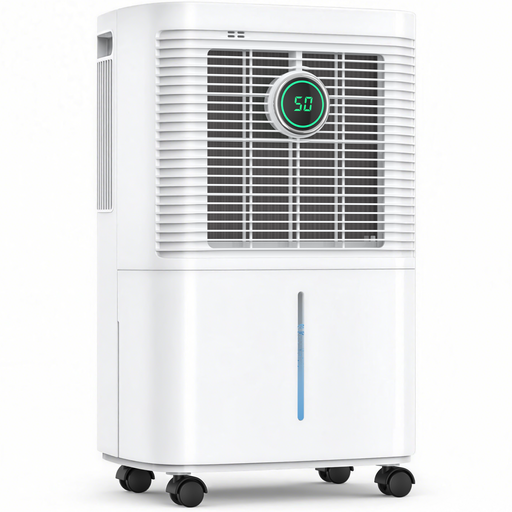 No image available
Ateroll dehumidifier, 16 l/day
Automatic humidity control and the stated sleep mode are features to consider for a room you use regularly.
Compressor dehumidifier with a capacity of up to 16 l/day, automatic humidity control, laundry mode and automatic defrosting. The sleep mode is rated at 36 dB.
View at Joybuy
Frequently asked questions
What humidity level should I monitor in my room?
The Verbraucherzentrale recommends a relative humidity of around 40–60 % for a comfortable indoor climate and suggests using a thermo-hygrometer. The reading alone won’t explain why a window is wet or rule out possible building damage.
When should I ventilate if there’s water on the window in the morning?
For bedrooms, the Umweltbundesamt recommends airing the room thoroughly by opening the windows wide before bed and again in the morning after getting up. If damp persists despite heating and ventilating appropriately, or you notice other signs of damage, investigate the cause.
Where should I put a dehumidifier with a water tank, and what should I watch out for?
Follow the instructions for your chosen model and keep the air inlet and outlet clear. Check how to remove and empty the tank; the Bosch Dry 4000 and Stadler Form Lukas little are both stated to switch off when the tank is full.
How can I estimate electricity use?
Multiply the power consumption in watts by the actual number of operating hours, then divide by 1000 to work out energy use in kWh. You can calculate the cost once you know your price per kWh; a wattage figure alone won’t tell you your monthly bill.
How noisy is a dehumidifier at night?
It depends on the specific model and operating mode. Compare the noise rating for the relevant mode and check whether the appliance has a night mode and dimmable display. Figures from different manufacturers aren’t necessarily measured under the same conditions.


