If you regularly dry laundry in your student room, choose a dehumidifier to suit the room size, temperature and humidity, then compare its laundry mode, operating noise, power consumption and tank handling. The German Environment Agency recommends ventilating more when drying laundry indoors. A dehumidifier does not replace ventilation or investigating the cause of persistent damp. A manufacturer's stated capacity in litres per day does not guarantee a particular drying time for your laundry.
Who might benefit from a dehumidifier?
People who dry laundry in their room
If there’s no practical place to dry laundry outside your room, choosing a suitable room size and a clear way to control humidity matters more than a marketing promise about drying speed. In this situation, the German Environment Agency also recommends ventilating more. Bosch Home Comfort lists a laundry mode on selected models.
Light sleepers who study and sleep in the same room
If you study and sleep in your room, consider noise figures alongside the relevant operating mode: a night mode doesn’t automatically tell you how noisy the laundry mode is. Bosch Home Comfort and Meaco describe different modes for their respective models.
People weighing up cost and space
If you need to balance floor space, electricity use and emptying the tank, check the specific model’s dimensions, tank details and power consumption. Bosch Home Comfort and Pro Breeze publish these details for selected appliances.
What to look for when buying
The German Environment Agency recommends ventilating more when drying laundry indoors. Treat a dehumidifier as an additional measure, and choose one to suit your room, how you’ll use it and where you can put it.
| What matters when buying |
What to check |
Who will find this most important? |
| Humidity when drying laundry |
Compare the room size and temperature, laundry mode and conditions used to measure the stated dehumidifying capacity. |
If I dry laundry in my only room, I want an appliance that suits the space and the amount of moisture. Around 33% of consumers put humidity control first when drying laundry. |
| Noise while studying and sleeping |
Check the noise figure and the operating mode it refers to; don’t assume night mode and laundry mode are the same. |
If you study and sleep in the same room, you’ll want to know whether the noise figure also applies when using the appliance with laundry. Around 27% of consumers prioritise a tolerable operating noise level. |
| Ongoing electricity use |
Consider the specific model’s power consumption and how long you expect to run it. |
If the appliance will be running regularly, I want to factor its electricity use into my ongoing costs. Around 20% of consumers give this priority. |
| Floor space and tank handling |
Check the appliance’s dimensions, tank capacity and accessibility. Plan to use a drain hose only if there’s a suitable drain and a safe route for the hose. |
If space is limited, I want to position the appliance and clothes airer sensibly, and be able to reach the tank easily. Around 20% of consumers focus first on space and ease of use. |
Common buying misconceptions
-
Assuming litres per day means a guaranteed drying time
The stated daily capacity doesn’t guarantee how long it will take to dry a particular load of laundry. Room size, temperature and usage all affect how well a model suits your situation.
Check the room size and temperature, the amount of laundry and the operating modes. Don’t convert a daily capacity figure into hours per load.
-
Assuming the night-mode noise figure also applies to laundry mode
Manufacturers distinguish between operating modes. A noise figure without its corresponding mode doesn’t reliably tell you how loud the appliance will be when drying laundry.
Check which mode a dB(A) figure refers to, and whether it’s relevant to how you plan to use the appliance.
-
Assuming passive moisture absorber granules are equivalent to a laundry mode
Humydry describes granules and compatible refills, but doesn’t state a daily capacity for a load of laundry that can be compared with electric appliances.
Consider passive systems as a separate option for localised damp, not as a proven replacement for an electric laundry mode.
Refills mean you’ll need to buy replacement material regularly.
-
Planning to use a drain hose without a suitable drain
A hose connection alone doesn’t mean there’s a suitable drain where you plan to position the appliance, or that the hose can be routed safely.
If there’s no suitable drain, pay particular attention to tank access and the full-tank shut-off feature. Check the hose route against the instructions for your specific model.
Brands for different needs
Bosch
Bosch Home Comfort offers electric compressor dehumidifiers in the Dry range, with different stated room sizes.
- For the Dry 1000 and Dry 2000, Bosch Home Comfort lists night and laundry modes, as well as a 2,5-l tank.
- The manufacturer’s room size and capacity figures don’t replace checking how well the appliance suits your room; they don’t guarantee a particular laundry drying time.
Meaco
Meaco offers compressor models such as the Arete Two 12L, as well as separate desiccant models in the DD8L range.
- Meaco describes additional fan and timer functions for drying laundry with the Arete Two 12L.
- Suitability and operating details are specific to each model; temperature details for a DD8L model don’t apply to the Arete Two.
Trotec
According to Trotec, the TTK 33 E is a compressor dehumidifier for rooms up to 15 m².
- For this model, Trotec lists a hose connection, automatic humidity control and a 1,5-l tank.
- The manufacturer’s 43 dB(A) figure refers to the highest fan setting. Take the small tank and the specific operating mode into account when comparing models.
Pro Breeze
According to the manufacturer, the OmniDry 20L is an electric compressor dehumidifier with a laundry mode and app control.
- For this model, Pro Breeze lists coverage of up to 30 m², a 4-l tank and dimensions of 30,5 × 24 × 49,5 cm.
- These manufacturer figures don’t prove that laundry will dry faster or that running costs will be lower in a student room.
Humydry
Humydry offers passive granule systems for controlling damp in specific areas as an alternative to electric appliances.
- The manufacturer describes compatible 450-g refills and a collection container.
- According to the product details, refills must not be used without the appliance designed for them. Comparable performance when drying laundry hasn’t been demonstrated.
Joybuy products for drying laundry indoors
This selection features electric dehumidifiers with a stated laundry or drying mode for use in a room. Compare their stated room coverage and features with the space you have and how you plan to use the appliance.
 No image available
Comfee MDDO-10DEN7, 10 l/day, 2,5-l tank
The stated laundry mode is useful if you dry laundry in your room.
The product name lists 10 l/day, a 2,5-l tank, three modes and a 24-hour timer.
The stated room size is around 16 m².
View at Joybuy
 No image available
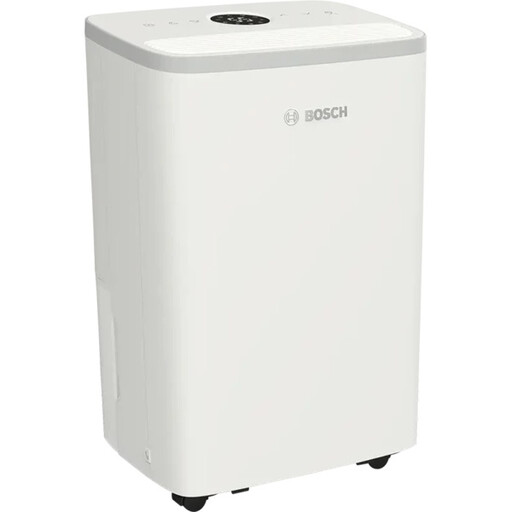
Bosch Dry 2000, 12 l/day, 2,5-l tank
The stated laundry mode is suited to drying laundry in your room.
The product name lists 12 l/day, room volume of up to 55 m³, a 2,5-l tank and 38 dB.
Auto, night and laundry modes are listed. According to the product description, continuous drainage requires a hose, which isn’t included.
View at Joybuy
 No image available
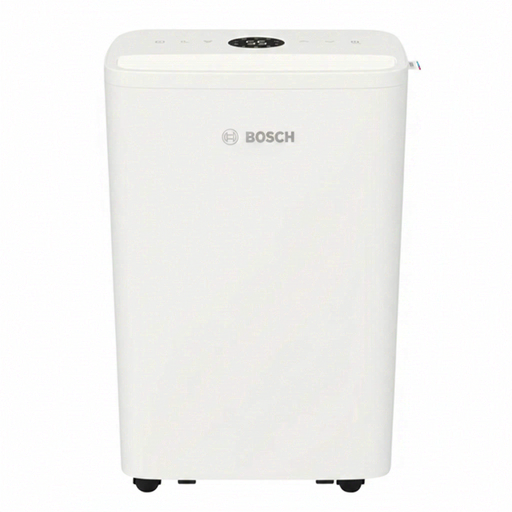
Bosch dehumidifier, 10 l/day, up to 17 m²
The stated laundry mode is useful if you dry laundry in your room.
The product name lists 10 l/day, coverage of up to 17 m², a 2,5-l tank and two fan speeds.
Night, laundry, defrost, continuous and automatic modes are listed.
View at Joybuy
 No image available
Bosch Dry 4000, 16 l/day, 2,5-l tank
The stated laundry mode is useful if you dry laundry in your room. Check the stated room coverage against your actual needs.
The product name lists 16 l/day, room volume of up to 75 m³, a 2,5-l tank and 40 dB.
Auto, night and laundry modes are listed. According to the product description, continuous drainage requires a hose, which isn’t included.
View at Joybuy
 No image available
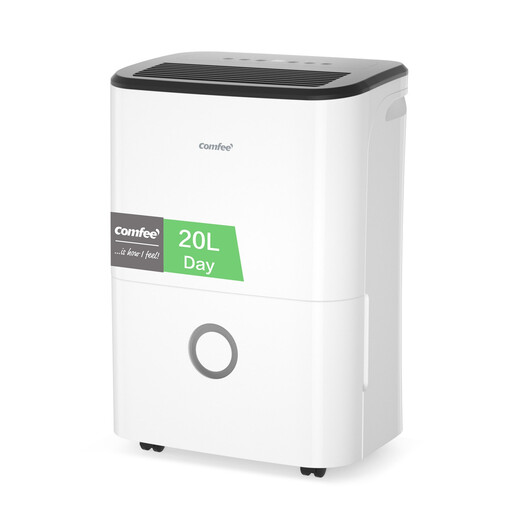
Comfee MDDF-20DEN7, 20 l/day, 3-l tank
The stated drying mode is suited to drying laundry in your room.
The product name lists 20 l/day, a removable 3-l tank and a 24-hour timer.
The stated room size is around 100 m³ (40 m²). According to the product description, continuous drainage requires a drain hose, which isn’t included.
View at Joybuy
Frequently asked questions
Should I keep ventilating while drying laundry?
Yes. The German Environment Agency recommends avoiding drying laundry indoors where possible. If you do dry it indoors, ventilate more. To monitor indoor humidity, it recommends using a hygrometer and gives 40–60 % relative humidity as a range for reducing the risk of mould. This is a recommendation, not a statutory requirement for appliances.
How noisy is a dehumidifier when drying laundry?
It depends on the specific model and operating mode. Only compare noise figures if they refer to the mode that matters to you; a figure for night mode can’t automatically be applied to laundry mode.
What does the litres-per-day figure tell me about drying my laundry?
It doesn’t guarantee a drying time for a load of laundry. When choosing an appliance, consider the room size and temperature, and the conditions behind the manufacturer’s figure, rather than converting daily capacity into hours.
Where should I place the appliance next to the clothes airer?
Follow the instructions for your specific model on stable positioning, airflow and clearances. For example, the instructions for the Trotec TTK 33 E say to place it upright on a stable surface. These model-specific instructions don’t automatically apply to other appliances.
What should I do if damp persists despite ventilating and using a dehumidifier?
Don’t assume that a litres-per-day figure means the appliance will fix the cause. The German Environment Agency highlights the need to address the source of damp. If it keeps returning or you can see mould, investigate the cause rather than simply choosing a more powerful appliance.


