
Lieferung heute & morgen

Qualitätsgarantie

Willkommens-Angebote freischalten: KOSTENLOSE Lieferung | Bis zu 80 % RABATT | Kostenlose 30-Tage-JoyPlus-Testphase
App herunterladen
Solar garden lights can mark out paths, highlight flower beds or provide lighting on your patio or balcony without needing a mains connection. However, garden solar lights vary considerably in their IP rating, battery capacity, brightness and installation requirements. A decorative solar garden light that works reliably after a sunny afternoon may not last as long in cloudy weather or during winter.
If you choose lights based only on their design or number of LEDs, you could overlook important details. The following points will help you make sense of marketing claims and find the right outdoor lighting for your space.
Claims such as ‘up to 12 hours’ usually refer to fully charged batteries and favourable charging conditions. Shade from house walls, trees or tall hedges reduces the energy available. In autumn and winter, there are also fewer hours of sunshine in Germany.
So check:
The level of protection is shown by the IP rating. An IP44 rating means the product is protected against solid objects 1 mm or larger and splashing water. This rating is often suitable for sheltered patios, balconies and flower beds, but it does not mean the light can withstand standing water for long periods.
IP65 offers greater protection against dust and water jets. However, an IP65 solar light must not be submerged. The requirements for a light fitted under a roof overhang are therefore different from those for a freestanding light in the lawn.
The number of LEDs alone tells you little about a light’s actual brightness. Lumens, colour temperature and beam angle are more useful indicators. A decorative string light is usually intended to create a pleasant atmosphere, while a path light should provide more even illumination to help you find your way.
Also check whether the light is warm white, neutral white, daylight white or an RGB solar light. RGB lighting is best suited to decorative accents, rather than clearly illuminating steps or paths.
Lumens (lm) measure the total light output. A higher figure can mean greater brightness, but the perceived illumination also depends on the beam angle and where the light is installed. A light with a 120° beam spreads its light differently from a narrowly focused spotlight.
Decorative solar garden lights often need only a low light output. For paths, entrances or larger patios, check the manufacturer’s stated light output and choose a suitable mounting height.
Lithium batteries offer high capacity in suitable products. For example, the Aigostar Smart Solar Globe Pendant Light is listed with an 8-Ah LiFePO4 battery, a 10-W monocrystalline solar panel and a light output of up to 350 lumens. According to the product description, it can run for up to 24 hours in suitable conditions.
Compact solar garden spike lights, on the other hand, often use smaller Ni-MH batteries. The Aigostar Solar Ground Spike Light, for example, is listed with a charging time of 4 to 6 hours and a running time of 8 to 12 hours. These figures are useful when planning, but actual performance depends on sunlight, temperature and how clean the panel is.
Solar garden spike lights are suitable for lawns and soft ground. Hanging lights, portable USB lights and solar string lights are more flexible options for patios and balconies. Before buying, check:
During frosty spells or extended periods of bad weather, it may be worth storing portable lights somewhere sheltered. Wooden and glass lanterns are not necessarily suitable for permanent outdoor use either.
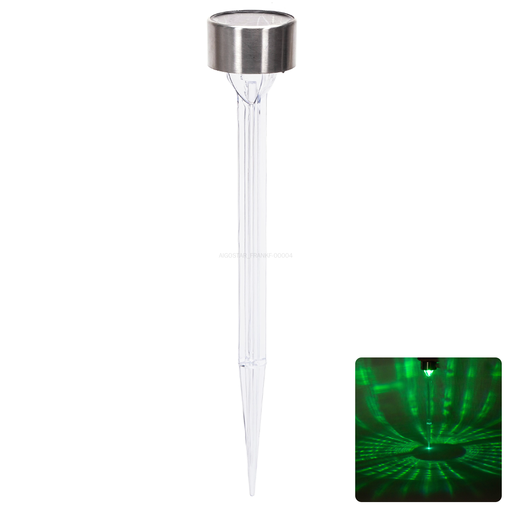
Why this product suits this need: The ground spike can be pushed into soft earth without needing a mains connection. Its RGB lighting and compact design make it suitable for flower beds, paths and smaller outdoor spaces.
The product details specify the charging time, battery type, IP44 rating and a running time of 8 to 12 hours. This makes it easier to set realistic expectations for decorative lighting.
RGB lighting, stainless steel look, ground spike installation and a stated charging time of 4 to 6 hours.
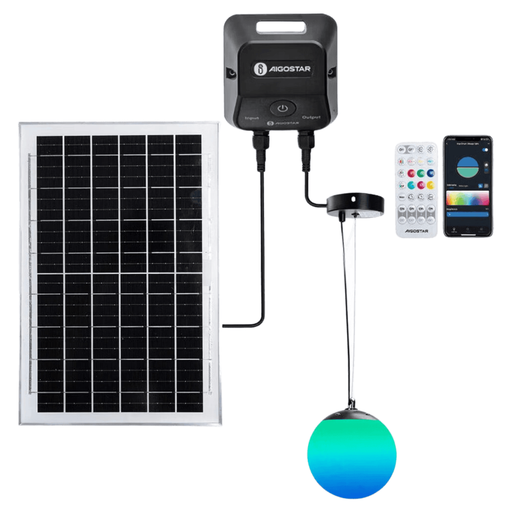
Why this product suits this need: This light combines solar power with app control, scheduling and adjustable brightness. It’s suited to larger patios and gardens, as well as installations with several compatible lights.
The specifications state 350 lumens, a 120° beam angle, an IP65 rating and a temperature range of -10 °C to 50 °C. However, the light is not designed to be submerged.
10-W solar panel, 8-Ah LiFePO4 battery and Bluetooth Mesh support for more than 200 devices, according to the product description.
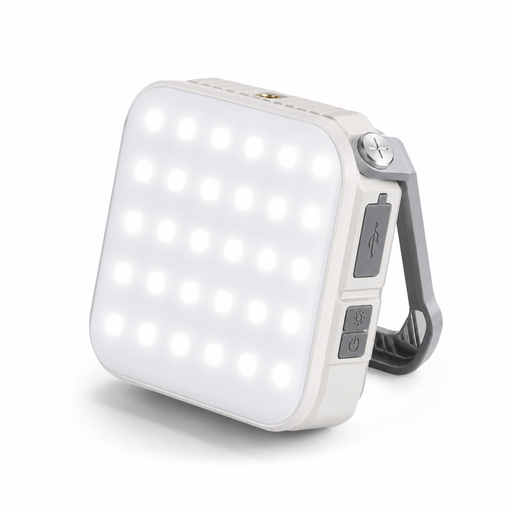
Why this product suits this need: For camping, gardening or power cuts, this portable light offers several ways to power and use it. It can stand on a surface, be hung up or charged via USB-C.
The lamp does not rely solely on sunlight: USB-C offers an additional charging option. Its IPX4 rating indicates protection against splashing water, not complete waterproofing.
800 lumens, three brightness settings, four colour temperatures and a 4,000-mAh battery with power bank function, according to the product details.
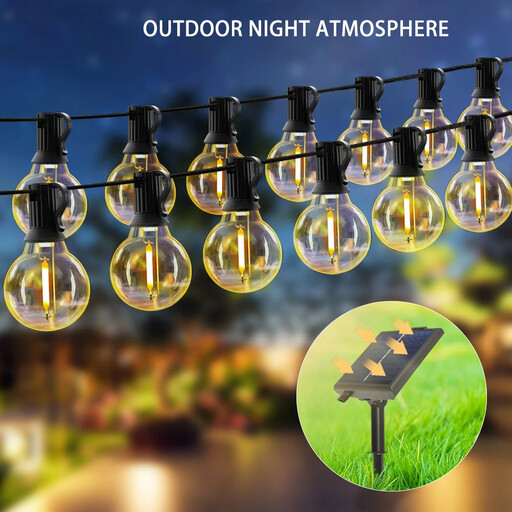
Why this product suits this need: This 18-metre solar string light is ideal for pergolas, balconies, fences and patios when you want decorative lighting over a larger area.
The product description gives the length, number of LEDs, dimming function and IP65 rating. This makes it easier to check whether the string light suits your installation area and the level of brightness you want.
30 LEDs, warm white light at 2700 K, dimming function and IP65 rating, according to the supplier.
We’ve put together a complete, regularly updated list of products that meet these strict selection criteria and fully comply with the safety regulations in force in the EU.
To help your solar garden lights retain their intended performance for as long as possible, clean the panel regularly with a soft, slightly damp cloth. Position it where it will receive as many hours of direct sunlight as possible. Keep it away from areas that are in permanent shade, and check that the ground is soft enough but stable before inserting the stake.
For lights with batteries, follow the manufacturer’s safety guidance. At the end of their useful life, batteries should not go in household waste; take them to the designated battery collection points instead.
The solar panel should be free from shade and angled upwards if possible. Remove any protective film and charge the battery before first use, following the product instructions. For lights with ground spikes, make sure the spike is straight and firmly secured in the ground.
Running time depends on battery capacity, hours of sunshine, temperature, dirt on the panel and the brightness setting. Manufacturer claims of 6, 8 or 12 hours should therefore be treated as estimates for specific conditions. Cleaning the panel regularly helps it charge consistently.
A solar-only light does not need to be connected to the mains while in use. However, you may incur costs for the initial purchase, battery replacements or spare parts. Hybrid and USB lights can also be charged from the mains when there is not enough sunlight.