
Lieferung heute & morgen

Qualitätsgarantie

Willkommens-Angebote freischalten: KOSTENLOSE Lieferung | Bis zu 80 % RABATT | Kostenlose 30-Tage-JoyPlus-Testphase
App herunterladen
By Joybuy Product Recommendation Officer, August 28, 2026
A high-end coffee machine is an investment in your daily enjoyment. But over time, limescale deposits become noticeable: the coffee tastes watery, the machine gets louder, or it displays an error message. Proper maintenance is crucial, but the market for cleaning products is overwhelming. Before you reach for the wrong product, you should know the most common and costly mistakes that many owners of bean-to-cup and espresso machines make.
Choosing the right product to descale your coffee machine is less about the brand and more about understanding your appliance's technology. Many well-intentioned pieces of advice and supposed "insider tips" can do more harm than good.
To maintain your machine effectively and safely, focus on these objective criteria instead of marketing promises.
The type of acid determines its effectiveness and material compatibility. Professional descalers for bean-to-cup machines use carefully balanced acids:
The choice between a liquid descaler and descaling tablets depends on personal preference and the machine manufacturer's specifications.
To properly clean a bean-to-cup machine, you need two different types of products:
Here are some product recommendations tailored to specific needs and machine types that avoid the pitfalls mentioned.
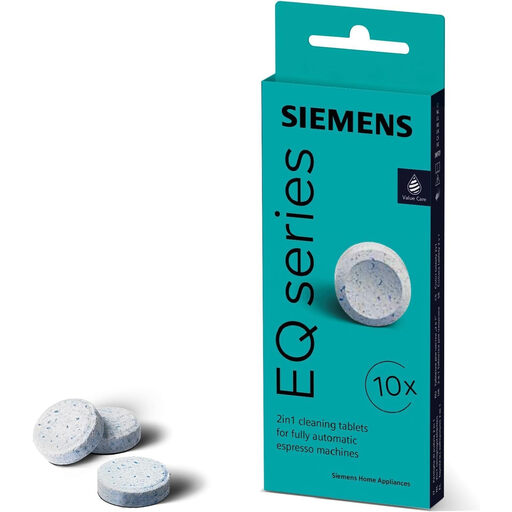
Why This Fits Their Persona: Ideal for owners of Siemens EQ series machines who value warranty preservation and maximum compatibility. As an original accessory, these tablets are perfectly formulated for the materials and cleaning programs of Siemens appliances.
Avoids the pitfall of incompatible third-party products (Pitfall 3). The formula is specifically designed for removing coffee grease and is not an unsuitable household remedy (Pitfall 1).
Reliably removes coffee oil residue for a pure taste and extends the life of the appliance. As an original accessory, it guarantees perfect compatibility with the machine.
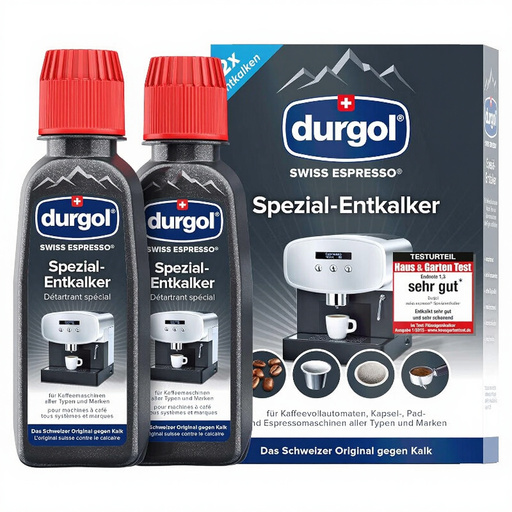
Why This Fits Their Persona: For users seeking a highly effective yet material-safe solution for various machine types (bean-to-cup, portafilter, capsule systems). The pre-portioned bottles make application simple and safe.
Offers a professional formula developed for coffee machines, which is far safer than household remedies (Pitfall 1). Its special protective formula is designed to be gentler on materials than many generic universal cleaners (Pitfall 3).
Very fast and thorough descaling with no additional soaking time required. According to the manufacturer, it leaves no residue and is food-safe after rinsing.
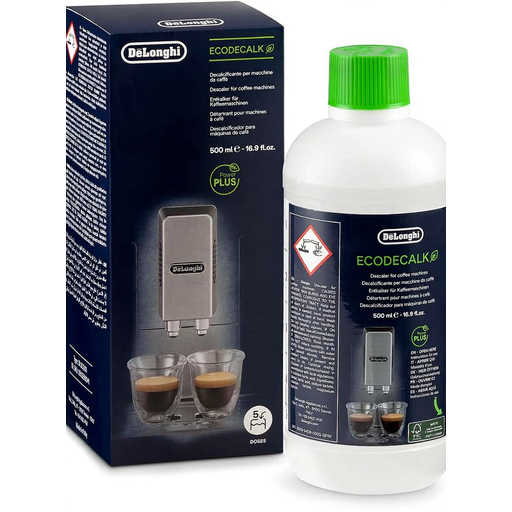
Why This Fits Their Persona: Perfect for users looking for an eco-friendly solution with a great price-performance ratio. The 500 ml bottle is sufficient for up to five descaling cycles, significantly lowering the cost per use.
Uses a professional formula based on natural lactic acid, which is more effective and safer than pure household remedies (Pitfall 1). As an original De'Longhi product, it also offers reliability and tested material compatibility (avoiding Pitfall 3).
According to the manufacturer, the formula is eco-friendly and biodegradable. The large-volume bottle is economical and reduces packaging waste.
We have compiled a complete, up-to-date list of products that fully meet these strict selection criteria and safety standards.
The frequency depends on two factors: the water hardness in your area and how often you use the machine. Most modern bean-to-cup machines will automatically notify you when descaling is necessary. As a general rule of thumb: with medium water hardness and daily use, descale approximately every two to three months. Products like the De'Longhi SoftBalls can be used preventatively to reduce limescale buildup in the water tank.
This is strongly discouraged. Acetic acid can make seals and hoses porous. Pure citric acid can form insoluble crystals (calcium citrate) at the high temperatures inside a coffee machine, leading to even worse blockages. Special descalers for bean-to-cup machines contain buffered acids and additional protective agents that are precisely tailored to the materials inside the machine.
These are two different but equally important maintenance processes. Descaling removes mineral deposits (limescale) from the water-carrying system. Cleaning with a coffee oil remover dissolves oily residues and deposits from the brewing unit and coffee spouts. Only the combination of both procedures ensures the long-term function of the machine and the quality of your coffee.