
Lieferung heute & morgen

Qualitätsgarantie

Willkommens-Angebote freischalten: KOSTENLOSE Lieferung | Bis zu 80 % RABATT | Kostenlose 30-Tage-JoyPlus-Testphase
App herunterladen
As a Joybuy Product Recommendation Officer, I see daily how a little neglect can lead to big problems: limescale buildup. If your coffee tastes watery, the machine gets louder, or it only drips, it's often too late. Regular descaling isn't an optional maintenance step, but a necessity to ensure the longevity and performance of your coffee machine.
However, the market for descalers is confusing and full of pitfalls. Before you reach for the wrong product and do more harm than good to your machine, you should know the three most common mistakes that often lead to expensive repairs.
You don't need to be a chemist to find the right descaler. It's enough to pay attention to three crucial parameters that determine the effectiveness and safety for your appliance.
The basis of every descaler is an acid. However, the type of acid determines how effective and gentle on materials the process is.
Both forms have their place, and the choice depends on personal preference and machine type.
A good descaler not only removes limescale but also protects the machine. Look for products that explicitly advertise corrosion protection. These contain special ingredients that form a protective layer on metallic components like heating coils and pipes during descaling. This is particularly important for high-end bean-to-cup and portafilter machines to maximise their lifespan.
Based on the criteria mentioned, we have identified some products that are suitable for specific user groups and their requirements.
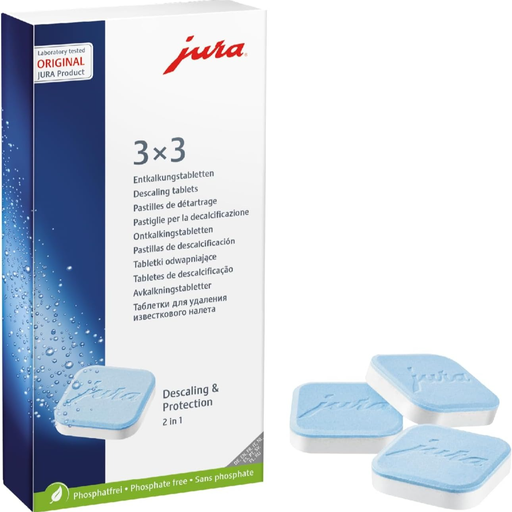
Why this product is a good fit: For owners of a JURA bean-to-cup machine who don't want to compromise. The formula is precisely tailored to the materials and descaling programs of JURA appliances to maintain the function and value of the investment.
Avoids the "one-product-for-all" trap as it is an original care product. The 2-phase action not only dissolves limescale but also seals the fluid system and provides sustainable corrosion protection.
T?V-certified hygiene and a phosphate-free composition specially developed for JURA machines.
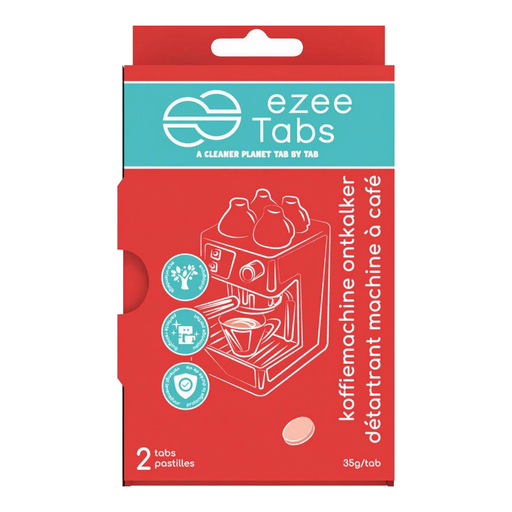
Why this product is a good fit: For users seeking an effective yet eco-friendly solution for all common bean-to-cup coffee machines. The tablet form reduces packaging waste and transport emissions.
Debunks the myth that eco-friendly products are less powerful. The formula is tough on limescale, yet biodegradable, vegan, and free of microplastics.
The formula is described as 100% vegan, non-toxic, and fully biodegradable. The concentrated tabs help reduce CO2 emissions during transport.
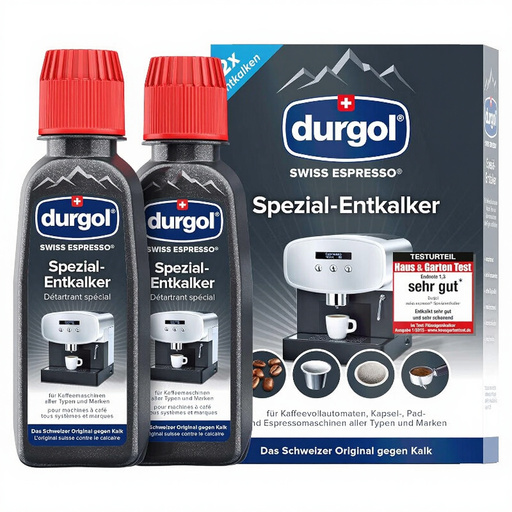
Why this product is a good fit: Ideal for owners of high-quality espresso and bean-to-cup machines of all brands who want a fast, safe, and straightforward descaling process. The pre-portioned bottles make application incredibly simple.
Evades the home remedy trap, which is often associated with long soaking times and uncertain results. This product is designed for rapid descaling with no additional soaking time and leaves no residue.
Guarantees a food-safe application after rinsing and includes a special protective and care formula to extend the machine's lifespan.
We have compiled a complete, up-to-date list of products that fully meet these strict selection criteria and German safety regulations.
The frequency depends on two factors: the water hardness in your area and the frequency of use. Many modern bean-to-cup machines calculate the level of calcification and automatically prompt you to descale. As a general guideline: with daily use and medium-hard water, descaling every two to three months is advisable.
This is not recommended. Household vinegar contains acetic acid, which can attack rubber and silicone seals. Pure citric acid in powder form, if used improperly (at too low a temperature), can clump with limescale to form solid calcium citrate, which worsens the blockage. Specially formulated descalers are tailored to the materials and temperatures in coffee machines and often contain corrosion inhibitors that home remedies lack.
These are two fundamentally different maintenance processes. Descaling removes mineral deposits (limescale) from the machine's water system—that is, from the thermoblock, pumps, and hoses. Cleaning removes coffee oils and fats that accumulate in the brewing unit and coffee spout and become rancid over time, which affects the taste. This requires special cleaning tablets, such as the Saeco Coffee Oil Remover Tablets.