Who might need a dehumidifier in a conservatory?

Owners of a cool room in a conservatory

If you only use the room occasionally, check whether the specific appliance can operate at the low temperatures actually found there. Trotec, Aktobis and Meaco list some of their desiccant models as suitable for cooler rooms; conditions vary by model.

People dealing with condensation on windows

A dehumidifier may help you control the humidity in the room. However, visible condensation does not automatically tell you whether the cause is the room air or damp in the structure. The German Environment Agency recommends taking the cause of the moisture into account.

People planning to leave the appliance running for longer periods

If you intend to leave the appliance running for a long time, noise and power consumption matter as well as the tank or a suitable drain. Check what happens when the tank is full and make sure the chosen position leaves enough space around the air vents.

What should you look for when buying?

Electric desiccant dehumidifier

Suitable if: the room is often unheated or cool and you want to dehumidify the room air. Trotec specifically lists conservatories as a suitable setting for the TTR 57 E; the stated operating conditions apply to this model.

Things to weigh up: noise, power consumption, and emptying the tank or using a suitable continuous drain.

Compressor dehumidifier

Suitable if: the room is mostly heated and you can compare performance specifications for the temperature and humidity levels you usually have.

Things to weigh up: specifications for desiccant and compressor dehumidifiers are only meaningfully comparable when the temperature and relative humidity are the same.

Non-electric moisture absorber

Suitable if: you are dealing with a small, localised damp area and the product is designed for that use.

Things to weigh up: before choosing one instead of an electric appliance to dehumidify a whole room, check how much water it absorbs under suitable conditions.

Buying priority What should you check? Who is this particularly important for?
Dehumidifying in cold conditions Compare the operating temperature and dehumidifying performance with the corresponding temperature and humidity conditions. If the room in my conservatory is often cool, I want to know whether the appliance can operate at the actual room temperature. Around 36% of consumers prioritise suitability for cool rooms.
Condensation and the cause of damp Monitor the room's humidity and, if damp keeps returning, check the windows, joints and affected surfaces too. If condensation forms, I want to reduce the humidity without overlooking possible water ingress or another structural cause. Around 29% of consumers focus on identifying the cause and dealing with condensation.
Ongoing electricity costs Use the power consumption for the mode you plan to use and your estimated operating hours. If the appliance is likely to run for longer periods, I want to estimate its power consumption before buying. Around 21% of consumers focus primarily on running costs.
Water drainage and noise Check the tank, the automatic shut-off when it is full, whether a suitable continuous drain is available, and the noise rating for the mode you plan to use. If the room is only used occasionally or the appliance will run for long periods, I want to avoid unnecessary emptying and disruptive operating noise. Around 14% of consumers prioritise ease of use and quiet operation.

Avoid common buying mistakes

  • Assuming the maximum litres-per-day figure is what the appliance will collect in your room

    A model's stated performance may depend on specific temperature and humidity conditions. Conditions in a room in a conservatory may be different, so the maximum figure is not a prediction of how the appliance will perform in practice.

    Only compare performance figures alongside the stated test conditions, and monitor the room's humidity while the appliance is running.

  • Treating condensation solely as an appliance problem

    A dehumidifier will not stop water from getting in or remove existing mould. The German Environment Agency points out that you also need to identify the cause of excess moisture.

    Monitor the damp and affected areas before and after using the appliance. If the damp persists or mould appears, get the cause investigated.

  • Assuming a non-electric moisture absorber is the same as an electric desiccant dehumidifier

    These terms refer to different types of product and, in themselves, do not show that both will do the same job throughout a whole room.

    Check the product type and intended use, and only compare products designed for the same purpose.

Brands to consider

Trotec

Trotec specifically describes its TTR 57 E desiccant dehumidifier as suitable for conservatories.

  • For the TTR 57 E, the manufacturer specifies rooms up to 20 m², a 5-l tank and operation from 1 °C.
  • These specifications apply to this particular model. Check that your room's size, temperature and dehumidifying needs are a good match.

Aktobis

According to Aktobis, the WDH-DS3 is a desiccant model for unheated rooms; the manufacturer lists conservatories as one example of where it can be used.

  • Aktobis recommends the model for rooms up to 25 m² and states that it can extract up to 10 l per day at around 8 °C and 80% relative humidity.
  • The performance figure is based on the stated temperature and humidity conditions, so it cannot be directly compared with figures for other models.

Meaco

Meaco offers the DD8L Pro, a desiccant model for cooler environments, and lists app control as a feature of this model.

  • Meaco specifies that the DD8L Pro can operate from 1 °C.
  • The temperature specification and app feature apply to this model. Weigh up the extra features against what you actually need.

Joybuy products for indoor use

The Joybuy products below are dehumidifiers for indoor use. If you are choosing one for a cool room in a conservatory, check the operating temperature for the specific model against the actual room temperature.

Comfee' MDDO-10DEN7 dehumidifier

Comfee' MDDO-10DEN7 dehumidifier

For humidity control, the product specifies an adjustable target range of 45–55% relative humidity and automatic shut-off when the tank is full.

10 l per day; 2.5-l tank; three operating modes and a 24-hour timer. The product details also specify continuous drainage.

The sleep mode is rated at 36 dB(A). Check that the operating temperature is suitable for a cool room.

View at Joybuy

Bosch Dry 4000 dehumidifier, 16 l per day

Bosch Dry 4000 dehumidifier, 16 l per day

Auto mode, a tank-full warning and automatic shut-off are useful for controlled operation and water management.

Up to 16 l per day; specified for rooms up to 75 m³; 2.5-l tank and 40 dB. The appliance has two fan speeds, as well as Auto, Night and Laundry modes.

A drain hose is required for continuous drainage and is not included. Check in advance whether you will need a suitable hose.

View at Joybuy
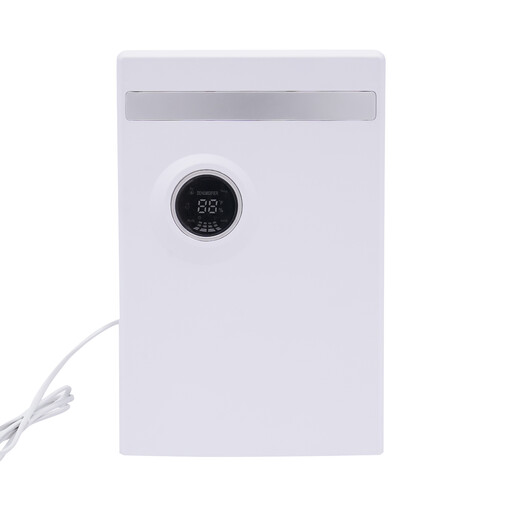
Portable dehumidifier, 100 W, with a 2,200-ml tank

Portable dehumidifier, 100 W

Automatic humidity control and shut-off when the tank is full are useful if you want to limit how often you need to empty it.

100 W; 2,200-ml tank; specified for areas up to 30 m². The product details also list an LED display.

Before choosing it for a cool room, check that the appliance's operating temperature is suitable for your space.

View at Joybuy
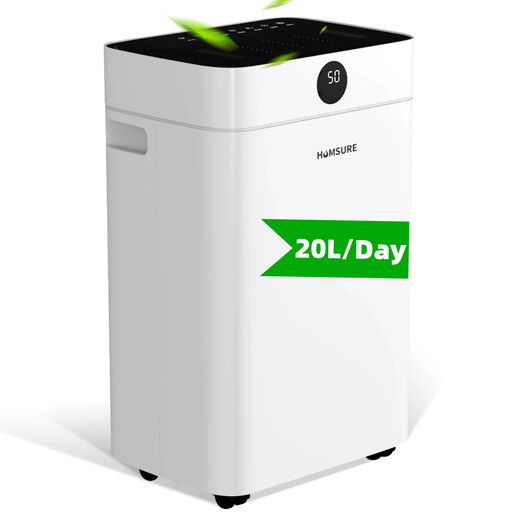
HUMSURE dehumidifier, 20 l per day, for rooms up to 50 m²

HUMSURE dehumidifier, 20 l per day

An adjustable target humidity and the choice of using the tank or continuous drainage may be useful when planning longer periods of operation.

Specified for rooms up to 50 m²; 2.8-l tank; 24-hour timer and automatic defrosting. A drain hose is listed as an option for continuous drainage.

Compare the performance specifications with the conditions in your room before using the stated daily capacity as a guide.

View at Joybuy
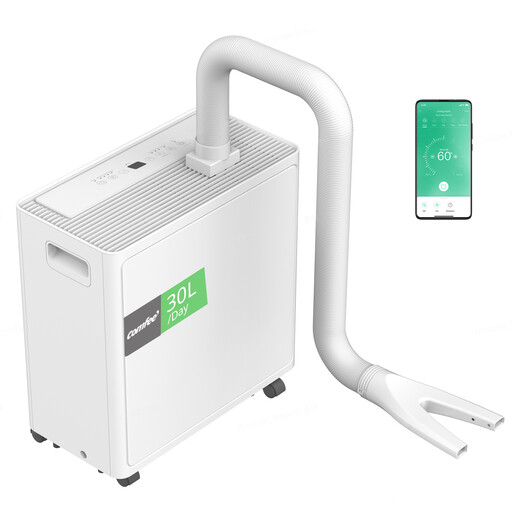
Comfee' MDDA-30DEN7-SD dehumidifier, 30 l per day

Comfee' MDDA-30DEN7-SD dehumidifier, 30 l per day

The listed water drainage options are the tank or continuous drainage; the appliance also offers app control.

Up to 30 l per 24 hours at 30 °C and 80% relative humidity; specified for rooms up to 73 m². The tank holds 3.2 l, and it also has four modes, a 24-hour timer and automatic defrosting.

The stated operating range is 5–32 °C. This means operation in rooms below 5 °C is outside the specified temperature range.

View at Joybuy

Frequently asked questions

Can a dehumidifier replace ventilation and repairs to the source of damp?

No. The German Environment Agency recommends ventilating appropriately and identifying or eliminating the cause of excess moisture. An appliance can complement these measures, but it cannot replace them.

What should I bear in mind when positioning and cleaning the appliance?

Keep the air inlets and outlets clear, and follow the instructions for the specific model. Aktobis' instructions for the WDH-DS3 warn against obstructing the air outlet and getting moisture on the electrics. These are the manufacturer's recommendations for this model, not a general legal clearance requirement.

What rights and potential additional costs should I consider when buying?

Your statutory rights against the seller are separate from any voluntary guarantee. As the Verbraucherzentrale explains, online purchases generally come with a 14-day right to cancel. Also check the expected power consumption and, if you plan to use continuous drainage, whether the necessary accessories are included.

Do I need special permission or registration to use an electric dehumidifier in Germany?

No requirement for the user to obtain a permit or register an appliance for ordinary household use of this kind is established here. The EU lists electrical and electronic equipment among the product groups that may be subject to CE requirements. CE marking is a manufacturer's declaration, not an independent quality mark. You cannot determine which requirements a specific model meets from its product category alone.

How can I return an old appliance?

The stiftung ear explains that retailers who are required to take back old appliances must accept an old appliance free of charge when you buy a corresponding new one, provided it is of the same appliance type and performs essentially the same function. Before ordering, check how the retailer in question handles returns.