Who might benefit from a desiccant dehumidifier?

Households with bathrooms that are hard to ventilate

If you can’t easily clear humidity peaks after a shower through a window, opening it and wiping down wet surfaces are still good first steps. A dehumidifier may be worth considering if dampness remains afterwards. The German Environment Agency recommends clearing humidity peaks immediately by opening the window wide.

Households with cool bathrooms

If your bathroom is cool at times, the temperature range of the specific appliance matters more than a general daily capacity figure. Check the manual for the model you’re considering; product listings and manuals may specify different minimum temperatures.

Households with limited space

In a small bathroom, you’ll need to find a dry, safe spot with enough clearance around the appliance. The VDE advises keeping electrical appliances well away from showers and baths. Noise and potential running time also matter if living or sleeping areas are close to the bathroom.

What should you look for when buying?

Ventilate and wipe away water

A good fit if: You can clear humidity peaks after a shower through a window and wipe water from wet surfaces.

Bear in mind: These steps don’t require an electric dehumidifier, but may not be enough on their own if ventilation is limited or dampness persists.

Portable desiccant dehumidifier

A good fit if: Dampness remains after taking the basic steps and you have a safe, dry place to put the appliance. If the room is cool, it’s particularly important to check the model’s temperature range.

Bear in mind: The appliance uses electricity and releases warmer air. It won’t replace ventilation or help identify the cause of persistent dampness. A manufacturer’s daily capacity figure doesn’t tell you how quickly your bathroom will dry out.

Compare with a compressor model

A good fit if: The room is usually warm and you want to compare desiccant and compressor dehumidifiers under the same conditions.

Bear in mind: Trotec says that a compressor dehumidifier’s practical performance may fall at lower temperatures. This doesn’t mean there’s one clear winner for performance or cost in your bathroom.

Priority What to look for when buying Who will find this useful?
Humidity peaks after showering Check the stated room size and the conditions behind the capacity figure; don’t treat daily capacity as a guaranteed drying time. If dampness remains after ventilation and wiping down, I want to tackle that specifically. Around 33% of consumers put residual dampness after showering first.
A safe place to put it Check the specific model’s requirements for a dry location, airflow and positioning. Get professional advice on any questions about the electrical installation. With limited space, I need a safe position away from the shower and bath. Around 27% of consumers prioritise where to put the appliance in a small bathroom.
Use at low temperatures Compare the actual room temperature with the temperature range in the manual for the version of the appliance you receive. If my bathroom is cool at times, the appliance needs to be suitable for that temperature. Around 20% of consumers prioritise operation at low room temperatures.
Power consumption and noise Check the power consumption and noise level for the setting you plan to use, and consider how long you expect to run it. In a small flat, I want to consider running time, noise and power consumption as part of everyday life. Around 20% of consumers prioritise these operating features.

Common buying mistakes

  • Assuming the maximum daily capacity tells you how long it takes to dry out after a shower

    The amount of water actually removed depends on factors including temperature, humidity and any further moisture entering the room. So a maximum litres-per-day figure doesn’t tell you how long drying your own bathroom will take.

    Check the conditions attached to the capacity figure and see how the humidity in your bathroom changes after showering.

  • Choosing an appliance without making sure there’s a safe place for it in a cramped bathroom

    An appliance that looks compact isn’t the right choice if you can’t position it safely in a dry place as instructed. The VDE advises keeping electrical appliances away from showers and baths.

    Before buying, check the available space, distance from water, air vents and cable routing. Ask a professional to assess any questions about your existing electrical installation.

    A safe position may limit the space you can use; you may need professional advice about the electrical installation.

  • Thinking a desiccant dehumidifier provides free heating

    A desiccant dehumidifier uses electricity while running and releases warmer air. This heat output doesn’t replace a separate assessment of your dehumidifying needs and energy use.

    Compare the power consumption with your planned running time, and take the heat output into account in a small room.

    With regular use, the running time adds up. To work out your own electricity costs, you’ll also need your price per kilowatt-hour.

  • Trying to deal with recurring damp or mould using a dehumidifier alone

    An appliance won’t automatically fix the cause of persistent dampness. The German Environment Agency says that the causes of high humidity that has led to mould must be identified and resolved.

    Use a dehumidifier only as an additional measure, and get recurring dampness or the cause of mould investigated.

    If the cause of the damp remains, the problem may continue; an appliance isn’t a substitute for finding the cause.

Models and brands compared

Meaco

Meaco lists the DD8L Junior as a desiccant dehumidifier; its German product overview says it is suitable for rooms up to 46 m².

  • Meaco gives the DD8L Junior a dehumidifying capacity of 8 litres per day. This is a manufacturer’s figure, not a guaranteed drying performance after a shower.
  • The German product overview says it operates from 0 °C, while the DD8L Junior manual gives 1 °C as the minimum operating temperature. If you plan to use it in a very cool spot, follow the manual for the version you receive.

Trotec

Trotec lists the TTR 57 E desiccant dehumidifier for rooms up to 20 m² or 50 m³.

  • Trotec gives the TTR 57 E a capacity of up to 9 litres per 24 hours, a 5-litre tank and operation from 1 °C.
  • These manufacturer’s figures aren’t based on an independent test after showering. The amount of water actually removed also depends on the surrounding conditions.

Wood’s

The Wood’s WDD80 is a desiccant model with a tank and hose connection. Its manual recommends a working area of 2–40 m².

  • For the WDD80, Wood’s gives a dehumidifying capacity of 8 litres, power consumption of 650 W and noise level of 36–50 dB at 20 °C and 60% relative humidity.
  • The product page says it operates down to 0 °C, while the manual gives a range of +1 °C to +37 °C. The stated performance and consumption figures apply under the specified test conditions. If the room is very cool, check the temperature range for the version you receive.

Dehumidifiers at Joybuy

The following Joybuy listings are for dehumidifiers intended for smaller rooms. If you specifically want a desiccant model, check the type of the product you’re considering before buying. Even if you can find a safe place for it in the bathroom, the VDE advice to keep appliances away from showers and baths takes priority.

Comfee MDDO-10DEN7 dehumidifier

Comfee' MDDO-10DEN7

The stated room size of around 16 m² makes this an option for smaller rooms.

The listing specifies up to 10 l per day, a 2.5-l tank, three operating modes, a 24-hour timer, automatic defrost and a sleep mode with a noise level of 36 dB.

Keep it away from showers and baths in the bathroom; the VDE specifically advises this for electrical appliances.

View at Joybuy
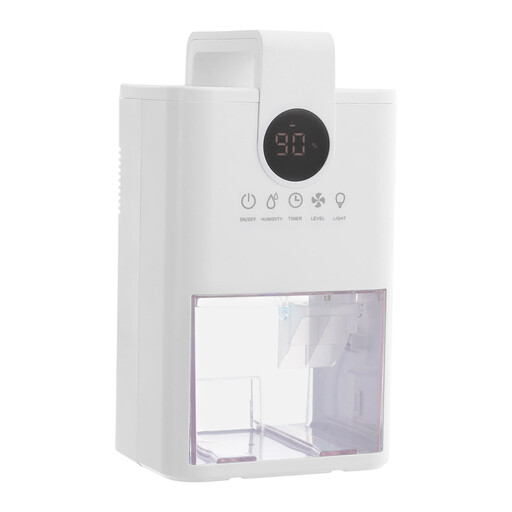
Portable dehumidifier with 1-l tank

Portable dehumidifier with 1-l tank

The listing describes a portable model with a handle and a weight of 1.1 kg.

It specifies up to 200 ml of moisture removed per day, a 1-l tank, a humidity display, three speeds and a timer. The stated room size is up to 30 m².

Keep it away from showers and baths in the bathroom; the VDE specifically advises this for electrical appliances.

View at Joybuy
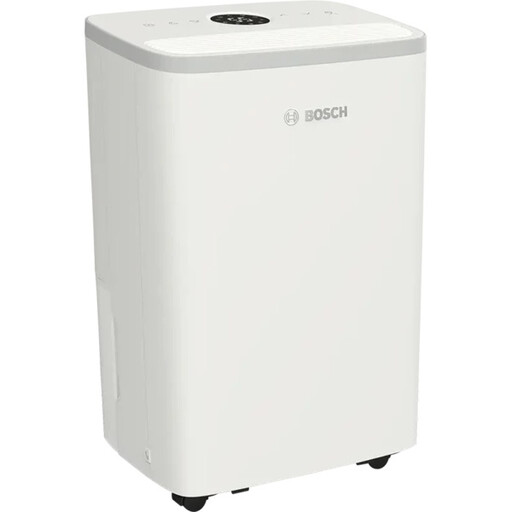
Bosch Dry 2000 dehumidifier

Bosch Dry 2000

The listing gives a room size of up to 55 m³ and says it has castors and a handle for moving it around.

It specifies up to 12 l per day, a 2.5-l tank, 38 dB, two fan speeds, and Auto, Night and Laundry modes.

The product description advises against using it where water could splash onto the appliance. The VDE advises keeping electrical appliances away from showers and baths.

View at Joybuy

Bosch Dry 4000 dehumidifier

Bosch Dry 4000

The product information gives a room size of up to 75 m³ and an Auto mode for humidity control.

It specifies up to 16 l per day, a 2.5-l tank, 40 dB, two fan speeds, and Auto, Night and Laundry modes.

The product description advises against using it where water could splash onto the appliance. The VDE advises keeping electrical appliances away from showers and baths.

View at Joybuy
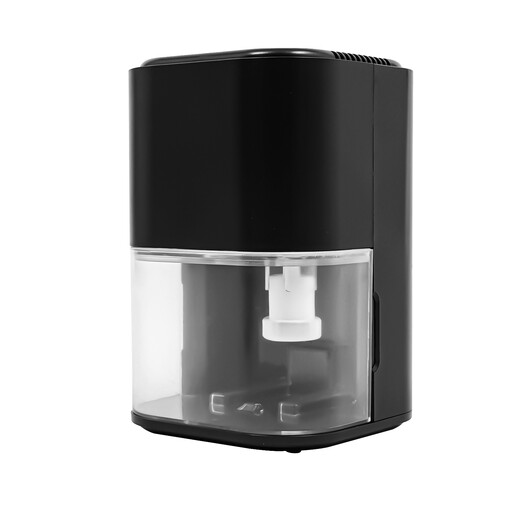
Mini dehumidifier with 2-l tank and 42 W

Mini dehumidifier with 2-l tank, 42 W

The listing describes a mini model with two operating modes and a sleep mode.

It specifies a 2-l tank, 42 W and a dehumidifying capacity of 17.6–21.12 fl oz per 24 hours. The stated room size is up to 215 ft².

Keep it away from showers and baths in the bathroom; the VDE specifically advises this for electrical appliances.

View at Joybuy

Frequently asked questions

What should I do first straight after showering?

Clear humidity peaks after showering by opening the window wide, and wipe water from wet surfaces if ventilation is limited. The German Environment Agency recommends dealing with humidity peaks immediately. A dehumidifier can complement these steps, but shouldn’t replace them.

Can I put a portable appliance right next to the shower or bath?

No. Don’t assume a portable dehumidifier is suitable for that spot just because it’s portable. The VDE specifically advises keeping electrical appliances away from showers and baths. Also check the manual for the model you’re considering. If you’re unsure where to position it or have questions about the electrical installation, seek professional advice.

How can I tell if humidity is a persistent problem?

Keep an eye on how the dampness changes in the room, rather than looking only at the peak straight after a shower. If dampness or mould keeps coming back, the cause needs to be identified; a dehumidifier won’t fix structural damp.

What should I know about maintenance and running costs?

Before buying, check the manual for instructions on emptying the tank, caring for the filter and, where applicable, using a hose. To work out your own electricity costs, you’ll need the power consumption for the setting you use, the number of hours it runs and your price per kilowatt-hour. The maximum dehumidifying capacity alone isn’t enough to give you a reliable cost.

What regulations apply to bathroom electrical installations in Germany?

The VDE describes special protection zones for bathrooms. It says that sockets and switches aren’t permitted inside a shower or bath; restrictions also apply to the area it describes as zone 1. This guidance on electrical installations doesn’t automatically mean a portable dehumidifier is permitted outside these zones. Whether a particular position is compatible with the existing installation and the appliance’s instructions must be assessed on a case-by-case basis.