If you regularly need to dry laundry in your room and the humidity rises as a result, a desiccant dehumidifier can help dry clothes on an airer. This type of appliance is particularly worth considering in cooler rooms. Before buying, check the ventilation options and humidity levels, as well as the laundry mode, noise on the setting you’ll actually use, power consumption, footprint and required clearances. A dehumidifier is no substitute for regular ventilation or for investigating walls that remain damp.
Who might benefit from a desiccant dehumidifier in a student room?
Students without access to a drying room
If you regularly hang laundry to dry in your own room, keep an eye on the humidity and continue to ventilate regularly. The German Environment Agency recommends making use of available drying rooms wherever possible.
Students with a cool room
If you dry laundry when the room temperature is low, a desiccant model may be worth considering. The F.A.Z. buying guide describes desiccant dehumidifiers as particularly suitable for cooler rooms.
Students who study and sleep in the same room
If your desk, bed and airer are close together, check the noise level for the setting you want to use, the footprint and the possible operating times.
What should you look for when buying?
Desiccant dehumidifier with a laundry mode
A good fit if: You often dry laundry in your room and it can be cool at times.
Things to weigh up: Power consumption, heat, noise and emptying the tank. Compare the specific operating settings rather than just the rated capacity.
Airer and adjusted ventilation
A good fit if: You have access to a suitable drying room or another place to dry laundry, or you can manage the moisture with appropriate ventilation.
Things to weigh up: You won’t need to use extra electricity or make room for an appliance, but you’ll still need to organise laundry and ventilation as part of your routine.
Compare with a compressor dehumidifier
Worth comparing if: Your room is regularly heated and you’d also like to consider other dehumidifying technologies.
Things to weigh up: Compare dehumidification figures only under the same temperature and humidity conditions. Check the specific model details to see whether it’s suitable for your room.
| Priority |
What to check when buying |
Who is it particularly relevant to? |
| Controlling humidity |
Check for a humidity display or hygrostat, as well as an automatic tank shut-off. Also consider ventilation and possible causes of damp. |
If I want to avoid spikes in humidity while drying laundry in my room, humidity control matters more than a high rated capacity. Around 24% of consumers prioritise humidity control. |
| Drying laundry on an airer |
Check the laundry mode and airflow. Compare dehumidification figures only under the same test conditions. |
If I regularly dry laundry in my room, the airflow needs to reach the airer and the appliance must be positioned safely. Around 24% of consumers put laundry drying first. |
| Quiet while studying and sleeping |
Check the noise level for the setting you want to use, adjustable fan speeds, night mode and signal sounds. |
If you study or sleep near the appliance, pay particular attention to the setting you actually plan to use. Around 19% of consumers prioritise quiet operation. |
| Ongoing electricity costs |
Check the power consumption of the setting you intend to use and how long it may run. Use your own electricity tariff to work out the cost. |
If I plan to use the appliance often, I want to estimate the running costs for my usage. Around 19% of consumers put running costs first. |
| Space and ease of use |
Check the dimensions, access to the tank and filter cleaning. Only plan to use a hose connection if there’s a suitable drain. |
If the airer and appliance both need to fit in a small room, footprint and easy-to-reach controls matter. Around 14% of consumers prioritise space and ease of use. |
Common misconceptions when buying and using a dehumidifier
-
Taking litres per day as a guide to how long a load of laundry will take to dry
Manufacturers sometimes give dehumidification figures for specific temperatures and humidity levels. These figures don’t automatically reflect the conditions in a student room or indicate how long a particular load will take to dry.
Compare figures only when you know the test conditions, and check the laundry mode and airflow separately.
-
Assuming the quietest noise rating applies to the laundry mode
Noise and airflow can vary depending on the fan and power settings. A noise rating for a quiet setting therefore doesn’t necessarily tell you how loud the laundry mode will be.
Check which operating setting the noise rating applies to, and which setting you intend to use while studying or sleeping.
-
Relying on the appliance to deal with persistently damp walls or a lack of ventilation
A dehumidifier won’t identify the cause of persistent damp or mould. The German Environment Agency stresses the importance of ventilation and finding the source of the problem.
Keep an eye on humidity, use suitable drying rooms and get persistent damp or mould investigated, whether or not you buy an appliance.
-
Hanging laundry too close to the appliance
Dripping water and blocked air inlets or outlets can make the appliance unsafe to use. The Trotec TTR 57 E operating manual warns of the risk of electric shock or fire if safety instructions are not followed.
Check the clearances and positioning advice in the manual for your specific model before placing the appliance and airer together.
A quick guide to suitable brands and models
Trotec
Trotec describes the TTR 57 E as a desiccant model for smaller rooms and drying laundry.
- Trotec says it’s suitable for rooms up to 20 m², with a dehumidification capacity of up to 9 l/24 h.
- These rated figures don’t guarantee the same level of dehumidification in a student room. Check the footprint, power consumption and noise on your preferred setting in the model documentation.
Meaco
The laundry and control features described for the DD8L Junior and DD8L Pro differ.
- Meaco describes the Junior as having a laundry mode and a low fan speed. The Pro adds control and night-time features.
- These details apply to these models and don’t prove that the brand as a whole is quieter or dries laundry faster.
De'Longhi
The DNS65 from the Tasciugo AriaDry Light range combines a laundry function with stated power and noise figures.
- De'Longhi states an input power of 520 W, a noise level of 34 dB(A) and a capacity of 6 l/24 h in normal operation at 30 °C and 80% relative humidity.
- These figures apply under the stated conditions. They don’t indicate a specific drying time or the noise level in laundry mode.
Wood's
Wood's describes the WDD80 as a desiccant model with three fan speeds and a tank or hose connection for cooler rooms.
- Wood's product page lists a 2-litre tank and operation from 0 °C.
- However, the operating manual gives a minimum operating temperature of +1 °C, a noise level of 36–50 dB and power consumption of 650 W at 20 °C and 60% relative humidity. Check the temperature limit with Wood's if you want to use the appliance below +1 °C.
Joybuy products for drying laundry indoors
The Joybuy products below are dehumidifiers with a stated laundry function. If you’re specifically looking for a desiccant model, check the type of the particular appliance before buying.
 Image unavailable
Comfee' MDDO-10DEN7, 10 l/day, 2.5-litre tank
A dedicated laundry-drying mode is listed for drying clothes indoors.
10 l/day; 2.5-litre tank; three modes; 24-hour timer; listed as suitable for rooms up to approximately 16 m².
View at Joybuy
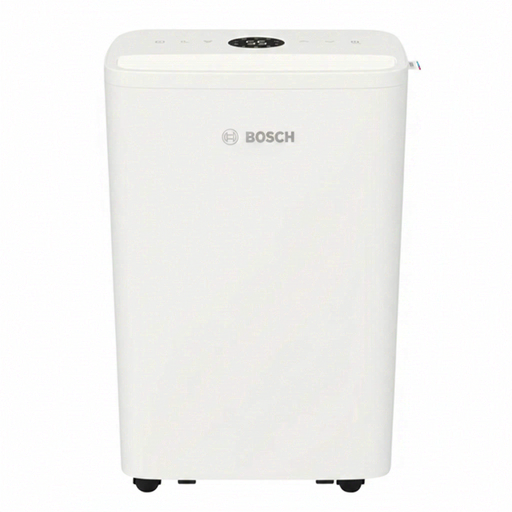 Image unavailable
Bosch dehumidifier, 10 l/day, 2.5-litre tank
The listed laundry-drying mode may be useful for drying clothes indoors.
Listed as suitable for rooms up to 17 m²; two fan speeds; 36 dB; night mode; tank-full alert and drain hose listed.
View at Joybuy
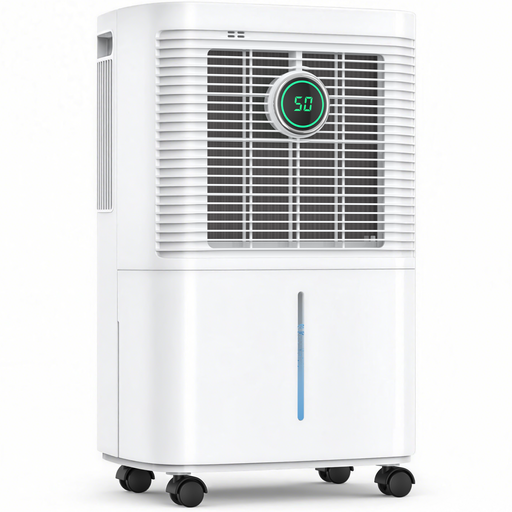 Image unavailable
Ateroll dehumidifier, 16 l/day, laundry mode
A laundry-drying function is listed for drying clothes indoors.
16 l/day; automatic humidity control; adjustable humidity range; sleep mode at 36 dB according to the product name.
View at Joybuy
 Image unavailable
VINO 20L Smart Dehumidifier, 20 l/day
A dedicated laundry mode is listed for drying clothes indoors.
Listed as suitable for rooms up to 40 m²; 2.5-litre tank; Wi-Fi control; sleep mode at 35 dB according to the product name.
View at Joybuy
 Image unavailable
VINO 12L Smart Dehumidifier, 12 l/day
A laundry-drying function and Dry mode are listed for indoor laundry.
Listed as suitable for rooms up to 24 m²; 1.8-litre tank; Wi-Fi control; sleep mode at 32 dB according to the product name.
View at Joybuy
Frequently asked questions about drying laundry with a dehumidifier
Does a dehumidifier replace ventilation when I dry laundry in my room?
No. The German Environment Agency recommends using available drying rooms wherever possible and ventilating more when drying laundry at home. A hygrometer can help you keep an eye on humidity. If damp or mould persists, you should also investigate the cause.
Where should I position the appliance next to an airer?
Keep the air inlets and outlets clear, protect the appliance from dripping water and follow the clearance and filter instructions in the manual for your specific model. The Trotec TTR 57 E operating manual warns that failure to follow the safety instructions could result in electric shock or fire.
How can I estimate the electricity costs?
Use the power consumption for the mode you’ll actually use: divide watts by 1,000, then multiply by the number of operating hours and your electricity price per kWh. The result applies to the usage scenario you’ve assumed; automatic shut-off and other settings may change actual consumption.
What conformity information should I check when buying in Germany?
For the specific electrical appliance, check the CE marking, manufacturer details, and German operating and safety instructions. The German Federal Network Agency lists these as aspects of market surveillance. A brand name or product description alone doesn’t prove that an individual listing is compliant.


