Who this guide is for

Storing clothes in your home office

If you store clothes in your study, it helps to measure the room’s humidity and find out what’s causing it, rather than focusing only on a high litres-per-day figure. Germany’s Federal Environment Agency recommends keeping an eye on humidity with a hygrometer.

Using a cool study

If you only heat your study occasionally, it’s important to check the operating temperature range of the specific model. Trotec and Wood’s list low operating temperatures for some of their products, but these figures don’t automatically apply to other models.

Working in the room while the dehumidifier is on

If you’re at your desk while the dehumidifier is running, factor in noise, operating mode and heat output when choosing a model. Check whether the manufacturer’s figures apply to a particular mode, and consider where you can position the appliance in your study.

What to consider when choosing

Desiccant dehumidifier

Suitable if: The room is damp during colder periods too and you store clothes in it. Check that the specific appliance’s operating temperature range suits your room.

Things to weigh up: Heating the desiccant uses electricity, and the heat released can make your study uncomfortable, depending on the time of year.

Compressor or condensing dehumidifier

Suitable if: Your home office is heated regularly and low operating temperatures aren’t your main deciding factor.

Things to weigh up: Check the usable temperature range and noise level of each model in the operating mode you plan to use.

Ventilation and finding the cause of damp

Suitable if: Your measurements don’t show persistently high humidity, or you can control it by ventilating appropriately.

Things to weigh up: If damp is coming through the building fabric or there’s mould, ventilation is no substitute for finding the cause or carrying out any necessary remedial work.

What you need What to check before buying Who it matters most to
Humidity where clothes are stored Monitor the room’s humidity with a hygrometer; check the model’s controls and stated room size. If I store clothes in my study, I want to manage humidity according to what’s actually needed and understand what’s causing it. Around 36% of consumers are likely to prioritise this kind of control when storing clothes.
A quiet working environment Check the noise rating and the operating mode it applies to; consider the air outlet and where you’ll position the appliance. If I work in the same room while the appliance is running, I want to take fan noise and warm air into account in day-to-day use. Around 29% of consumers are likely to prioritise a quiet working environment.
Operating at low temperatures Compare the lowest actual room temperature with the operating temperature range of the specific model. If my study is cool at times, I need an appliance whose stated operating range is suitable. Around 21% of consumers are likely to focus mainly on using a dehumidifier in a cool room.
Ongoing running costs and effort Check the power consumption in your preferred mode and the likely running time; choose a tank or hose connection that suits where you’ll position the appliance. If I need to dehumidify frequently, I want to factor in electricity use and emptying the tank. Around 14% of consumers are likely to prioritise keeping ongoing running costs and effort to a minimum.

Common buying mistakes

  • Expecting a dehumidifier to fix water damage or mould

    If the cause of the damp remains, mould can return. Germany’s Federal Environment Agency recommends finding and addressing the cause of excess moisture.

    Find out where the damp is coming from. Use an appliance to regulate the air in the room, not as a substitute for fixing the underlying cause or carrying out any necessary remedial work.

    You’ll still need to find the cause and, if necessary, carry out remedial work, even if you use a dehumidifier.

  • Assuming the maximum litres-per-day figure applies to your room

    A manufacturer’s maximum figure doesn’t automatically reflect how much moisture will be removed at your room’s temperature and humidity.

    Compare the information for the specific model with your room size and actual operating conditions. Then monitor the room’s humidity with a hygrometer.

  • Choosing a desiccant model for a warm study without checking alternatives

    An advantage in cool operating conditions doesn’t automatically make a desiccant model the best choice for a regularly heated room. Noise and heat output can also matter in a home office you’re using.

    Before deciding, compare the temperature range and operating figures of the specific desiccant model with suitable compressor models.

    Frequent use could mean higher electricity consumption and unwanted heat in your study. Both depend on the appliance and how you use it.

Brands and models to consider

Trotec

Trotec describes the TTR 57 E as a desiccant dehumidifier for rooms up to 20 m².

  • For the TTR 57 E, Trotec lists a humidity display, a laundry-drying function, a 5-litre tank and a dehumidifying capacity of up to 9 l/24 h. The manufacturer states that this model can operate from 1 °C.
  • The stated room size and dehumidifying capacity apply to this model and don’t guarantee the same performance in your room.

Meaco

Meaco sells desiccant models such as the DD8L Zambezi and DD8L Junior. Check each model variant separately.

  • Meaco describes the DD8L Zambezi and DD8L Junior as desiccant dehumidifiers.
  • Don’t assume that details about the model, features or items included with one DD8L variant also apply to another.

Wood’s

Wood’s sells the WDD80 and WDD90 sorption dehumidifiers for cool rooms.

  • Wood’s lists an operating range of 0 to 35 °C for the WDD90, along with three fan speeds, a 2-litre tank and a hose connection.
  • These details apply to the WDD90. Wood’s says the appliance can’t be started remotely for safety reasons.

Dehumidifiers for drying laundry in a home office

The following Joybuy models are described as dehumidifiers with a laundry-drying function. Before buying, check that the type of appliance, operating range and noise level suit your study.
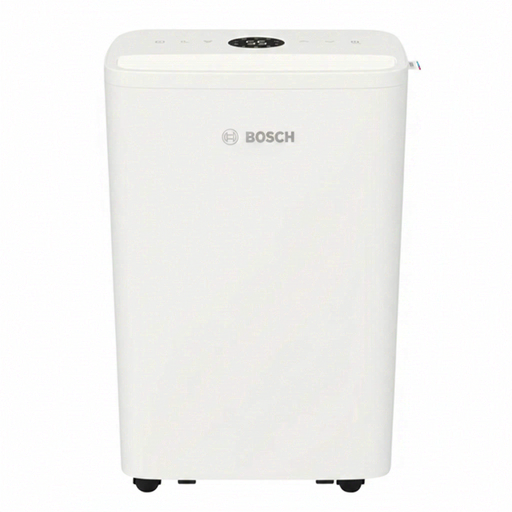
Bosch dehumidifier with laundry-drying mode

Bosch dehumidifier, 10 l/day

The stated laundry-drying mode may be useful if you keep clothes in your home office.

10 l/day; stated to cover up to 17 m²; 2.5-litre tank; 36 dB; two fan speeds; automatic, night and laundry-drying modes; LED display; R290.

View at Joybuy
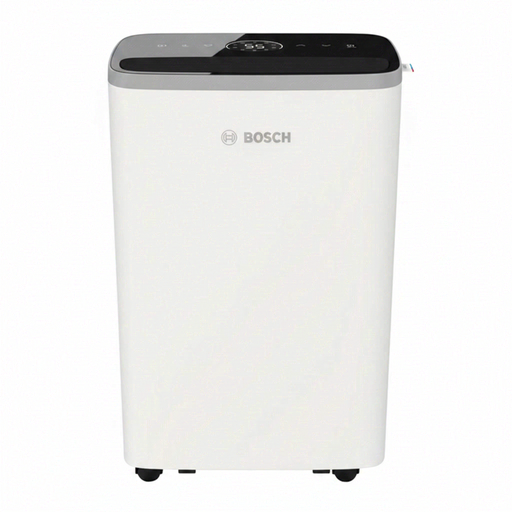
Bosch Dry 4000 dehumidifier

Bosch Dry 4000

Its dedicated laundry-drying mode is designed for drying clothes in the room.

16 l/day; stated to cover up to 75 m³; 2.5-litre tank; 40 dB; two fan speeds; automatic, night and laundry-drying modes; LED display; 24-hour timer. A hose option for continuous drainage is described.

View at Joybuy
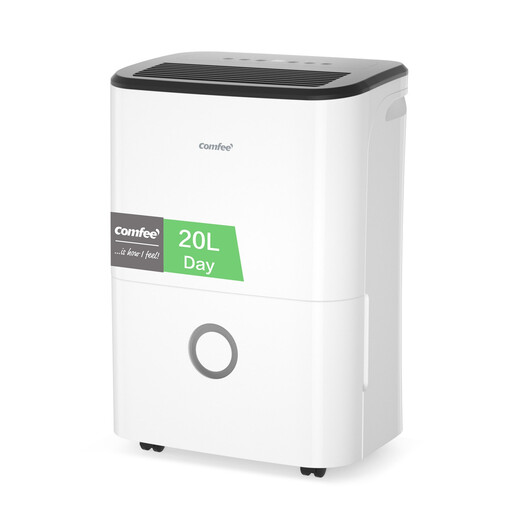
Comfee MDDF-20DEN7 dehumidifier

Comfee MDDF-20DEN7

The Smart mode and laundry-drying mode may be useful when you want to adjust use to suit your study.

20 l/day; 3-litre tank; Smart mode with a stated target range of 45–55%; three modes; 24-hour timer; stated to cover around 100 m³ (40 m²); R290. The description says a hose for continuous drainage isn’t included.

View at Joybuy

VINO 20L Smart Dehumidifier with Wi-Fi control

VINO 20L Smart Dehumidifier

An adjustable target humidity and the stated laundry-drying mode may be useful in a home office.

20 l/day; stated to cover 40 m²; 2.5-litre tank; Wi-Fi control; sleep mode; 35 dB; R290. A continuous drainage option is described.

View at Joybuy
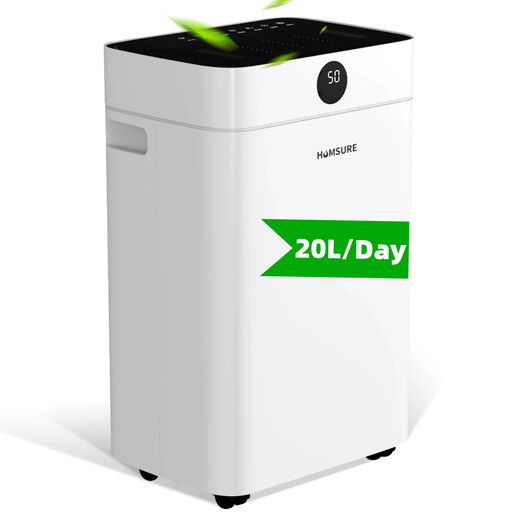
HUMSURE dehumidifier with laundry-drying mode

HUMSURE dehumidifier, 20 l/day

Its dedicated laundry-drying mode and adjustable target humidity may suit a room where you store clothes.

20 l/day; stated to cover 50 m²; 2.8-litre tank; target humidity of 40–80%; 24-hour timer; automatic defrost function; R290. A drain hose is listed as included.

View at Joybuy

Frequently asked questions

When is a dehumidifier useful for clothes in storage?

Start by measuring the relative humidity in your study rather than choosing an appliance size based only on a musty smell. Germany’s Federal Environment Agency recommends keeping indoor relative humidity between 40 and 60 per cent to reduce the risk of mould, and using a hygrometer to monitor it. Any cause of persistently high humidity should be investigated separately.

How much space should I leave between the appliance, clothes and curtains?

Keep the air inlet and outlet clear, and follow the instructions for your specific model. For example, the Meaco DD8L Junior instructions recommend leaving at least 30 cm between the appliance and curtains or other objects. This isn’t a general requirement for other models.

How can I estimate the ongoing electricity costs?

You’ll need the power consumption in the mode you use, the actual running hours and your electricity tariff. Also check whether you can easily empty the tank where the appliance will be positioned, or whether a hose can reach a suitable drain.

What should I know about the filter and water tank?

Check the tank or drain and filter according to the instructions for the appliance. Wood’s describes the WDD80 as having a washable dust filter, but you can’t use this to determine maintenance intervals for other models.

What labelling should I look for on an electrical appliance in Germany?

Electrical appliances must comply with the relevant EU product regulations. Where applicable harmonised regulations require CE marking, it must be present. Germany’s Federal Network Agency lists markings, manufacturer details and instructions in German among the things to check. CE marking isn’t an independent test of dehumidifying performance.