Misted-up windows alone don’t mean you need a desiccant dehumidifier. First, check the room’s humidity, temperature and possible sources of damp, and ventilate when needed. If a room remains damp despite adequate heating and ventilation, and is often cool, a suitably sized desiccant model may be worth considering. In a normally heated home, compare suitable compressor models too. Recurring condensation or mould calls for an investigation into the cause: a dehumidifier won’t fix water ingress or remove existing mould.
Who might need a dehumidifier?
People with misted-up windows
If you notice damp after sleeping or cooking, monitor the room temperature and humidity, and check whether your ventilation and heating are right for the situation. The Verbraucherzentrale (German consumer advice centre) gives a relative humidity of around 40 to 60% as a guide for living spaces; this won’t necessarily prevent condensation on every window surface.
People with small, cool rooms
If a living room or bedroom is often cool, check that the specific model’s stated temperature range, room size and placement requirements suit your space. Manufacturers such as Trotec also describe their desiccant models as suitable for cool rooms.
People who regularly dry laundry indoors
If you dry laundry indoors, consider power consumption, noise, tank capacity and how often it needs emptying, as well as any laundry mode. The German Environment Agency recommends ventilating strategically to clear peaks in humidity.
What should you look for when buying?
First, note when the windows mist up and how warm the room is. The Verbraucherzentrale gives a relative humidity of 40 to 60% as a guide for living spaces, not a guarantee against condensation on every surface.
| Consideration |
What to check before buying |
Who should pay particular attention? |
| Cause and room humidity |
Monitor the temperature and relative humidity; check whether the appliance has an adjustable humidistat. |
If my windows mist up again despite ventilating, I want to check the humidity and find the cause before rushing into a purchase. Around 36% of consumers prioritise identifying the cause and controlling humidity. |
| Suitability for cool rooms |
Compare the actual room temperature, the recommended room size and the specific model’s temperature range. |
If my small room stays cool, I want to be sure the appliance is designed for that exact temperature and floor area. Around 29% of consumers prioritise dehumidifying a cool room. |
| Power use and quiet operation |
Check the power consumption for each operating mode, the noise level and the required clearance around the appliance. |
If the appliance will be in a bedroom or living room, I want to weigh up its running time, power consumption and operating noise. Around 21% of consumers prioritise power use and quiet operation. |
| Laundry damp and the tank |
Check the tank capacity and whether the appliance switches off when the tank is full; only plan to use a hose connection if you have a suitable drain. |
If I regularly dry laundry indoors, a suitable laundry mode and the effort involved in emptying the tank matter to me. Around 14% of consumers prioritise laundry damp and condensate handling. |
Common buying misconceptions
-
Misted-up windows don’t prove that you need an appliance
Condensation can be linked to peaks in humidity and cold surfaces. A dehumidifier is no substitute for ventilating strategically, investigating structural damp or dealing with existing mould.
Monitor the temperature and humidity, and check whether the windows mist up after sleeping, showering or cooking. If the problem persists, find out what’s causing it.
Buying in haste can add to your electricity use while leaving the underlying cause of damp unresolved.
-
Don’t compare litres per day without checking the test conditions
Dehumidification figures are based on specific combinations of temperature and relative humidity. A maximum figure on its own tells you little about how an appliance will perform in a cool living space.
Alongside the stated daily output, compare the test conditions and the actual room temperature.
-
“No compressor” doesn’t automatically mean low energy use or silent operation
A desiccant dehumidifier uses electricity, and its noise and power consumption depend, among other things, on the model and operating mode. For example, the Wood’s WDD80 manual gives figures of 650 W at 20 °C and 60% relative humidity, and 36 to 50 dB.
Check the figures for the specific model, then estimate its energy use based on how many hours you plan to run it and your electricity tariff.
Running an appliance for long periods can add up; the actual cost depends on how long you use it and your tariff.
-
A hose connection doesn’t automatically mean you can use continuous drainage
Hose drainage only works if there’s a suitable drain and you can route the hose appropriately.
Check where you’ll place the appliance and how the hose will reach the drain. If there’s no suitable drain, tank capacity and the full-tank shut-off feature are important.
Depending on where you place the appliance, you may need to route the hose suitably; otherwise, you’ll have to empty the tank by hand regularly.
Notable brands and models
Trotec
Trotec describes its TTR 57 E desiccant dehumidifier as suitable for rooms up to 20 m², including cool, unheated spaces.
- For the TTR 57 E, Trotec lists a 5-l tank, a humidity display and a laundry mode.
- The stated maximum of up to 9 l/24 h is a manufacturer’s figure, not a measured yield for a particular home.
Meaco
Meaco offers DD8L-series desiccant models as well as compressor dehumidifiers; the right type depends on how warm the room actually is.
- The manufacturer describes the DD8L Pro as an app-compatible desiccant model, among other features.
- The DD8L Junior manual requires clear air vents and at least 30 cm of clearance from curtains and other objects. Don’t assume this guidance also applies to the DD8L Pro without checking.
Wood’s
Wood’s describes the compact WDD80 desiccant dehumidifier as suitable for cool rooms.
- The manual lists a 2-l tank, 650 W at 20 °C and 60% relative humidity, and a noise level of 36 to 50 dB.
- The stated minimum operating temperature varies: the product page gives 0 °C, while the manual says +1 °C. If you plan to use it close to this limit, check the latest manual for the appliance on offer.
Aktobis
Aktobis describes its WDH-DS3 electric desiccant dehumidifier as suitable for cool rooms of up to around 25 m², depending on room conditions.
- The manufacturer lists 730 W, a tank of around 5 l and a daily output of 9 l at 8 °C and 80% relative humidity.
- This stated test point isn’t directly comparable with the daily figures for other models tested under different conditions.
Joybuy product selection
The Joybuy options below are dehumidifiers for living spaces and bedrooms. If you’re specifically looking for a desiccant model for a cool room, check the type and recommended temperature range for the specific model.
 No image available
Comfee' MDDO-10DEN7 dehumidifier, 10 l per day
For a smaller room where setting a target humidity is important.
10 l/day; 2.5-l tank; stated coverage of around 16 m²; Smart mode at 45–55%, with adjustable target values from 35–85%. The product description says the appliance switches off when the tank is full.
Joybuy
 No image available
Bosch Dry 4000 dehumidifier, 16 l per day
An option if the listed Auto and laundry modes suit the way you plan to use it.
16 l/day; stated coverage up to 75 m³; 2.5-l tank; night mode at 40 dB. The product description says a hose for continuous drainage isn’t included; the appliance switches off when the tank is full.
Joybuy
 No image available
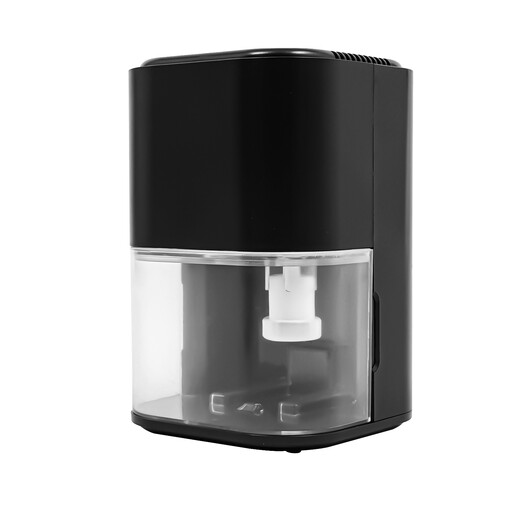
Mini dehumidifier, 42 W, two modes
For shoppers considering a compact appliance with two operating modes for a smaller room.
42 W; two modes; stated dehumidification rate of 17.6–21.12 fl oz/24 h; stated coverage up to 215 sq ft. The product title says the appliance switches off automatically when the tank reaches 0.33 gal.
Joybuy
 No image available
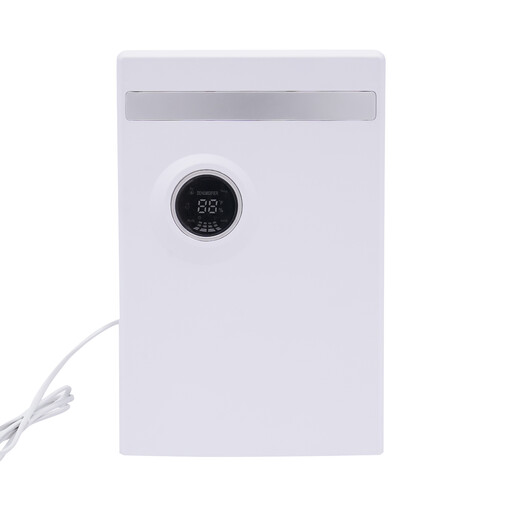
Portable dehumidifier, 100 W, 2,200-ml tank
For a room where the stated coverage of 30 m² and automatic humidity control are suitable.
100 W; 2,200-ml tank; stated coverage of 30 m²; stated dehumidification rate of 350–500 ml per day. The product description says the appliance switches off automatically when the tank is full.
Joybuy
 No image available
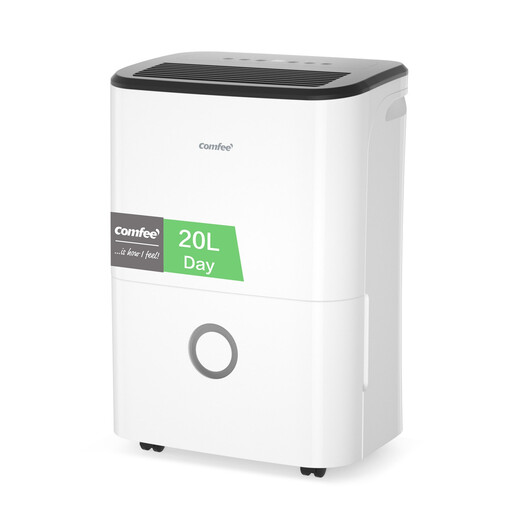
Comfee' MDDF-20DEN7 dehumidifier, 20 l per 24 hours
An option if the stated coverage and laundry mode suit your room and how you plan to use it.
20 l/24 h; 3-l tank; stated coverage of around 40 m² or 100 m³; Smart and laundry modes. The product description says a hose for continuous drainage isn’t included; the appliance switches off when the tank is full.
Joybuy
Frequently asked questions
Will a dehumidifier help if there’s already visible mould?
It can affect the humidity in the room, but it won’t replace dealing with existing mould or finding the cause of the damp. The German Environment Agency stresses that the causes of excess moisture must be identified and addressed.
Where should I put the appliance in a small bedroom?
Set up the appliance according to the manual for the specific model, and keep the air inlets and outlets clear. For example, the Meaco DD8L Junior manual specifies at least 30 cm of clearance from curtains and other objects; this figure doesn’t automatically apply to other models.
How can I estimate the running costs?
For a rough estimate, divide the power consumption in watts by 1,000, then multiply it by the number of hours the appliance runs. This gives you the energy used in kilowatt hours. Multiply that figure by your price per kilowatt hour. For example, the Wood’s WDD80 manual gives a figure of 650 W at 20 °C and 60% relative humidity. This is for a specific operating point, not a measurement of how you’ll use the appliance.
What should I know about the tank and hose drainage?
Check the tank capacity and whether the appliance switches off when it’s full, and make sure there’s a suitable drain where you plan to place it. Wood’s lists a hose connection and a washable dust filter for the WDD80; follow the manual for the specific appliance when connecting the hose and cleaning the filter.


