People with a cool, damp bedroom
If you notice recurring dampness in a cool room, consider the actual room temperature and possible causes of the moisture, as well as heating and ventilation.


A desiccant dehumidifier can help control moisture in a cool bedroom if dampness persists despite adequate heating and ventilation, and the specific model is suitable for the room’s size and temperature. Before buying, also compare the noise level in the mode you plan to use, power consumption and how the tank or drainage works. As the German Environment Agency points out, a dehumidifier is no substitute for fresh air or for identifying and resolving the cause of structural damp.
If you notice recurring dampness in a cool room, consider the actual room temperature and possible causes of the moisture, as well as heating and ventilation.
If you plan to use the dehumidifier near your bed at night, check its noise level in the mode you intend to use. A night mode doesn’t necessarily mean silent operation.
If you expect to run it for long periods, power consumption, automatic controls and how to empty the tank or connect a suitable drain are important considerations.
First, measure the room temperature and humidity, and check whether the dampness keeps returning. Then compare the specific model’s temperature range, noise level while you sleep, power consumption and ease of use.
| What matters | What to check before buying | Who is this particularly important to? |
|---|---|---|
| Damp in a cool room | Check that the specific model’s temperature range and stated room size are suitable for your bedroom, and measure the humidity. | If my bedroom stays cool and the damp keeps returning, I want to know whether the dehumidifier is designed for that temperature and room size. Around 33% of consumers put moisture control in cold conditions first. |
| Undisturbed sleep | Check which operating mode the noise rating applies to, and whether the night mode, display and alert sounds can be controlled separately. | If you plan to use the dehumidifier close to your bed at night, pay particular attention to potential noise and light disturbance. Around 27% of consumers prioritise a peaceful night’s sleep. |
| Power consumption | Compare the power consumption for each mode and the expected running time. Calculate energy use in kWh using watts × operating hours ÷ 1,000. | If I need to dehumidify regularly, I want to estimate the electricity needed for my planned running time. Around 20% of consumers focus primarily on running costs. |
| Tank or drainage | Check the tank capacity, automatic shut-off when full and, where applicable, the hose connection, placement requirements and maintenance instructions. | If you don’t want to empty the tank often, check whether the tank or drainage option suits where you plan to put the dehumidifier. Around 20% of consumers prioritise ease of use. |
The German Environment Agency points out that the causes of excess moisture need to be identified and addressed.
If dampness or mould persists, have the cause investigated and consider a dehumidifier only as an additional way to help control moisture.
A maximum dehumidification rate and a stated room size don’t tell you how much water a model will actually collect in the temperature and humidity conditions in your room.
Check the temperature range and the conditions specified by the manufacturer for the exact model, and monitor how the humidity changes in your room.
In night mode, Meaco says the DD8L Pro switches off the display lights and audible alerts, but the airflow continues.
Check noise ratings and night-time features separately, and take the intended position of the dehumidifier into account.
Meaco offers several DD8L desiccant models, including the Junior, Zambezi and Pro. The models differ in their controls and features.
Trotec describes the TTR 57 E as a desiccant dehumidifier for rooms up to 20 m², suitable for use at low temperatures.
Wood’s describes the WDD90 as a sorption dehumidifier for cold rooms, with Wi-Fi control, several fan speeds and the option of using the tank or a hose connection.
The following Joybuy models are dehumidifiers with stated room or bedroom suitability. If you’re choosing one for a cool bedroom, also check the type of dehumidifier and the permitted temperature range for the specific model.
 No image available
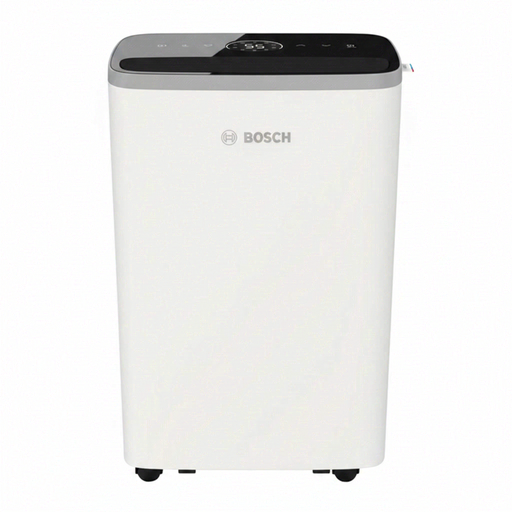
The product details specify a room size of around 40 m³ (16 m²). Compare this with your bedroom’s size and check whether the unit is suitable for its temperature.
Features listed include a sleep mode rated at 36 dB, a 24-hour timer and R290 refrigerant.
 No image available
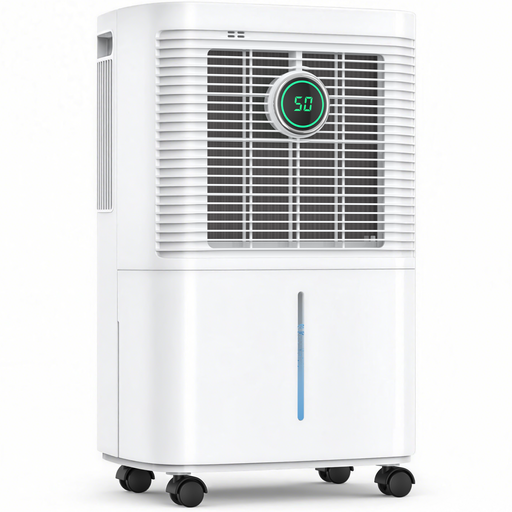
The stated room size is up to 75 m³. Before using it in a cool bedroom, also check the type of dehumidifier and the permitted temperature range.
The product details list a noise level of 40 dB, two fan speeds and a night mode with a dimmed display. According to the description, a hose for continuous drainage is not included.
 No image available
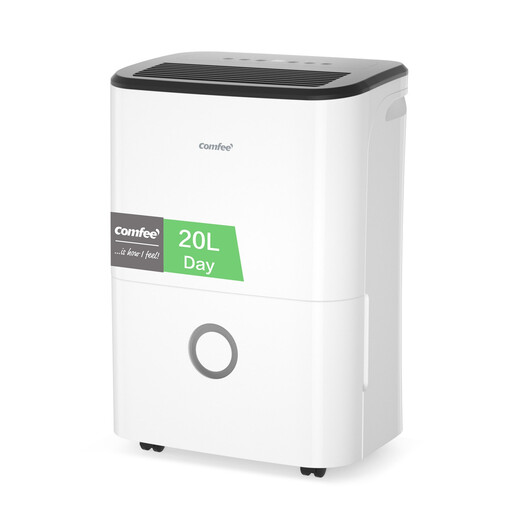
This model is listed as suitable for bedrooms. For a cool room, also check whether its type and temperature range are suitable.
The product details specify up to 16 l/day and a sleep mode rated at 36 dB.
 No image available
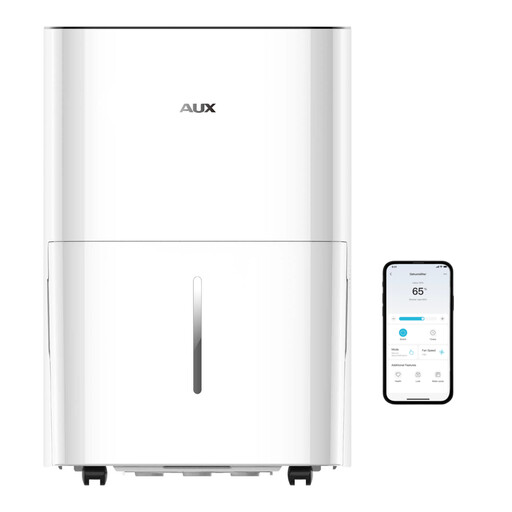
The product details specify a room size of around 100 m³ (40 m²). Compare this with your room’s size and check whether the unit is suitable for its temperature.
Hose drainage is listed as an option, but the description says the hose is not included. R290 refrigerant is also specified.
 No image available
The product details list rooms of 25 m² as suitable. For a cool bedroom, also check the type of dehumidifier and the permitted temperature range.
The stated operating range is 5–35 °C, with up to 8 hours of continuous operation and R290 refrigerant.
Use a thermo-hygrometer to measure the room temperature and relative humidity at the times that matter to you. The Verbraucherzentrale (German consumer advice service) gives around 40–60% relative humidity as a comfortable range for living spaces; humidity can differ on cold wall surfaces. Get any visible signs of damp damage checked, whatever the reading.
The German Environment Agency recommends airing bedrooms with the window wide open before going to bed and in the morning after getting up.
Follow the instructions for the specific model. Meaco requires the DD8L Zambezi to be placed on a stable, level surface and warns against operating it with a damaged mains cable or in standing water. Check the tank, filter and, if applicable, hose in line with the appliance instructions.
Multiply the power consumption in watts by the expected operating hours, then divide by 1,000 to calculate energy use in kWh. To work out the cost, multiply this figure by your electricity rate. The result depends on how long you run the dehumidifier and your tariff.
No. The German Environment Agency says that electrical and electronic waste should be collected separately. Check with your local council for ways to dispose of it in your area.