What should you look for when choosing one?
Think about each shopper’s main priority and match the appliance’s features to the conditions in your own room.
| Priority |
What to check before buying |
Who is this particularly important to? |
| Condensation and its cause |
Monitor room temperature and relative humidity; don’t judge recurring damp or mould on the appliance’s performance alone. |
If I keep seeing wet windows, I want to find out what’s causing the damp before choosing an appliance. Around 33% of shoppers have this as their main concern. |
| Suitability for cool rooms |
Compare the temperature range, stated room size and the conditions used to measure the dehumidification performance for the specific model. |
If my room stays cool for long periods, the technology needs to suit the actual room temperature. Around 27% of shoppers prioritise suitability in cold conditions. |
| Noise while sleeping and studying |
Check the noise level and fan speed for the operating mode you plan to use; also consider run times and where you’ll place the appliance. |
If I plan to run the appliance while I’m sleeping or studying, noise levels are a particular concern. Around 20% of shoppers prioritise quiet operation. |
| Power consumption and emptying the tank |
Check power consumption, expected run time, tank capacity and whether a hose connection is available for draining. |
If I’ll be using it often, I want to estimate the electricity costs and know how to deal with the collected water. Around 20% of shoppers are mainly concerned about running costs. |
Dehumidifiers for different rooms
The following Joybuy products are general-purpose room dehumidifiers; for rooms that are heated consistently, there are also alternatives specifically described as compressor models. Before buying, check that the type of appliance is right for your room temperature and whether you specifically need a desiccant dehumidifier.
 No image available
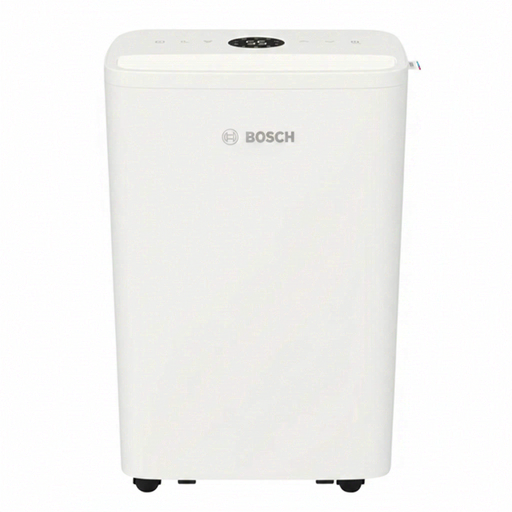
Bosch dehumidifier, 10 l/day, up to 17 m²
An option if the stated room size suits your room and you’re considering running it overnight; check that the type of appliance is suitable for your temperature range.
Figures stated in the product name: up to 10 l per day, up to 17 m², 2.5-litre water tank, 36 dB, two fan speeds and R290 refrigerant.
View at Joybuy
 No image available
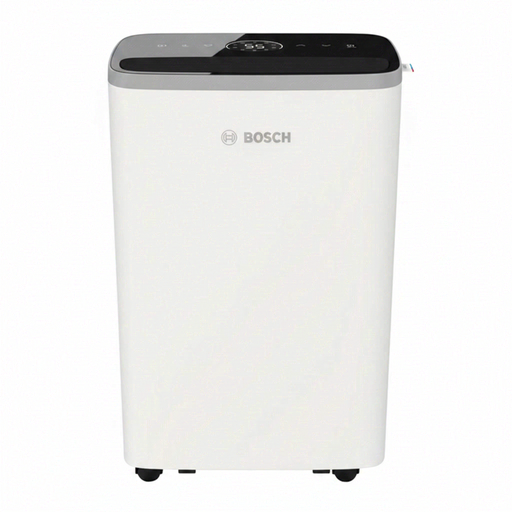
Bosch Dry 4000, 16 l/day
The stated room size and night mode may be useful when choosing a dehumidifier for a room; compare the figures with the conditions where you’ll use it.
Figures stated in the product name: up to 16 l per day, up to 75 m³, 2.5-litre tank, 40 dB and two fan speeds.
View at Joybuy
 No image available
Comfee’ MDDO-10DEN7, 10 l/day
This model isn’t a desiccant dehumidifier. It’s an alternative only if you’re not specifically looking for a desiccant model and this type of appliance is suitable for your room.
Figures stated in the product name: 10 l per day, 2.5-litre tank, 24-hour timer, three operating modes, R290 refrigerant and sleep mode at 36 dB. The stated room coverage is approximately 16 m² or 40 m³.
View at Joybuy
 No image available
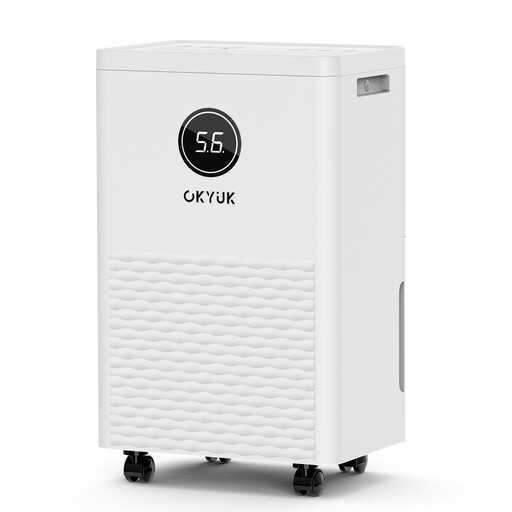
OKYUK D036D-12L compressor dehumidifier
As a compressor model, this is an alternative to consider for a room that’s heated consistently. Compare the room temperature and noise level with the conditions in which you plan to use it.
Figures stated in the product description: up to 12 l per day, up to 30 m² and sleep mode at 35 dB.
View at Joybuy
 No image available
CONOPU CS10B compressor dehumidifier
As a compressor model, this is an alternative for rooms that are heated consistently. Check that the stated room size and drainage options suit your room.
Figures stated in the product information: up to 16 l per day, up to 60 m², sleep mode at 30 dB, timer and hoses for continuous drainage.
View at Joybuy
Frequently asked questions about condensation and dehumidifiers
Is a dehumidifier enough if my window is wet in the morning?
Not necessarily. Measure the room’s humidity, ventilate adequately and, if the damp or mould persists, investigate the cause. The German Environment Agency gives 40–60 % relative indoor humidity as a guide to reducing the risk of mould; this isn’t a legal requirement for appliances.
How should I position and maintain an appliance in a small room?
Follow the instructions for your specific model, particularly those on keeping the air inlet and outlet clear, electrical connections, emptying the tank and filter maintenance. For the WDD80, Wood’s describes a removable tank, a hose connection and maintenance instructions; these aren’t general installation guidelines for other appliances.
How can I estimate the electricity costs?
For a known operating mode, multiply the power consumption in kW by the actual operating hours and your price per kWh. The 650 W figure given in the Wood’s manual for the WDD80 applies at 20 °C and 60 % relative humidity; on its own, it doesn’t give you a monthly cost for an appliance with automatic controls.
Do I need to report damp or mould as a tenant?
If a defect in the rented property appears during your tenancy, § 536c BGB requires you to notify your landlord without delay. Recurring damp or mould shouldn’t simply be covered up with a dehumidifier; whether a particular case counts as a defect depends on the cause and circumstances. This provision is part of the German Civil Code.
How should I dispose of an old electric dehumidifier?
Don’t put it in your household rubbish. The German Environment Agency advises that old electrical appliances should be returned separately, for example to a recycling centre or a retailer. Check the relevant acceptance requirements first.


