First, measure the humidity in your room and check whether the damp is confined to one storage area or affects the whole room. A refillable desiccant container may suit a small, poorly ventilated cupboard; if humidity throughout the room is repeatedly high, an electric unit suited to the room size and temperature may be a better option. Ventilation and addressing the cause of the damp are still essential: a dehumidifier is no substitute for either, as the Verbraucherzentrale and the German Environment Agency also recommend.
Which solution is right for you?
Students with a damp room and stored clothing
If you keep clothes in your living or sleeping area, start by measuring the room’s humidity and checking the ventilation and possible sources of damp. The Verbraucherzentrale recommends using a thermo-hygrometer.
Students who are sensitive to noise
If you sleep or study in the same room, consider the operating mode and where you’ll place the unit. Night mode doesn’t necessarily mean silent operation.
Students with a poorly ventilated cupboard
If you’re mainly concerned about one storage area, first check whether air circulates poorly there or whether humidity is also high elsewhere in the room.
What to consider when buying
First decide whether you want to dehumidify one storage area or the air in the whole room. Then consider the room size and temperature, noise in a shared room and the ongoing maintenance involved.
Desiccant for a small storage area
Suitable if: the room air isn’t consistently too humid, but a poorly ventilated cupboard needs extra attention and you don’t want a mains-powered unit.
Bear in mind: you’ll need to refill the desiccant and empty the container. Any spilled liquid could damage clothing or other delicate materials.
Electric compressor dehumidifier for the room
Suitable if: humidity in the room is repeatedly high and the manufacturer’s specifications for room volume and operating temperature suit your room.
Bear in mind: the unit needs electricity and floor space, makes some noise while running, and requires you to empty the tank or use a suitable drain.
Electric desiccant dehumidifier for cooler rooms
Suitable if: you need an electric unit and the room is cooler than the operating temperature range of a compressor model you’re considering.
Bear in mind: suitability for lower temperatures alone tells you nothing about electricity costs or noise levels. Check the specifications for the exact model.
| Concern |
What to check when buying |
Who it matters most to |
| Clothing and the cause of damp |
Measure the room’s humidity; check the storage area and possible sources of damp. |
I want to protect clothes in a poorly ventilated cupboard and find out whether the damp is localised or affects the whole room. Around 36% of consumers put protecting stored clothing first. |
| Quiet for sleeping and studying |
Check the noise rating and operating modes for the specific model; compare figures only when they were measured under similar conditions. |
If I sleep or study in the same room, I want to know when and in which mode the unit can run. Around 29% of consumers prioritise a quiet environment for sleeping and studying. |
| Room humidity and unit size |
Check the room volume, operating temperature range and conditions for the stated performance against your room. |
If humidity throughout the room is repeatedly high, I need a solution with specifications suited to the room size and temperature. Around 21% of consumers prioritise persistently high room humidity. |
| Running costs and water disposal |
Check how often the desiccant needs refilling, or the electricity consumption and planned running time; also consider access to the tank and a safe location for the unit. |
If I want to keep ongoing costs down, I compare how often a desiccant container needs refilling with the electricity consumption and emptying involved with an electric unit. Around 14% of consumers put low running costs first. |
Common buying misconceptions
-
A desiccant container controls humidity throughout the room
UHU describes its container as suitable for poorly ventilated areas. That doesn’t mean it will reliably regulate the air in an occupied room.
Measure the room’s humidity first, then decide whether a local solution or a room-sized unit is appropriate.
-
The maximum litres-per-day rating reflects performance in your room
Manufacturers’ maximum dehumidification figures don’t show how much water a unit will actually collect in the conditions of a student room. Room size and temperature matter too.
Compare the room volume and permitted operating temperature with the intended location, and check the conditions under which the performance figure was measured.
-
A dehumidifier alone will solve mould or damp damage
If there’s mould, you need to find and address the cause; a unit won’t fix damp coming through the building structure.
Check what’s causing it. If a defect in the rented property appears during your tenancy, you must notify your landlord without delay under § 536c BGB.
Brands to consider
Bosch
Bosch offers the Dry 1000, 2000 and 4000 models, with different specifications for room volume and maximum daily extraction. Choose a size suited to your specific room.
- Bosch lists automatic modes for its units. The Dry 4000 also has overfill protection and switches off automatically when its tank is full.
- The Dry 4000 is larger than the Dry 1000. Bosch and Joybuy give different noise ratings for the Dry 4000, so compare figures only when the measurement conditions are comparable.
Meaco
Meaco offers compressor and desiccant units; room temperature is an important difference between the models.
- Meaco Germany lists a minimum operating temperature of 10 °C for the Arete One 10L and 0 °C for the DD8L Zambezi.
- These temperature figures apply to the specific models listed. Check noise and electricity consumption separately for the unit you’re considering.
Trotec
Trotec describes the TTK 33 E as a compressor dehumidifier for rooms up to 15 m² or 37 m³.
- According to Trotec, the model has a humidistat, a 1.5-litre tank and a hose connection.
- The maximum daily extraction rate isn’t a measure of performance in a student room. Trotec states a noise level of 43 dB(A) at the highest fan setting.
UHU
UHU’s Luftentfeuchter Original is a refillable desiccant container for poorly ventilated areas.
- UHU describes the product as requiring no electricity and making no noise.
- You’ll still need to refill and empty it. UHU warns that spilled liquid can cause stains and damage leather or metal.
WENKO
WENKO offers refillable, electricity-free room dehumidifiers in its Cube and Drop ranges as options for small areas.
- WENKO describes the units as having replaceable dehumidifier blocks.
- Check the coverage specified for the particular product and the unit used. Don’t assume figures in square metres and cubic metres are equivalent.
Joybuy products
The following Joybuy products are electric dehumidifiers designed for room air. Compare the stated room size, operating modes, tank and noise ratings with your actual needs.
 No image available
Comfee' MDDO-10DEN7, 10 L/day
The stated room size and sleep mode may be useful in a shared room.
Listed in the product title: up to around 40 m³ (16 m²), a 2.5-litre water tank, a 24-hour timer and 36 dB in sleep mode.
The title also mentions automatic defrost and a child lock.
View at Joybuy
 No image available
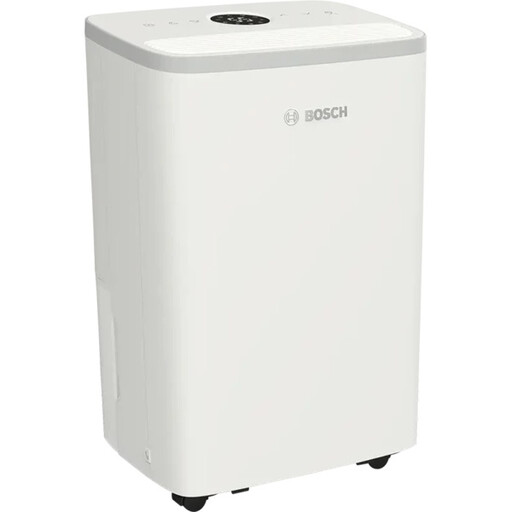
Bosch Dry 2000, 12 L/day
The stated room size and laundry mode may be useful if you want to dehumidify the room and dry washing indoors.
Listed in the product title: up to 55 m³, a 2.5-litre tank and 38 dB. Auto, night and laundry modes are also listed, along with two fan speeds.
According to the product description, the hose for continuous drainage is not included.
View at Joybuy
 No image available
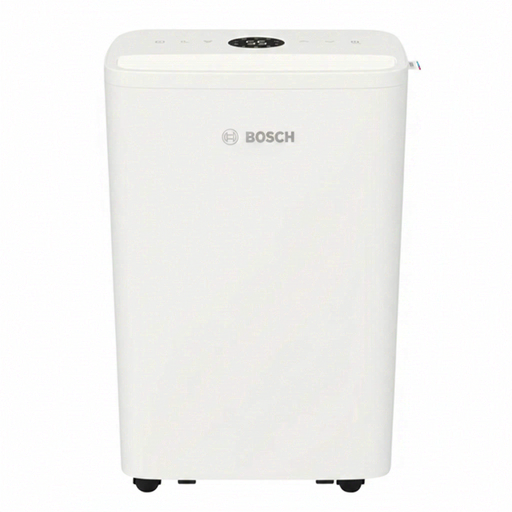
Bosch dehumidifier, 10 L/day
The stated room size and laundry mode may suit you if you want to dehumidify the room and dry washing indoors.
Listed in the product title: up to 17 m² and a 2.5-litre tank. The product description lists two fan speeds and 36 dB at the highest setting.
Modes listed include night, laundry, defrost, continuous and automatic, as well as a hose for continuous drainage.
View at Joybuy
 No image available
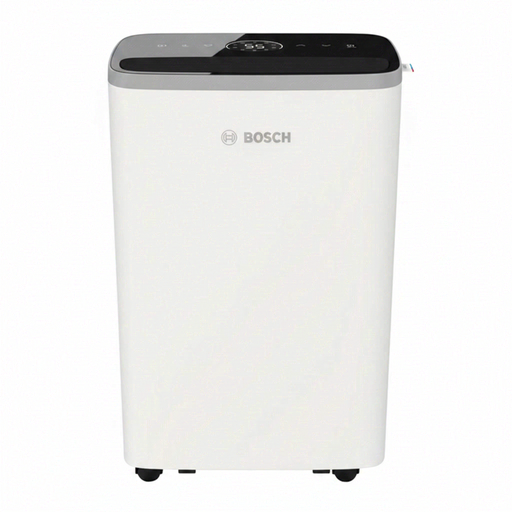
Bosch Dry 4000, 16 L/day
The stated room size, along with Auto and laundry modes, is relevant if you want a unit to dehumidify the room and dry washing indoors.
Listed in the product title: up to 75 m³ and a 2.5-litre tank; two fan speeds are listed, along with Auto, night and laundry modes.
Joybuy lists 40 dB, while Bosch lists 38 dB. As the figures don’t specify consistent measurement conditions, check the noise rating for the exact version before buying. According to the product description, the hose for continuous drainage is not included.
View at Joybuy
 No image available
VINO 12L Smart Dehumidifier
Laundry and sleep modes may be useful if the unit will be in a room that’s also used for living or sleeping.
Listed in the product title: Wi-Fi control, a 1.8-litre tank and three modes: Auto, Dry and Sleep. The description states up to 12 L/day and a room size of up to 24 m².
View at Joybuy
Frequently asked questions
What humidity level should I measure before buying?
Measure relative humidity with a thermo-hygrometer. The Verbraucherzentrale gives around 40 to 60% as a comfortable range for living spaces; a single reading won’t tell you whether damp is recurring or the walls are cold.
Can I use a dehumidifier instead of ventilating?
No. The German Environment Agency recommends regular ventilation and taking extra care when drying washing indoors. A dehumidifier also won’t fix damp coming through the building structure.
How can I position a desiccant container safely?
Following UHU’s instructions, place it on a firm, stable surface and keep any liquid that might spill away from clothing, leather and metal. Empty the container and refill it with the appropriate desiccant.
What running costs and maintenance should I compare?
For a desiccant container, compare how often it needs suitable refills. For an electric unit, consider electricity consumption, planned running time and the need to empty the tank or use a suitable drain; also check the warranty terms for the specific offer.
What should I do if there’s mould in my rented student room?
Have the cause investigated and notify your landlord without delay if a defect in the rented property arises during your tenancy. This is required under § 536c BGB; whether a particular case of mould falls under this provision depends on the circumstances. A dehumidifier is no substitute for investigating the cause.


