
Lieferung heute & morgen

Qualitätsgarantie
App herunterladen
Kategorien
A designer vase is more than a mere container for flowers; it is a standalone design element that defines the aesthetic of a room. Selecting the right piece requires an analysis of its material, form, and intended placement. Whether serving as a central table vase or a subtle accent on a shelf, its design specifications determine its character and visual impact. This guide focuses on the objective criteria relevant to choosing a modern decorative vase that is both stylish and functional.
The decision to purchase a vase should be based on an objective evaluation of its properties. Material composition and form are the primary factors that determine its suitability for specific interior styles and applications.
The choice of material influences the haptics, light reflection, and durability of the vase.
Porcelain and Ceramic: These materials are distinguished by their opacity and substantial weight, which gives them excellent stability. A porcelain vase can feature either a glazed or a matte surface. Glazed versions reflect light to create dynamic accents, while matte surfaces offer a more subdued, sculptural presence. The density of the material makes it impermeable to water, rendering it highly functional for fresh floral arrangements.
Glass: A glass vase interacts directly with light. Its transparency or translucency can vary depending on its tint and wall thickness. Tinted glass filters light, adding a dimension of colour to the room, while clear glass draws complete focus to its contents. The malleability of glass allows for complex and intricate designs, ranging from minimalist cylindrical shapes to organic, flowing forms.
Metallic Surfaces: Applications or full coatings, often in gold or silver tones, lend a luxurious character to a vase. A gold vase can be finished using various methods, such as PVD coating or galvanic processes, which ensure high abrasion resistance. The reflective properties of metal create targeted points of light, elevating the vase as a visual highlight.
The silhouette of a vase determines its interaction with its surroundings and its contents.
Sculptural vs. Classic Forms: A sculptural vase features such a distinct design language that it functions as an art object even without flowers. Asymmetrical, geometric, or figurative designs are characteristic of this style. In contrast, classic vase shapes (e.g., cylinder, amphora) are primarily designed for displaying bouquets and tend to recede formally into the background.
Size and Proportion: The dimensions must be appropriate for the intended placement. A small vase is suitable for side tables, narrow shelves, or as part of a larger arrangement. Large floor vases require ample space to achieve their full effect and often act as an architectural statement. The diameter of the opening is crucial for the type of bouquet—narrow openings are ideal for single stems, while wide openings accommodate opulent bouquets.
The following products have been selected based on their specific design features and material properties.
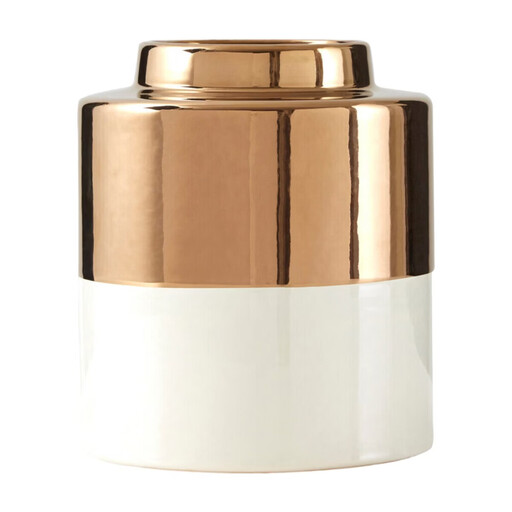
Why We Recommend This Product: This model combines a classic, bulbous shape with a modern two-tone design. According to the manufacturer, the material base is porcelain, which provides a smooth, tactile surface and stability. The contrast between the white body and the gold-coloured neck creates a defined visual anchor. With a height of 20 cm and a diameter of 18 cm, it is perfectly sized for use on shelves or console tables.
Advantages:
Who It's For: For those seeking a small vase with the appearance of a luxury vase. It integrates well into modern and boutique hotel-inspired interiors, serving as an elegant accent for living room decor.
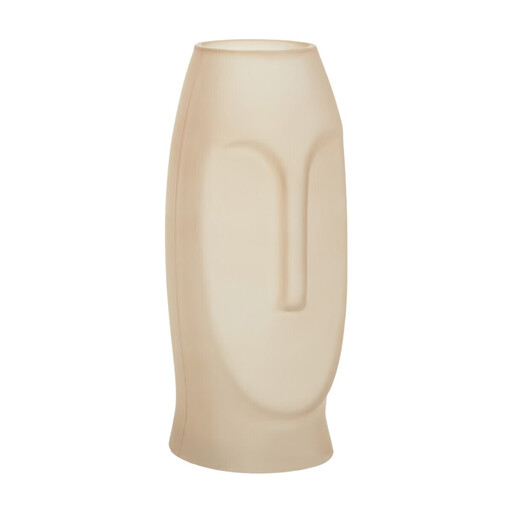
Why We Recommend This Product: This glass vase doubles as a sculptural vase due to its unique design. The upper section is shaped like a stylised face, giving the object a high degree of recognition. The gold-coloured surface of the glass creates a warm, reflective effect. Its slim profile, with a height of 23 cm and a diameter of 10 cm, is designed for displaying single stems or small branches, but it can also stand alone as a purely decorative object.
Advantages:
Who It's For: Users looking for an expressive statement piece. The design harmonises particularly well with boho decor and eclectic interior styles that prioritise individual and artistic accents.
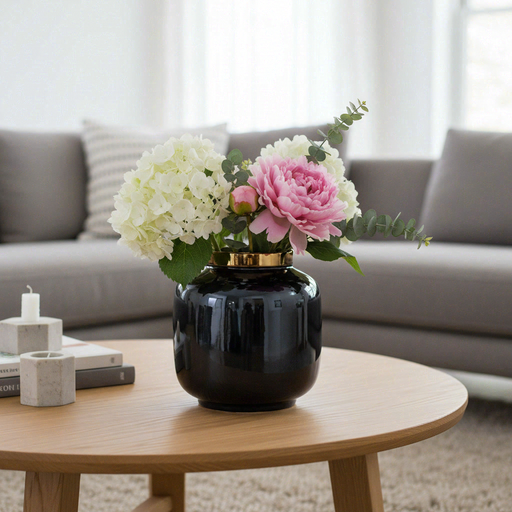
Why We Recommend This Product: This model leverages the strong visual contrast between black porcelain and a gold-coloured rim. The shape is defined by an angular shoulder and a narrow neck, creating a modern, geometric aesthetic. Its glossy glazed surface reflects ambient light, lending additional depth to the deep black colour. The manufacturer states the material composition as 90% ceramic and 10% glaze.
Advantages:
Who It's For: For connoisseurs of a contemporary and sophisticated style. The combination of black and gold is a classic hallmark of a luxury vase and fits perfectly into minimalist or opulently designed spaces.
The models presented represent specific design directions. However, the spectrum of vases, particularly in the realm of metallic finishes, is far broader. For those specifically looking for objects with warm metal tones, an expanded overview offers additional options. Discover our curated selection of gold vases to compare more shapes and material combinations.
1. What distinguishes a designer vase from a conventional vase? A designer vase is characterised by a deliberate design process where form, material, and craftsmanship are paramount. It often has a sculptural quality and functions as a standalone decorative object, even without flowers. Conventional vases are designed primarily to be functional containers for plants.
2. What is the best way to style a modern vase? For a modern decorative vase, a minimalist approach is often recommended. Single, long-stemmed flowers or branches (e.g., eucalyptus, ornamental grasses) accentuate the vase's form without distracting from it. Many sculptural vases achieve their full impact when placed as a standalone object, completely empty.
3. Which material is the most functional for a vase? Functionality depends on the intended use. For fresh flowers, waterproof materials like glass, glazed porcelain, or ceramic are ideal. They are robust and easy to clean. Materials such as unglazed clay or certain metals can be porous or react with water, making them better suited for dried flowers or as purely decorative objects.