People who need a quiet workspace
If you want to concentrate or hold conversations at your desk, look for a breeze you can adjust precisely and check how noisy the fan is at the speed you’ll actually use.


For a pleasant breeze right at your desk, a compact table fan with fine speed control is a natural starting point. If you want the air to reach other areas of your flat too, direction and oscillation are key. Compare noise ratings at the speed you’ll actually need, along with the footprint and power consumption, rather than looking only at maximum airflow. The German Environment Agency notes that fans cool the skin by moving air, but do not lower the room temperature.
If you want to concentrate or hold conversations at your desk, look for a breeze you can adjust precisely and check how noisy the fan is at the speed you’ll actually use.
On a small desk, the fan and its base need to fit without getting in the way of your screen, work materials or furniture. Allow for room to tilt or oscillate it too.
If you want to move air beyond your own seat, check whether you can direct the airflow into other areas of your small flat.
First decide whether a quiet, direct breeze at your desk or wider air distribution matters more. Then compare the dimensions, noise ratings and power consumption with how you plan to use the fan.
| Buying criterion | What to look for | Who is this especially important to? |
|---|---|---|
| Noise and speed control | Check the speed settings, direction and conditions behind the dB(A) ratings. The key factor is the setting you actually plan to use. | If I want to concentrate or make calls at my desk, I need a breeze I can adjust easily that won’t disturb me at my preferred setting. Around 36% of consumers prioritise quiet, adjustable airflow. |
| Footprint and oscillation range | Compare the fan and base dimensions with the space available, and allow room for tilting or oscillation. | On a cramped desk, I want to keep my screen and work materials accessible and avoid the fan bumping into anything as it oscillates. Around 29% of consumers prioritise finding a fan that fits in a limited space. |
| Air distribution | Check whether the fan oscillates horizontally or vertically, or whether you need to direct the airflow manually. | If I want to move air beyond my seat, I need to position and direct the fan so that it reaches the area. Around 21% of consumers prioritise air distribution beyond their immediate workspace. |
| Power consumption | Check the power range or maximum power consumption of the specific model. To estimate your own costs, factor in how many hours you’ll use it and your electricity tariff. | If I’m using the fan for long periods, I want to know the power consumption at my chosen setting and what that means for running costs. Around 14% of consumers put ongoing electricity use first. |
Moving air can make your skin feel cooler, but it doesn’t remove heat from your home. The German Environment Agency therefore distinguishes between the cooling effect on your skin and an actual reduction in room temperature.
Before buying, consider whether you mainly want a more pleasant breeze at your desk or a lower room temperature. The German consumer advice centre recommends waiting until it’s cooler outside than indoors before opening the windows.
A stated minimum rating doesn’t tell you how noisy the fan is at the setting you’ll need for your preferred airflow. Manufacturers’ figures also apply to specific models, rather than representing a standard rating for all fans.
Compare ratings under similar conditions and focus on the setting that’s right for where you’ll be sitting. If possible, check the operating noise at exactly that setting.
On the same product page for Rowenta’s VU2740F0, an automatic oscillation claim is contradicted by a feature field.
If automatic oscillation is a deciding factor, ask for confirmation that the feature is included on the specific model number and version.
Meaco’s table air circulators include the MeacoFan Sefte 10 Table and the MeacoFan 1056, which offer horizontal and vertical air distribution.
The Philips CX3050/01 is a table fan with a tilt function and oscillation.
The distributor describes the Vornado 533 as a desk or floor air circulator for small to medium-sized rooms, with directed airflow.
The Rowenta VU2740F0 is a table fan with four speed settings.
According to Duux, the Whisper Flex² can be converted from a table fan to a pedestal fan, making it a possible choice if you move it between locations.
The Joybuy products below are table fans and air circulators designed to move air around your workspace. Depending on the model, check how much space it takes up and whether a direct or wider airflow suits your desk.
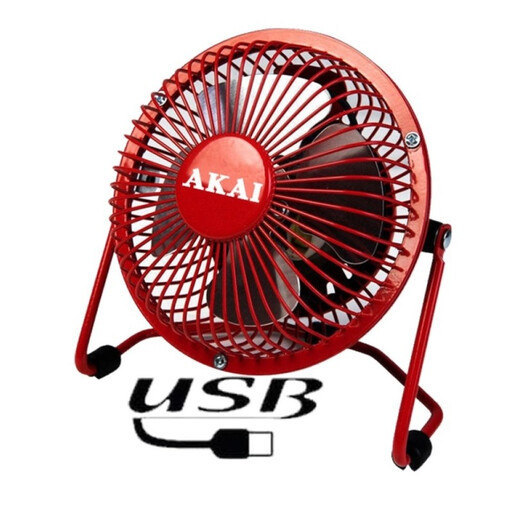 No image available
Designed as a table fan for a breeze at your workspace. Check that its size and direction suit your desk.
Colour: grey, red or green, selected at random.
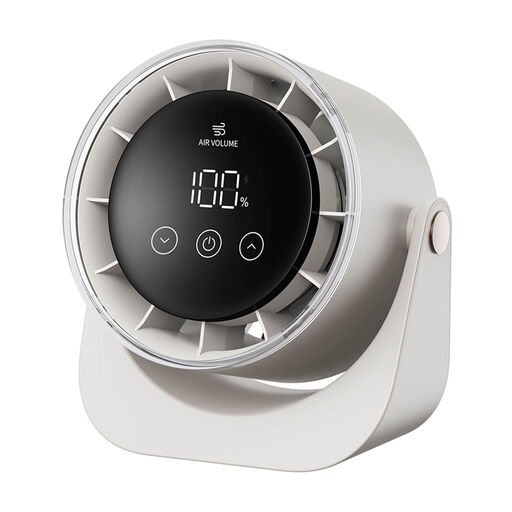 No image available
Its compact, cordless design could suit a desk or a spot where you move it from place to place.
100 speed settings, LED display and 90° tilt adjustment.
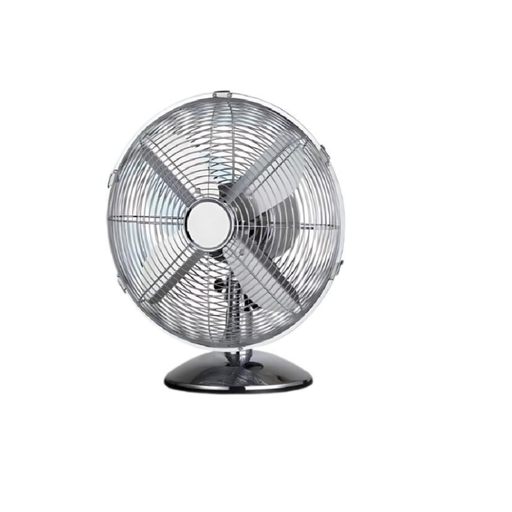 No image available
The oscillation function can distribute air from side to side. Check that the rotor and its oscillation range will fit on your work surface.
30 cm rotor, 35 W, three speed settings, automatic left-to-right oscillation and manually adjustable tilt.
Four aluminium blades, metal housing and carry handle.
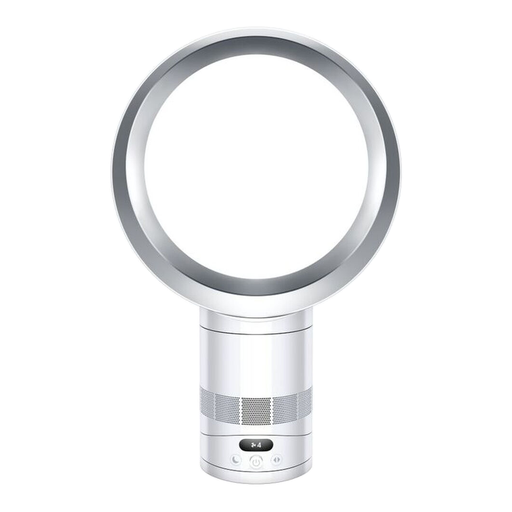 No image available
Listed as a table fan for your workspace. Check the fan’s height and the space it needs against your desk.
 No image available
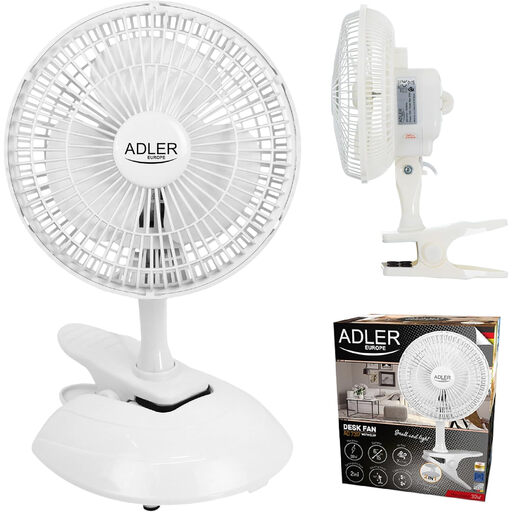
The clip and base give you different ways to position the fan at your workspace. Check which option suits your desk.
15 cm rotor, two speed settings, 30 W and 16° tilt.
Includes a clip and base.
No. The German Environment Agency explains that fans cool the skin by moving air, but don’t reduce the heat in your home. If it’s cooler outside than indoors, opening the windows at the right time of day can help too.
No, because the minimum rating doesn’t necessarily reflect how noisy the fan is at the setting you’ll need for your preferred airflow. Compare ratings alongside the conditions they refer to, and pay particular attention to the setting you’re likely to use.
Multiply the power in kilowatts by the number of hours the fan runs and your price per kilowatt-hour. At 26 W for 8 hours a day over 30 days, the calculation comes to 6.24 kWh. Meaco lists 26 W as the maximum power consumption for the Sefte 10 Table; this isn’t a verified consumption figure for every setting.
Position the fan so the airflow isn’t constantly directed straight at your face, and leave enough room for it to oscillate. Follow the instructions and guidance for your specific model when cleaning it. For the Honeywell HT900, the manufacturer says to unplug the fan before opening the grille.
Mains-powered appliances covered by the EU Low Voltage Directive must meet its safety and CE requirements. The German Federal Network Agency lists labelling, manufacturer information and German-language instructions with the required warnings among the points to check. CE marking is the manufacturer’s declaration of conformity, not an independent quality mark. The requirements for a USB or battery-powered model should be assessed for the specific product.