Desk users in a large living room
If you work at a desk, you’ll want to adjust the direction and strength so the air reaches your seat without disrupting your concentration. TÜV SÜD describes oscillation as a way to distribute airflow around a room.


At your desk, an air circulator with adjustable direction and a well-controlled low setting is a good choice if you want the breeze to reach your seat without blowing directly on you all the time. If you also want air to reach other parts of a large living room, the oscillation direction and where you place the fan matter more. A fan moves air, but does not lower the room temperature itself, as the Verbraucherzentrale explains.
If you work at a desk, you’ll want to adjust the direction and strength so the air reaches your seat without disrupting your concentration. TÜV SÜD describes oscillation as a way to distribute airflow around a room.
If you want to move air between your desk and other seating areas, pay attention to the direction and oscillation rather than simply blowing air at one spot. TÜV SÜD highlights oscillation as a way to distribute air.
If you prefer a quiet working environment, assess the low setting alongside the airflow it produces. IMTEST points out that wattage alone tells you little about fan performance.
TÜV SÜD describes oscillation as a way to distribute air around a room, while IMTEST stresses that fan performance cannot be judged by wattage alone.
| What matters to you | What to check when buying | Who is this important to? |
|---|---|---|
| Air distribution in the living room | Check where you can place the fan and whether it oscillates horizontally and, where applicable, vertically. Don’t assume the manufacturer’s stated coverage will suit your room layout. | If I want the air to reach other seats as well as my desk, I need airflow that I can direct appropriately. Around 36% of consumers prioritise air distribution in the living room. |
| Noise while working | Compare the noise level with the usable airflow at the same fan setting; don’t compare minimum and maximum figures as if they were equivalent. | If I need to concentrate, a quiet setting that still moves enough air at my desk matters to me. Around 29% of consumers prioritise quiet operation. |
| A breeze at your seat | Consider the low setting, tilt angle and distance from where you’ll actually be sitting. | If I mainly want a controllable breeze at my seat, I should be able to direct the airflow towards me or let it pass by. Around 21% of consumers prioritise this. |
| Energy use over longer periods | Consider the power consumption in watts alongside the setting you need and the airflow stated for it. | If the fan will be running for long working sessions, I want to take account of the energy use at the setting I’ll actually use. Around 14% of consumers prioritise low running costs. |
A standard fan moves air but does not remove heat from the living room. This can make people feel cooler, but it does not automatically lower the room temperature.
Before buying, consider whether you need a breeze at your desk or an actual reduction in room temperature.
For the Rowenta Turbo Silence Extreme VU5677, the manufacturer’s figures for Silent Night mode and maximum airflow refer to different operating modes.
Check which noise and airflow figures apply to the same setting.
IMTEST points out that wattage alone tells you little about fan performance. A manufacturer’s stated coverage also doesn’t automatically tell you how much air will reach your desk.
Consider airflow, direction, noise and power consumption at the settings you actually plan to use.
The MeacoFan range includes desk, floor and pedestal fans. The MeacoFan 1056 is worth considering if you want flexible positioning in your work area.
The Turbo Silence Extreme VU5677 is a pedestal fan for anyone with floor space beside their desk for a height-adjustable setup.
The compact Leo 3D air circulator is an option if you want to move the unit around and direct it in different directions.
This selection includes desk, floor and tower fans with details on direction or air distribution for use at your desk or around the home.
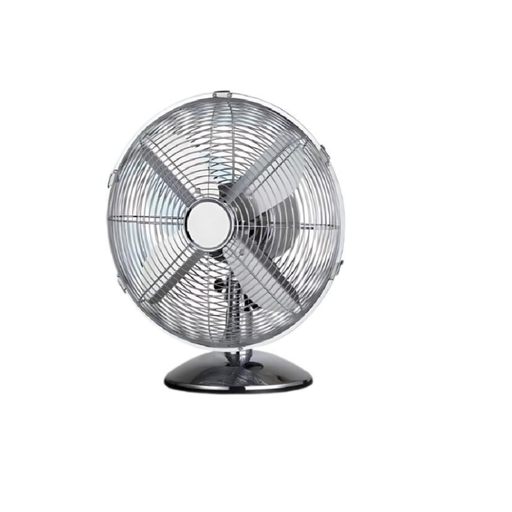 No image available
Manual tilt and left-to-right oscillation give you several ways to direct airflow at your desk.
Three speeds, four aluminium blades, a chrome safety grille, metal housing and carry handle.
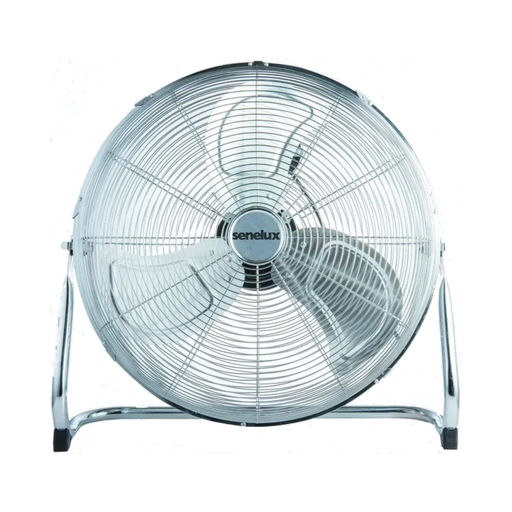 No image available
The tilting fan head can be directed towards your seat or wherever you need it.
The product name specifies three speeds, a tilt angle of up to 70°, metal blades, a carry handle and rubber feet.
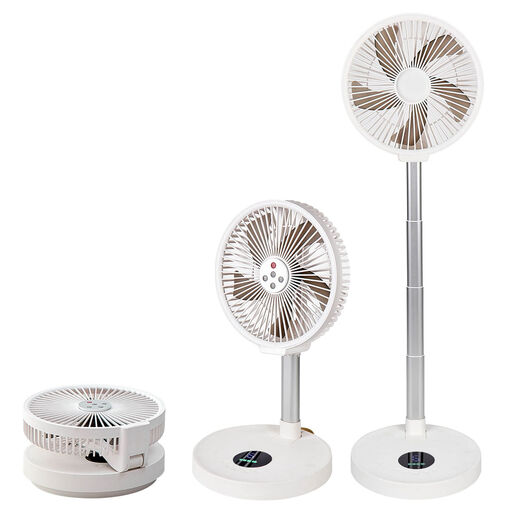 No image available
Its height-adjustable, foldable design is intended for flexible positioning in your living or work area.
The product name lists six speeds, a timer, a remote control and a 7200-mAh battery.
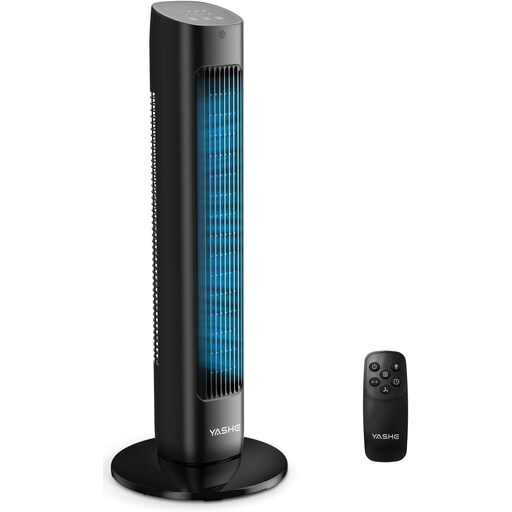 No image available
The product name lists a remote control and a noise level of 28 dB; check which fan setting this figure refers to.
The model name specifies a height of 80 cm.
 No image available
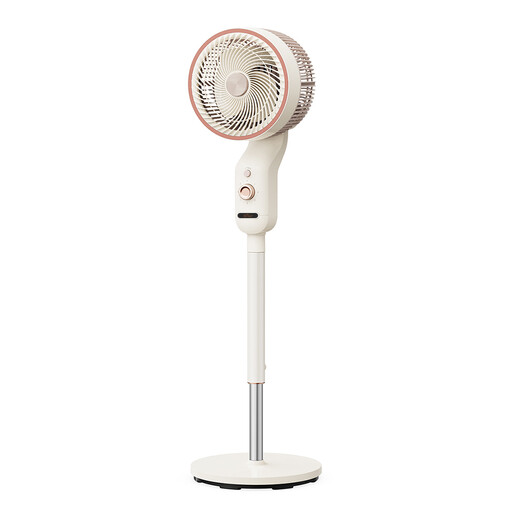
The product name specifies a height-adjustable design and 360° air circulation for different directions.
Three speeds; the stated height adjusts from 34 to 41 inches.
No. A standard fan does not remove heat from the room. It moves air, which can make people feel cooler, but a different type of appliance is needed to actually lower the room temperature, as the Verbraucherzentrale explains.
Position it so the air reaches your seat or deliberately passes by it. TÜV SÜD recommends keeping powerful fans at a sufficient distance from people; an oscillation function can help prevent a constant direct draught. Also follow the placement instructions for the specific fan.
Check the specific product listing for the CE mark, identifiable manufacturer details and German instructions with the necessary warnings. The Bundesnetzagentur lists these as market surveillance criteria.
If there’s a fault, your statutory rights against the seller are relevant; an additional guarantee is a voluntary service subject to its own terms. The Verbraucherzentrale recommends keeping your statutory rights and any guarantee separate. Before buying, also check the terms of any guarantee on offer.