
Lieferung heute & morgen

Qualitätsgarantie

Willkommens-Angebote freischalten: KOSTENLOSE Lieferung | Bis zu 80 % RABATT | Kostenlose 30-Tage-JoyPlus-Testphase
App herunterladen
A new desk is a significant purchase for your home office, study, or personal workspace. However, the sheer number of options can be overwhelming. Many models look appealing online but prove to be impractical or unstable after a short time. As a Joybuy Product Recommendation Officer, I'm here to help you navigate the common pitfalls and make an informed decision that meets your needs.
This guide focuses on the objective criteria that separate a good desk from an unsuitable one. We'll highlight the most common flaws that lead to frustration and unnecessary expenses.
The 3 Most Common Pitfalls When Buying a Desk:
To avoid a poor purchase, you should focus on three core aspects. These determine the longevity, functionality, and comfort of your future workspace.
A desk's stability depends on two factors: the desktop material and the frame's construction.
The right dimensions are crucial for a comfortable and healthy working posture.
A tidy workspace promotes focus. Integrated solutions are often a better choice than aftermarket add-ons.
Here are some models that represent a considered choice for different user profiles, based on objective features.
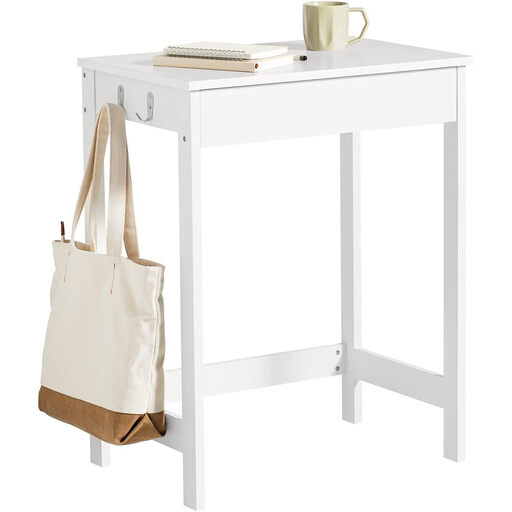
Why This Fits Their Persona: Ideal for students or those with a small home office area in their apartment. The compact 60x40 cm dimensions allow for a functional workspace even in niches or small rooms.
It avoids the 'design over function' trap. Despite its small footprint, it provides targeted storage with a drawer and side hooks, preventing clutter on the work surface.
The sturdy iron frame ensures a high load capacity of up to 60 kg, avoiding the stability trap. The E1-grade MDF board is robust and easy to maintain.
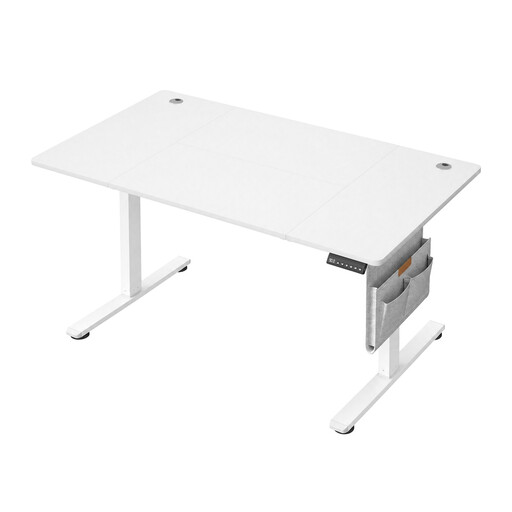
Why This Fits Their Persona: Perfect for home office professionals who spend long hours at their desk and prioritise healthy posture. It makes switching between sitting and standing effortless.
It solves the wobbly construction problem with a solid steel frame that ensures stability even at its highest position. The quiet motor provides smooth, disruption-free adjustments.
The electric height adjustment (72-120 cm) with four memory presets offers superior convenience. Integrated cable grommets and a storage pouch help keep the workspace organised.
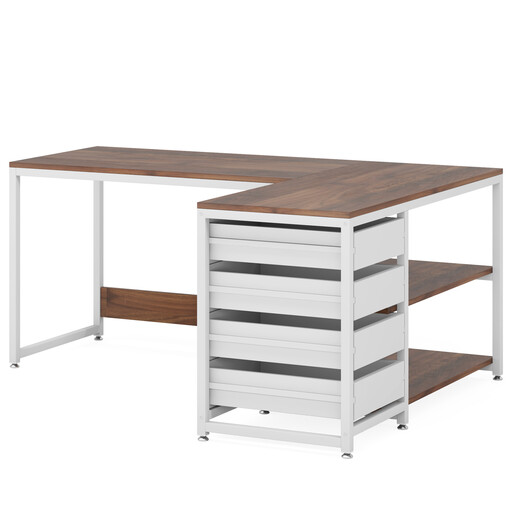
Why This Fits Their Persona: Ideal for users who need a large work surface for multiple monitors and ample storage space. The L-shape makes optimal use of space and separates work and storage areas.
This model is the direct answer to the 'design dead-end'. With four drawers and two open shelves, it provides a comprehensive storage solution that ensures tidiness from the start.
The generous work surface (150 x 110 cm) and reversible design, which allows for assembly in either a left or right corner configuration, offer maximum flexibility for various room layouts.
A white desk complements almost any interior design style. We've curated a selection of models that meet the criteria for quality and functionality mentioned here.
1. What is the ideal height for a desk? The standard height for desks is between 72 and 76 cm, which is suitable for most people. For an ergonomically optimal posture, your forearms should be able to rest horizontally on the desktop while your shoulders are relaxed. If you are very tall or short, a height-adjustable desk is the best solution to fine-tune the height.
2. What is the easiest material to maintain for a desktop? A desktop made of particleboard or MDF with a melamine resin coating is typically very low-maintenance. The surface is sealed, scratch-resistant, and can be easily cleaned with a damp cloth. Unlike solid wood, which requires regular oiling or waxing, this material needs no special care.
3. How much weight can an average desk support? The load capacity varies greatly depending on the construction. A simple, small desk can often support 40–60 kg, which is sufficient for a laptop and a few books. Larger office or gaming desks with a robust steel frame are often rated for 70 kg or more and can easily hold multiple monitors and heavy equipment. Always check the manufacturer's specifications for the maximum static load capacity.