
Lieferung heute & morgen

Qualitätsgarantie

Willkommens-Angebote freischalten: KOSTENLOSE Lieferung | Bis zu 80 % RABATT | Kostenlose 30-Tage-JoyPlus-Testphase
App herunterladen
A desk clamp lamp can keep your workspace clear, direct light exactly where you need it and work well for home working, studying or reading. In practice, however, it is not just the design that matters. A clamp that is too weak, an unsuitable connection or missing information about the bulb can make the lamp barely usable after purchase.
The maximum opening and shape of the clamp are often given less prominence than the colour or design. You should therefore measure the tabletop thickness before buying. Shelves, bed edges and monitor surfaces also have different requirements in terms of stability and contact area.
A clamp that is too small will not sit securely. If it is tightened too much, delicate surfaces may be damaged. Non-slip pads and carefully adjustable pressure are practical features to look for.
With an LED clamp lamp, lumens, colour temperature and colour rendering are more informative than the LED designation alone. Neutral white light of around 4,000 Kelvin can be suitable for concentrated work, while warm white light is often preferred for reading or creating a more relaxed environment.
If brightness or colour temperature information is missing, it is difficult to judge whether the lamp will illuminate the desk sufficiently. For a lamp with a replaceable bulb, you should also check whether it has the desired E14 or other fitting.
A desk lamp with a clamp can be powered via a mains plug, USB or battery. With USB models, the required voltage and current are important. A monitor lamp with a USB connection may require a suitable power adapter or a sufficiently powerful USB port.
For lamps with a fitting, the bulb is not always included. You should therefore check the product description for information such as “bulb not included”, maximum wattage, cable length and dimming capability.
Measure the following before buying:
A flexible desk lamp with a gooseneck or adjustable arm can be positioned differently for reading, drawing and video calls. A sturdier construction may be preferable if you want the lamp to remain permanently in one position.
For an objective assessment, you should have at least the following information:
A dimmable clamp lamp is useful if it will be used at different times of day or for various tasks. Brightness control cannot, however, replace suitable positioning. The light should not shine directly into your eyes or create distracting reflections on the monitor.
A mains-powered desk clamp lamp is suitable for a fixed workstation and does not require charging breaks. A rechargeable clamp lamp is more flexible if there are no sockets nearby or if you occasionally want to use the lamp elsewhere. In this case, check the battery capacity, charging connection and stated operating time.
A monitor lamp should be designed to suit the screen. According to the product information, the 50-centimetre Leair lamp is intended for large monitors from 24 inches, curved monitors and laptops. It is mounted on the top edge. If it does not sit securely, stop using it to prevent it from falling.

Why this product suits the profile: The 43 cm-high desk lamp with a fixed clamp is designed for desks or bedside tables and is powered from the mains.
The product details specify the fitting, cable length, dimensions and maximum power. The bulb is explicitly not included.
Metal and plastic construction, 1.50 m cable, E14 fitting and tilting lamp head.
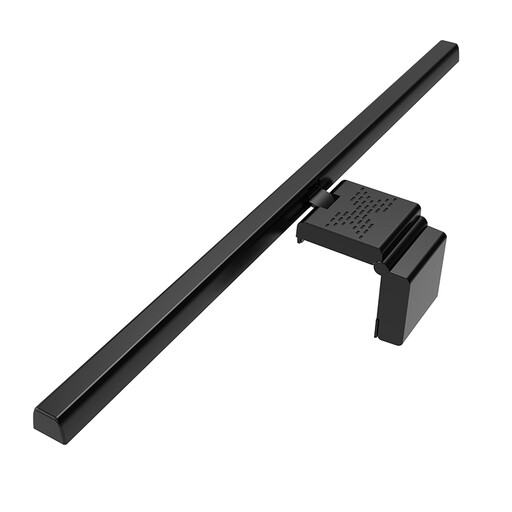
Why this product suits the profile: This monitor lamp is aimed at home workers, gamers and people with large or dual screens.
The instructions specify monitor compatibility, secure attachment and the required power supply of 5 V and 2 A.
Three colour temperatures of 3,000, 4,500 and 6,500 Kelvin, plus stepless brightness control.

Why this product suits the profile: The cordless design is ideal for flexible workspaces, shelves, bedside tables and reading where there is no nearby socket.
The battery, charging operation and stated runtimes of 3, 7 or 30 hours make the power supply clear.
2.5 W LED, 160 lumens, three brightness levels, 4,000 Kelvin and an adjustable silicone arm.
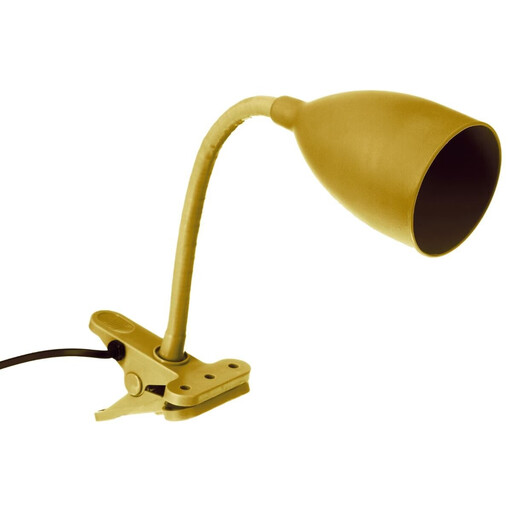
Why this product suits the profile: The flexible clamp lamp is designed for desks, bedrooms or living rooms and can be attached without taking up much space.
The product details specify mains operation, an E14 fitting and maximum power of 7 W. This makes it easy to choose a suitable bulb.
43 cm height, 150 cm cable, flexible positioning and a secure clamp; the bulb must be fitted separately.
We have put together a complete, regularly updated list of products that fully meet these strict selection criteria and the safety regulations applicable in the EU.
With a desk lamp with a clamp, the contact surface should be clean and dry. Attach the clamp so that it sits securely without putting excessive pressure on the edge of the desk. Take particular care with the top edge of the screen when fitting a monitor lamp. Cables should not hang across walkways and must not be kinked.
A reading lamp with a clamp is best positioned to the side or slightly behind your shoulder. For right-handed users, positioning it on the left can reduce shadows when writing; left-handed users will often benefit from the opposite arrangement. Your personal seating position and avoiding direct glare remain the key considerations.
Specialist monitor lamps with a suitable hanging mechanism are a sensible choice for monitors. Check the screen thickness, weight balance and power supply. A standard E14 clamp lamp is generally intended for desks or shelves and is not automatically suitable for mounting on a monitor.
The lifespan depends on the LED module, heat dissipation, usage and power supply. With replaceable bulbs, the lamp can continue to be used by replacing the bulb later. For lamps with permanently integrated LEDs, check the manufacturer’s stated lifespan.
Running costs depend on power consumption, daily usage time and your electricity tariff. A 2.5 W LED uses less energy over the same operating time than a bulb with a higher wattage. For a lamp with an E14 fitting, choose a wattage within the stated maximum limit and also compare the actual luminous flux.