
Lieferung heute & morgen

Qualitätsgarantie

Willkommens-Angebote freischalten: KOSTENLOSE Lieferung | Bis zu 80 % RABATT | Kostenlose 30-Tage-JoyPlus-Testphase
App herunterladen
Rising temperatures can significantly impact concentration at your desk, whether in the office or at home. A targeted airflow provides cooling without needing to run the air conditioning for the entire room. However, the selection of desk fans is vast, and the differences are often in the details.
As a Joybuy Product Recommendation Officer, my job is to provide you with clear and objective guidance. This article introduces various models and explains the key criteria to help you make an informed decision—without any marketing hype.
To find the right device for your needs, a few technical aspects and functional features are crucial.
A quiet desk fan is essential, especially in the workplace or bedroom. The noise level is measured in decibels (dB). Models under 40 dB are generally considered quiet and are unlikely to disturb your concentration or sleep. Devices with a DC motor often have an advantage here, as they are not only quieter but also known for being energy-saving fans. Another distinction is between a classic fan and an air circulator. While a fan directs air straight at the user, an air circulator is designed to move all the air in the room, ensuring a more even temperature distribution.
The type of power supply determines how and where you can use the fan.
Modern fans often offer more than just a simple on/off switch. Features like a remote control, multiple speed settings, or a timer significantly enhance user comfort. While a pedestal fan with a remote control is a different category of device, many compact desk models and air circulators also include this convenient feature. An integrated timer allows the device to switch off automatically after a preset time, which is particularly useful at night and saves energy.
Based on the criteria mentioned, we have compiled a selection of models that cater to different needs.
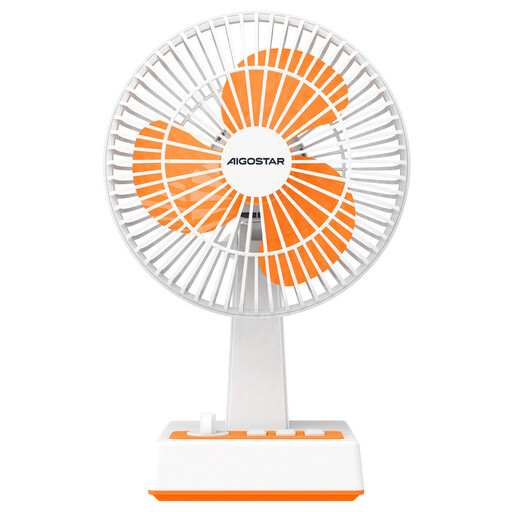
Why This Model Stands Out: The Aigostar desk fan combines functionality with an appealing retro design. With its white and orange colour scheme, it adds a stylish accent to any desk. The USB power supply makes it an uncomplicated companion in the office or at home.
Advantages:
Who is this model for? This model is ideal for users looking for a simple yet stylish USB fan for personal use at their workspace or on their bedside table. Its design particularly appeals to those who value aesthetics.
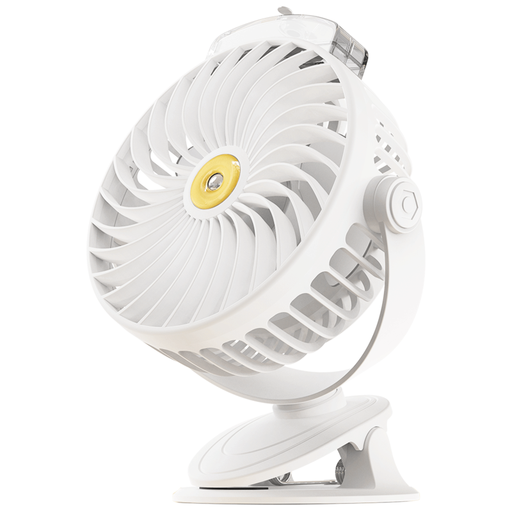
Why This Model Stands Out: This clip-on fan with a battery is distinguished by its high flexibility. Thanks to its sturdy clip, it can be attached to tabletops, shelves, or bed frames, or alternatively used as a freestanding fan. The additional misting function provides an extra bit of refreshment on particularly dry and hot days.
Advantages:
Who is this model for? Perfect for students, residents of smaller apartments, or parents who need a flexible cooling solution that can adapt to various locations—from the desk to a child's cot to fitness equipment.
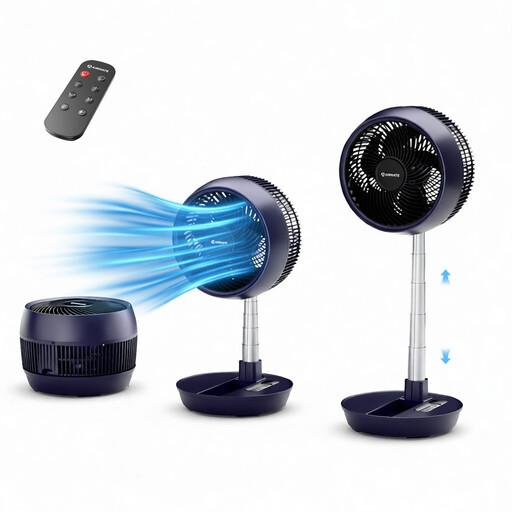
Why This Model Stands Out: The AIRMATE is more than just a fan; it's a powerful air circulator. Its energy-efficient DC motor ensures quiet operation and strong air circulation. Thanks to its folding mechanism and height adjustment, it is extremely versatile and can be stored compactly.
Advantages:
Who is this model for? This model is aimed at comfort-conscious and tech-savvy users looking for a powerful, quiet, and energy-efficient solution for larger areas like living rooms or bedrooms. It is a great choice for families and noise-sensitive individuals.
The models presented here already cover a broad spectrum. However, if you haven't found the right device for your specific needs, there are many more variations to discover. From ultra-compact handheld fans to models with special features, you can find a wider selection in our main category.
? Discover more portable fans here
A conventional desk fan creates a directional airflow that provides direct cooling on the skin. An air circulator, like the model from AIRMATE, is designed to move all the air in a room. It generates a vortex-like airflow that reflects off walls and ceilings, ensuring a more even temperature distribution without creating an unpleasant draught.
Power consumption varies depending on the model and speed setting. A small USB fan often requires only between 2.5 and 5 watts. Models with a DC motor, which are considered particularly energy-saving fans, often consume no more than 25 watts even at higher speeds. Compared to an air conditioner, which can use several hundred to over a thousand watts, operating a desk fan is significantly more cost-effective.
Modern USB fans are designed for continuous operation. However, it is advisable to pay attention to some safety aspects. Ensure the device is on a stable, level surface and that the air inlets and outlets are free from objects like papers or curtains. Models with a timer function offer additional safety and convenience, as they switch off automatically after a set time. Always follow the manufacturer's safety instructions.