What to look for when buying
For use by your home office sofa, the main thing is whether the fan reaches the spot you want without its noise or placement getting in the way of your working day.
| What matters |
What to check when buying |
Who it matters most to |
| Airflow at your sofa seat |
Consider the placement height, tilt, distance and whether the fan has an adjustable low setting. |
If I sit in one regular spot, I want a comfortable breeze that doesn’t feel too strong from close range. Around 31% of consumers put airflow to their sofa seat first. |
| Noise while working |
Check which speed setting each noise level refers to, and whether it moves enough air at the sofa. |
When I’m talking or concentrating on work, I don’t want to judge the fan by its quietest setting alone. Around 25% of consumers prioritise quiet operation while working. |
| Air distribution across several seats |
Check that the oscillation direction and tilt suit the positions of your sofa and desk. |
If I move between the sofa and my desk, or want to cool several spots, I want the airflow to reach each seating area. Around 19% of consumers prioritise this kind of air distribution. |
| Flexible placement |
For a mains-powered fan, check the cable length and location of the socket. For a rechargeable model, check the battery life on the setting you need and how it charges. |
If I move the fan around, I don’t want to depend on having a socket in the right place. Around 13% of consumers prioritise flexible placement. |
| Purchase and running costs |
Compare the power consumption and purchase price of the specific model. Calculate running costs using the same period of use and your own electricity tariff. |
If I use the fan regularly, the ongoing electricity costs matter to me as well as the purchase price. Around 12% of consumers put these costs first. |
Joybuy products for use by the sofa
The selection below includes desk fans with directional or oscillating airflow, as well as a rechargeable air circulator.
 No image available
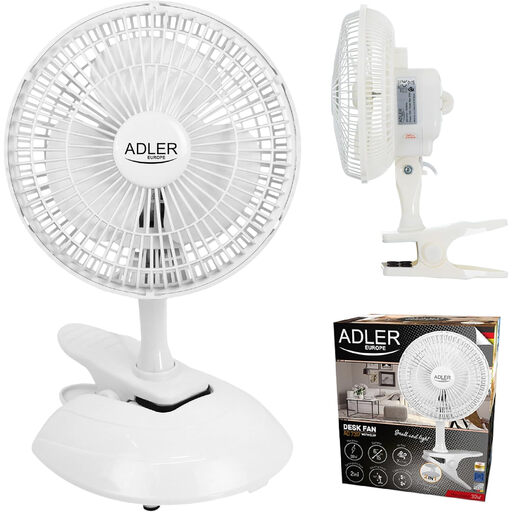
ADLER AD 7317 clip-on desk fan
For a fixed position where you can direct the airflow towards your seat.
15 cm blade diameter, two speed settings, 30 W, clip and stand.
View at Joybuy
 No image available
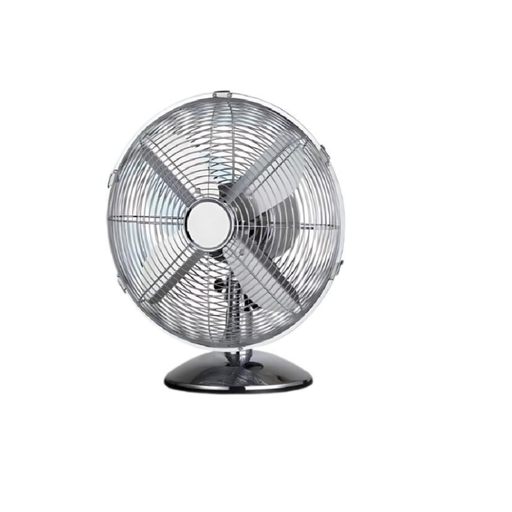
AKAI desk fan, 30 cm, 35 W
For adjusting airflow between the sofa and your desk; check that the oscillation suits where you plan to place it.
Three speed settings, automatic left-to-right oscillation, manually adjustable tilt and four aluminium blades.
View at Joybuy
 No image available
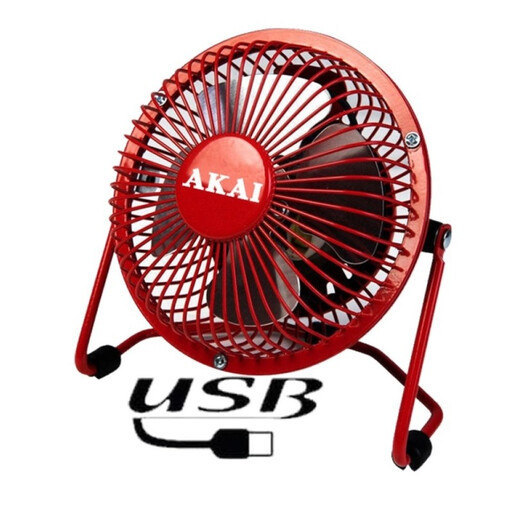
AKAI VE10-N-Grey desk fan
For directing airflow around your desk; the product description specifies horizontal oscillation and manually adjustable tilt.
According to the product name, the colour is selected at random.
View at Joybuy
 No image available
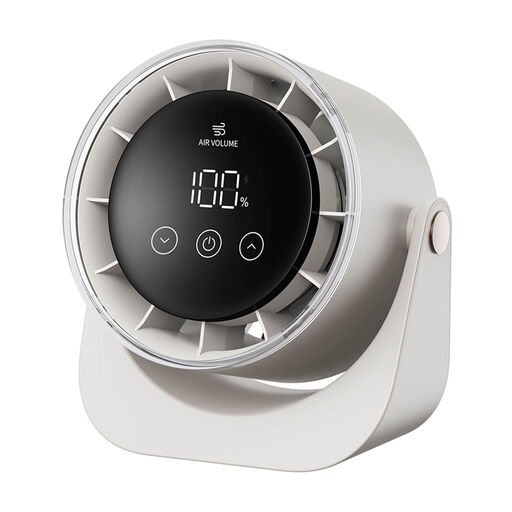
Rechargeable air circulator with 100 speed settings
For a position away from a nearby socket; check that the battery life is sufficient for the setting you want to use.
Rechargeable, 100 speed settings, 90° tilt adjustment and LED display.
View at Joybuy
 No image available
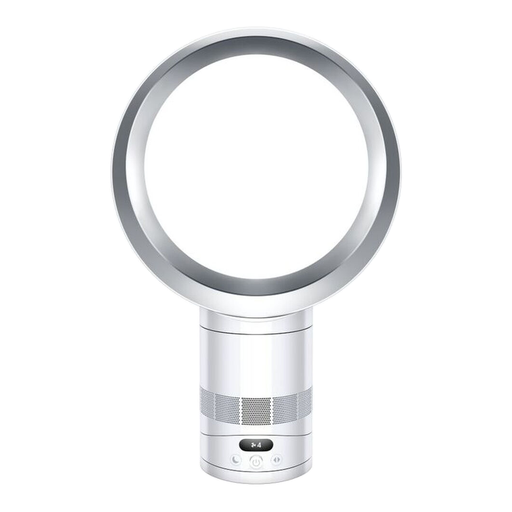
Dyson Cool CF1 desk fan, 602807-01
For distributing airflow across several positions; check that the oscillation and tilt described in the listing suit your sofa and desk.
View at Joybuy
Frequently asked questions
Does a desk fan cool your home office?
No. Moving air can feel cooling where you’re sitting, but a desk fan doesn’t lower the room temperature. For overheated rooms, the Verbraucherzentrale recommends measures such as using sun protection and airing the room when it’s cooler outside.
How should I position a fan by the sofa?
Place the fan on a stable surface and start by directing the airflow on a low setting. Oscillation can help if you want to cover several seats. For a rechargeable model, check the battery life on the setting you need and follow the instructions in the manual.
How can I estimate the cost of running a fan?
To work this out for yourself, you’ll need the power consumption of the specific model, how long you use it and your electricity tariff. Compare power figures over the same period of use; a low wattage alone doesn’t tell you whether the airflow will be enough at the sofa.
What does the CE marking on a desk fan mean?
By applying the CE marking, the manufacturer declares that the product meets the relevant EU requirements; it isn’t an independent assessment of quality. The Low Voltage Directive applies to electrical equipment within the specified voltage range of 50 to 1,000 V AC, and shouldn’t automatically be assumed to apply to every USB-powered or rechargeable device.
What are my rights if an online purchase in Germany is faulty?
If an appliance is faulty, you can assert your statutory warranty rights against the seller; a guarantee is different and is voluntary. For online purchases, you generally have a 14-day right to cancel, starting from the day you receive the goods. The Verbraucherzentrale explains these rights and the conditions that apply.


