Which buying criteria matter in a small flat?
First decide whether you want the airflow to reach one regular seat or several. Then consider the noise level on the setting you need and the space available where you plan to put the fan.
| What matters |
What to check before buying |
Who will find this especially important? |
| Airflow at your seat |
Check the low and higher settings, as well as whether the fan can be tilted to suit your seating distance. |
If I sit in one place for a long time, I want to be able to direct the breeze towards me. Around 42% of consumers say focused airflow is their main concern. |
| Noise level on the setting you use |
Check the noise figures for the specific setting and, where available, independent test results obtained under comparable conditions. |
When I’m working or sleeping, I want a pleasant breeze without the noise from my chosen setting becoming a distraction. Around 33% of consumers put low noise first. |
| Footprint and airflow distribution |
Measure the base and the space needed for oscillation; check whether the fan offers horizontal or vertical oscillation. |
If there’s little room on the desk or shelf and the airflow needs to reach several seats, the fan must stand securely and have enough space around it. Around 25% of consumers say limited space is their main concern. |
Joybuy products for focused airflow and flexible positioning
The products below include desk fans for a focused breeze at your regular seat, as well as portable battery-powered and oscillating models for changing locations or several seats.
 No image available
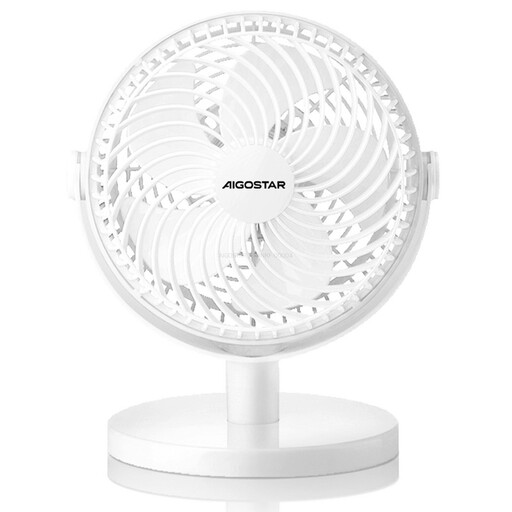
Aigostar USB desk fan with five blades
For a regular desk spot when you want USB power and airflow you can direct where you need it.
Has two speed settings and a head that adjusts through 360°; the product description recommends personal use indoors in an area of up to around 1 m².
View at Joybuy
 No image available
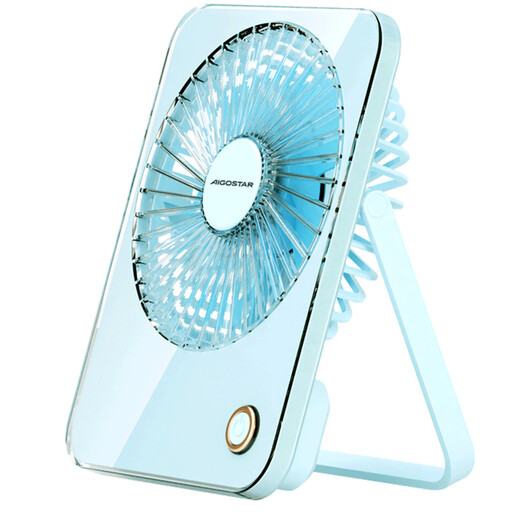
Aigostar USB desk fan, 3-inch, 3600mAh
For moving between locations when you’re looking for a portable fan with a battery.
Has three speed settings and a folding 180° stand; the product description recommends personal use in areas of up to around 2 m². Colour: blue.
View at Joybuy
 No image available
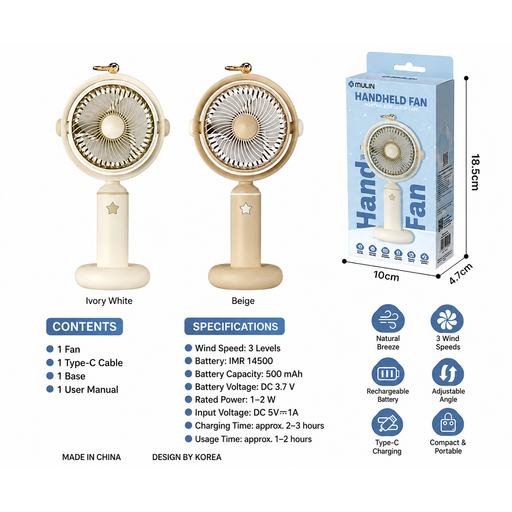
mulin MU-SFS804 mini fan, 500mAh
For a small desk or when you’re out and about, if you want to use the fan both in your hand and on its stand.
Supplied with a USB-C charging cable and stand; the product description quotes a battery life of around 1–2 hours. Available in two colours; colour sent at random.
View at Joybuy
 No image available
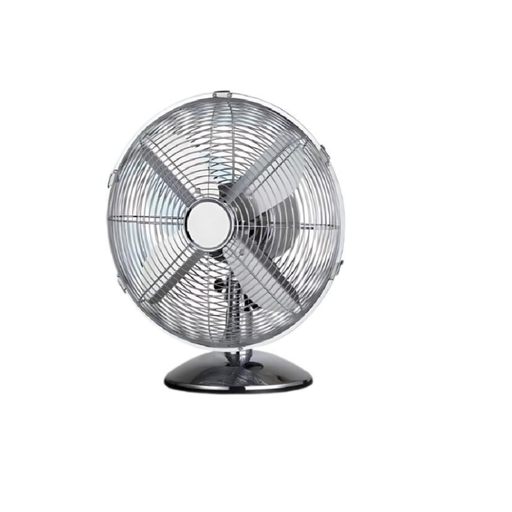
AKAI desk fan, 30 cm, 35 W
For several seats when you want the airflow to sweep from side to side automatically and have enough space for the fan.
Has three settings, four aluminium blades, automatic left-right oscillation and manually adjustable tilt; diameter: 30 cm.
View at Joybuy
 No image available
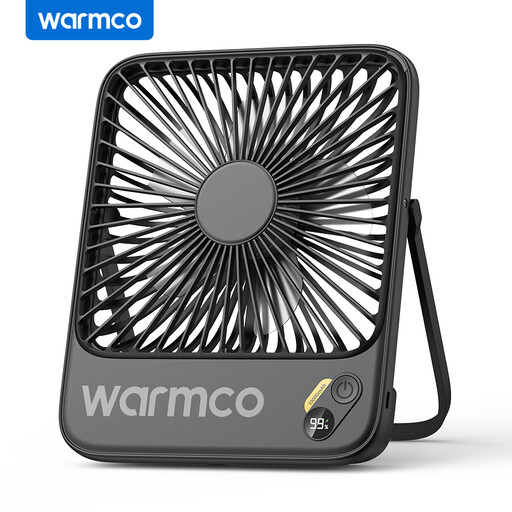
Warmco D3 rechargeable fan, 10000mAh
For a flexible setup when you want a rechargeable model with a slim design.
Has four speed settings, USB-C and an LED display.
View at Joybuy
Frequently asked questions about desk fans
Can a desk fan lower the temperature in a room?
No. It moves air, which can cool your skin, but it won’t lower the room temperature. The German Environment Agency and the Verbraucherzentrale describe ventilation and heat protection as ways to manage heat in your home.
What should I look out for in noise figures?
Check which operating setting a noise figure applies to. A figure for the lowest setting doesn’t tell you how noisy the fan is when moving more air. Manufacturer figures aren’t independent measurements either. IMTEST lists noise level as a factor when choosing a fan.
How can I position an oscillating fan safely?
Place it on a stable surface and leave enough room for the oscillating head. Follow the instructions for the specific model when cleaning it, as designs vary.
What happens if the product is faulty after purchase?
When you buy as a consumer, your statutory rights are against the seller; this is separate from any voluntary manufacturer’s guarantee. The Verbraucherzentrale explains that if a product is faulty, you can first ask for it to be repaired or replaced.
What does the CE marking on a fan mean?
The CE marking is the manufacturer’s declaration that the product meets the EU requirements that apply to it; it isn’t an independent quality mark. In its area of responsibility, the German Federal Network Agency lists matters including product marking, product identity and manufacturer information as aspects of market surveillance.


