Students who want a breeze by their chair
If you often sit in the same spot, look for finely adjustable airflow that you can direct towards your seat without having it blow strongly all the time.


If you mainly want to feel the breeze at your chair, a desk fan or desk air circulator with adjustable settings and a directional airflow is a good choice. If you want the air to reach other parts of the room too, check the oscillation range. Compare the noise and airflow at the setting you’ll actually use, and check the space available and power supply. The German Environment Agency points out that a fan moves the air but does not lower the room temperature or replace ventilation.
If you often sit in the same spot, look for finely adjustable airflow that you can direct towards your seat without having it blow strongly all the time.
If you study or sleep in the same room, what matters is how loud the fan is at the setting that moves enough air for you.
If you want the airflow to reach beyond your immediate seating area, check whether the fan can be adjusted or oscillates to direct the air where you need it.
In October 2026, IMTEST tested desk fans for factors including airflow strength, noise and power consumption. For use by your chair, you should also consider how the airflow can be directed and the conditions at the intended location.
A good fit if: You have limited space and mainly want to direct the airflow towards your seat.
The trade-off: The airflow may feel too strong at close range. Being able to direct it precisely doesn’t tell you how well it will reach other corners of the room.
A good fit if: You want to circulate air beyond your chair and have space to position the fan or allow it to oscillate.
The trade-off: Check whether the particular model oscillates automatically and whether the stronger setting you need still sounds comfortable.
The four priorities in the table relate to people choosing a fan for use by a chair in a student room; each row represents the main buying priority in that case.
| Priority | What to check when buying | Who it matters most to |
|---|---|---|
| A comfortable breeze by your chair | Low speed settings and tilt range; distance between the fan and your seat. | If I sit right by my chair, I want to be able to adjust the airflow rather than have it blow strongly all the time. Around 33% of consumers put a comfortable breeze at their seat first. |
| Low noise while studying or sleeping | Noise rating and the setting it applies to; whether that setting provides the airflow you need. | If I study or sleep in the same room, I pay attention to how loud the fan is at my preferred setting. Around 25% of consumers prioritise low operating noise. |
| Airflow beyond your seating area | Horizontal and vertical adjustment; manual or automatic oscillation and a clear path for the airflow. | If I want the air to reach other parts of the room too, I need to be able to direct it beyond my chair. Around 25% of consumers put airflow that reaches further afield first. |
| Space and power supply | Fan dimensions and room to direct the airflow; a socket and cable route, or battery life at the setting you plan to use. | If there’s little space beside my chair or no socket within reach, the fan needs to suit the available spot. Around 17% of consumers prioritise space or power supply. |
A fan moves the air already in the room. Ventilation remains important for air exchange and removing heat when outdoor conditions are suitable.
Decide whether you want a breeze by your chair or airflow around the room, and plan ventilation separately.
A low figure doesn’t automatically tell you how loud the fan will be at a higher setting, which may be needed where you sit.
Compare noise and airflow at the setting you actually plan to use.
IMTEST points out that a strong breeze can feel uncomfortable at close range.
First, look for a useful low setting and a suitable direction. Then consider whether you also need an oscillation function to reach the rest of the room.
The F100 is a desk air circulator designed for a compact space, with manually adjustable airflow direction.
The Sefte 10 Table Pro is aimed at people who want finer adjustment and airflow in multiple directions.
The Turbo Silence Extreme+ VU2750F0 is a desk fan with automatic horizontal oscillation.
Dyson describes the Cool CF1 as a desk fan with no exposed blades and a sleep timer.
IMTEST lists the HT-900E as a value-for-money option in its German desk fan comparison.
The following products are desk fans or flexible desk fans that can direct a breeze towards your chair. Check their dimensions, airflow direction and power supply against the space where you plan to use them.
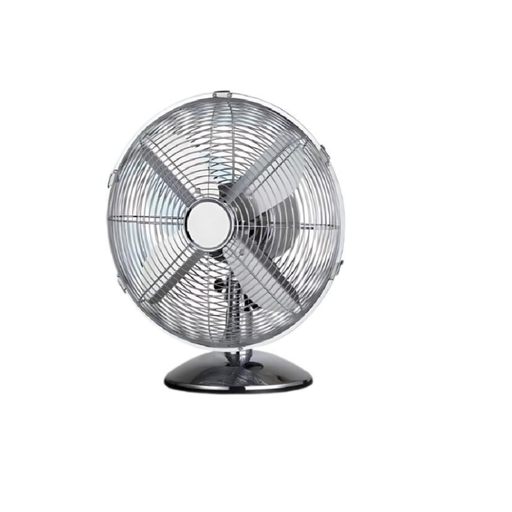 No image available
For a breeze by your chair, with airflow adjustable using the speed settings and tilt.
30 cm; 35 W; three speeds; four aluminium blades; left-right oscillation and manually adjustable tilt.
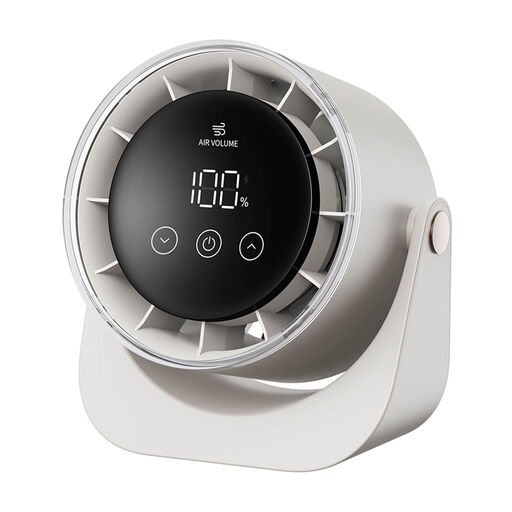 No image available
For a spot without a socket within reach, with finely adjustable airflow and an adjustable direction.
100 speed settings; 90° tilt; LED display; cordless, according to the product name.
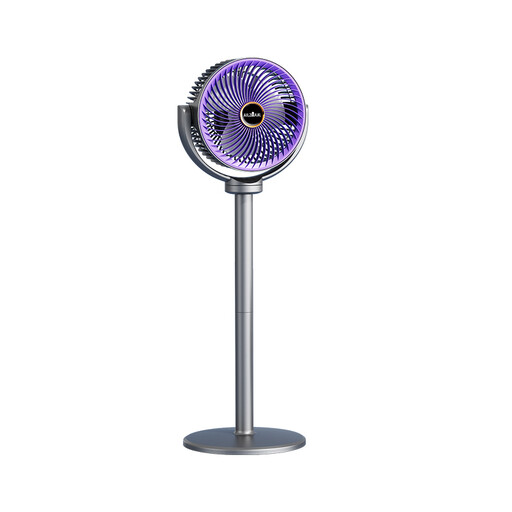 No image available
For varying setup heights, when you want to direct the airflow towards your chair.
Five speeds; 2400-mAh battery; Type-C; tilts by 90°; height-adjustable.
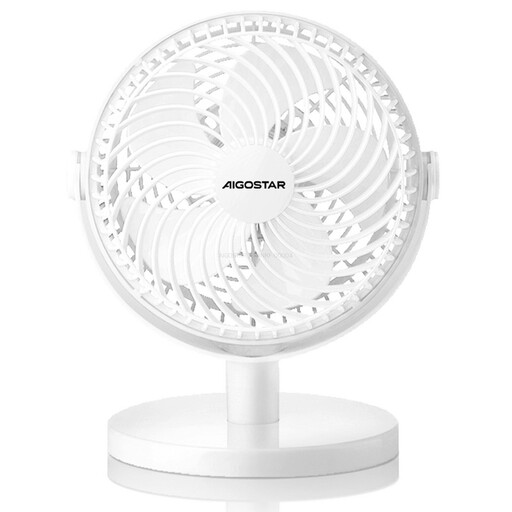 No image available
For a small workspace with a USB port nearby, if two speed settings are enough.
Five blades; two speeds; head adjusts through 360°; USB-powered.
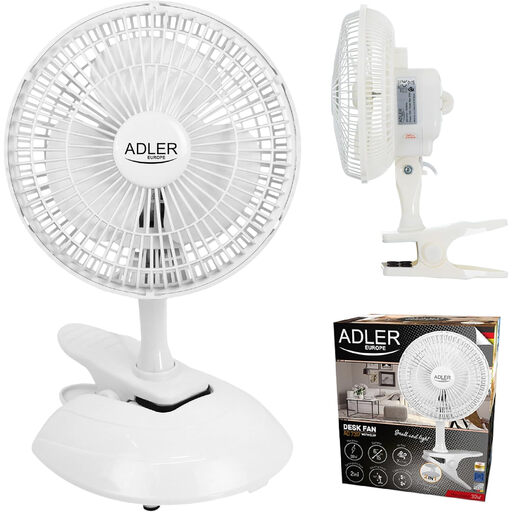 No image available
For a compact workspace setup, if the clip or stand suits the location.
15 cm; 30 W; two speeds; clip and stand.
No, it won’t lower the room temperature. The German Environment Agency explains that moving air cools your skin. You can let cooler outdoor air in by ventilating when it’s cooler outside.
No, circulating the air in a room doesn’t replace exchanging it with outdoor air. According to the German Environment Agency, regular and adequate ventilation can help prevent mould, among other things; how often you need to ventilate depends on the room and how it’s used.
Allow enough space to direct the airflow as you want, and check that the fan’s dimensions suit the spot. The manufacturer says the safety grille on the BONECO F100 is removable. Follow the instructions and safety guidance for your particular fan when cleaning it.
According to the German consumer advice centre, online purchases generally come with a 14-day right to cancel; you must notify the retailer that you wish to cancel. The EU explains that the manufacturer uses the CE mark to declare that the product complies with the relevant product regulations. The mark is not an independent check of every individual product on sale.