
Lieferung heute & morgen

Qualitätsgarantie

Willkommens-Angebote freischalten: KOSTENLOSE Lieferung | Bis zu 80 % RABATT | Kostenlose 30-Tage-JoyPlus-Testphase
App herunterladen
Setting up a functional workspace begins with choosing the right desk. Whether for focused work in your home office, studying, or personal projects, the desk is the heart of your productivity. With a vast array of models available, from ergonomic solutions to space-saving designs, the choice can be overwhelming. This guide provides a structured overview of key criteria and presents a selection of desks for various needs to help you make an informed decision.
Before you decide on a model, three key aspects should be considered: ergonomics, space utilisation, and functionality.
A height-adjustable desk allows you to switch between sitting and standing. This can improve posture and boost concentration. Electric models offer the convenience of adjusting the height at the touch of a button, while manual versions are often a more budget-friendly alternative. The ability to customise the desk's height is a crucial factor for an ergonomic home office desk.
The available space is a key factor in choosing the right model. A corner desk makes efficient use of unused corners and often provides a generous work surface without dominating the room. For smaller apartments, student rooms, or alcoves, a small desk is the ideal solution. Compact models are designed to create a fully functional workspace even in limited areas.
Consider what requirements your workstation must meet. If you need a large surface for multiple monitors and documents, a large computer desk is the right choice. However, if you value organisation and a tidy surface, consider a desk with drawers and integrated shelves. Additional storage helps keep office supplies, documents, and personal items within reach but out of sight.
Here is a selection of models that cater to different needs and spatial constraints.
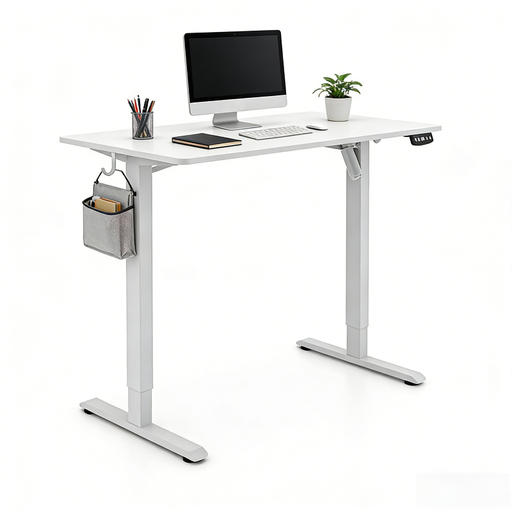
What sets it apart: This model offers the flexibility of an electric sit-stand desk in a clean, minimalist design.
Advantages:
Best for: Professionals and students looking for an ergonomic and flexible workspace for their home office who also value a minimalist design.

What sets it apart: An exceptionally large work surface, ideal as a dual workstation or for setups with high space requirements.
Advantages:
Best for: Couples or colleagues sharing a home office, gamers, or creative professionals who need a very large and stable work surface.

What sets it apart: A clever corner solution that combines work surface and storage, and can be flexibly adapted to the room.
Advantages:
Best for: Users who want to make the most of a corner while keeping documents and office supplies neatly stored.
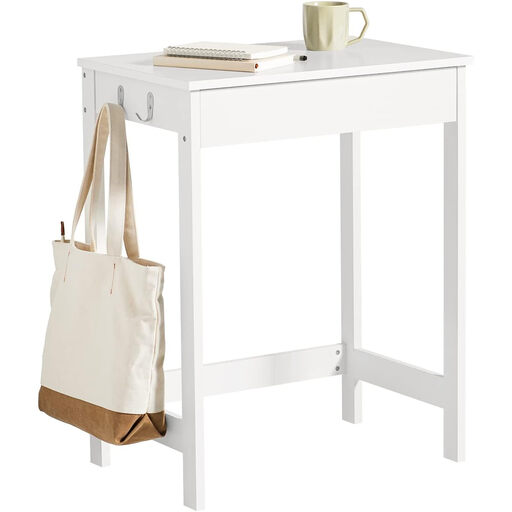
What sets it apart: An extremely compact and functional small desk, specially designed for tight spaces.
Advantages:
Best for: Students, residents of small apartments, or anyone needing to set up a compact secondary workspace in a bedroom or living room.
Haven't found the right model for you yet? If you have a preference for simple designs, you can find more options in our simple white computer desk category that blend seamlessly into modern living concepts.
The standard height for a sitting desk is between 72 and 76 cm, which suits most people of average height. However, for optimal ergonomics, the height should be individually adjustable. A height-adjustable desk, which typically adjusts from around 70 cm to 120 cm, offers the greatest flexibility for both sitting and standing positions.
The amount of space required depends on the desk model and your work habits. A small desk that is 60 cm wide requires about 1.5 square metres, including the chair and room to move. For a larger office desk (e.g., 160 cm wide) or a corner desk, you should plan for at least 2.5 to 3 square metres to ensure sufficient legroom and space to roll your chair back.