If it’s mainly your legs or the area around your seat that feels cold, targeted infrared heat is a natural option to consider. If you also want to warm the air around your desk, a fan heater may be suitable if positioned correctly. A wall-mounted rapid heater is worth considering if you want to warm the room rather than just your seat, and suitable installation is possible. The key factors are the area to be heated, safe clearances, noise and actual running time – not a blanket promise of savings.
Who are the different types of heating suitable for?
People with cold legs at their desk
If you mainly need warmth at your seat and don’t want to heat your whole home, consider a desk or under-desk heater that directs heat where you need it. VASNER describes its desk heating solutions as providing targeted warmth for your feet and legs. Make sure the installation location and required clearances are suitable for the specific model.
People with a chilly home office
If you also want to warm the air around your desk, a fan heater with suitable heat settings and a thermostat may be a good option. Rowenta lists these features for the SO2320; check the noise level and floor space required for the specific model.
People with a small or cluttered workspace
If space is limited, make sure the heater, cable and airflow can all be arranged safely. The German Fire Service Association advises keeping fan heaters at a safe distance from flammable objects.
What should I check before buying?
Targeted infrared heat
Suitable if: Your legs or feet are the main things that need warming at your seat, and you can position the heater appropriately.
The trade-off: The heat is mainly directed at the area it reaches; this doesn’t prove that a home that’s too cold overall will be heated sufficiently.
Portable fan heater
Suitable if: You’d also like to warm the air around your desk from time to time, and have a safe place to position the heater with an unobstructed airflow.
The trade-off: The airflow and operating noise may be noticeable while you work; the heat settings and thermostat on the specific model matter.
Wall-mounted rapid heater
Suitable if: You want to warm the room rather than just your seat, and suitable wall mounting is possible.
The trade-off: The wall space, connection and installation requirements must match the instructions for the specific model; this isn’t a portable heater you can simply place on a desk.
Check the room heating and ventilation
Suitable if: Your whole small home, not just your workspace, is too cold or damp.
The trade-off: Localised supplementary heat is no substitute for adequate heating or ventilation; the consumer advice centre warns of the risk of mould in inadequately heated rooms.
The percentages group consumers by their main reason for buying electric supplementary heating for a desk in a small home.
| Priority |
What to check before buying |
Who is this particularly important to? |
| Warmth at your seat |
Check the area to be heated, how the heater can be positioned, and the permitted placement and clearances. |
If it’s mainly my legs or feet that feel cold at my desk, I need warmth there rather than throughout the whole home. Around 31% of consumers put localised heat first. |
| Ongoing electricity use |
Take into account the power rating of each setting, actual running hours and your own electricity tariff. |
If I use a supplementary heater for longer periods, I want to estimate its energy use based on its actual running time. Around 25% of consumers prioritise keeping running costs under control. |
| Safe positioning |
Follow the model instructions, required clearances, cable condition and specified connection requirements. The German Fire Service Association advises keeping fan heaters away from flammable objects. |
If my desk is small or cluttered, I need to keep a safe space clear for the heater and its cable. Around 25% of consumers put safe positioning first. |
| Working without distractions |
Check the noise information and operating setting for the specific model; only compare figures measured on a like-for-like basis. |
If I work close to the heater, I want to be disturbed as little as possible by noise or airflow. Around 19% of consumers prioritise a quiet workspace. |
Which buying mistakes should I avoid?
-
Expecting a tiny plug-in fan heater to heat your whole home
The consumer advice centre considers small plug-in fan heaters unsuitable as a replacement for room heating. Warming the area around your desk and keeping your whole home adequately heated are two different things.
Check separately whether you need localised warmth at your desk or a solution that warms the room air.
-
Assuming that “Eco” or “infrared” automatically means lower running costs
A label describing the type of heating doesn’t replace a calculation based on how you actually use the heater. The rated power and the time it’s actually switched on determine its calculated energy use.
Compare the power consumption and planned running hours on the same basis. To work out the cost, use: kilowatts × hours × your tariff per kilowatt hour.
-
Treating a wall-mounted model like a portable desk heater
The AEG VH 213 and the Stiebel Eltron CK 20 Premium are described as wall-mounted rapid heaters and aren’t designed to stand freely on a desk.
Before choosing one, check the installation instructions and connection requirements for the specific model.
A wall-mounted solution may require additional installation work.
-
Underheating or under-ventilating the rest of your home to keep your seat warm
Targeted warmth at your workspace won’t automatically solve the problem of a home that’s too cold or damp overall. The consumer advice centre warns that inadequately heated rooms carry an increased risk of mould.
Assess room temperature and damp separately from how warm you feel directly at your desk.
Which brands are worth considering as examples?
Rowenta
Portable fan heaters, including the SO2320 as an example of a model for warming the air around your desk from time to time.
- According to Rowenta, the SO2320 has two settings, a mechanical thermostat and a carry handle.
- This version doesn’t have a timer or oscillation. The manufacturer’s description of it as “quiet” isn’t an independent comparison with other models.
VASNER
Desk and under-desk infrared solutions for targeted warmth at your seat.
- The manufacturer describes the products as providing warmth for your feet and legs.
- This doesn’t amount to an independent measurement of room-heating performance or prove a general cost advantage. Check the installation requirements and clearances for the specific version.
Stiebel Eltron
The wall-mounted CK 20 Premium rapid heater is an example of a solution designed to warm the room air rather than just your seat.
- The manufacturer specifies a 2 kW power rating, a timer and sound pressure levels of 37/48 dB(A).
- Wall mounting and connection requirements mean this isn’t a free-standing desk heater.
AEG Haustechnik
The wall-mounted VH 213 fan heater is described as a heater for transitional periods or supplementary heating.
- According to the manufacturer, the model has a weekly timer, overheat protection and a 2 kW power rating.
- If you’re looking for a heater you can move around easily and place on your desk, bear in mind that this model is designed for wall mounting.
De’Longhi
The manufacturer offers portable rapid heaters as a range of models for short-term warmth indoors.
- The manufacturer’s range includes several rapid heaters.
- A range overview alone doesn’t tell you how noisy a specific model is, whether it’s suitable for your needs or what safety features it has.
Joybuy products for warmth at your desk
This selection includes an infrared panel for targeted warmth and portable fan heaters for occasional warmth at your desk or in your home office. Before buying, check the model instructions and make sure the specific heater is suitable for the place where you plan to use it.
 No image available
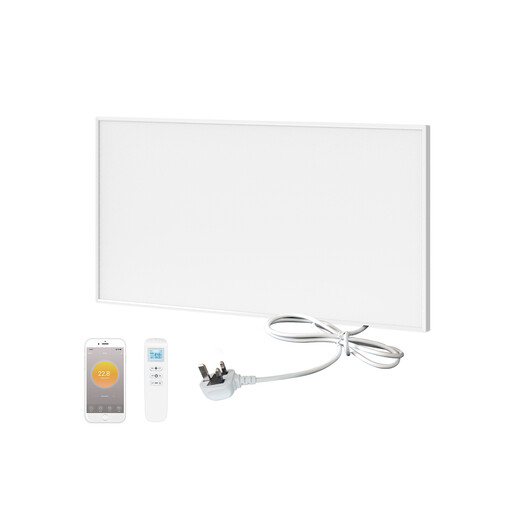
Welltin infrared heating panel with graphene heating element, 60.3 × 30.3 × 1.4 cm
Could be worth considering if you want targeted warmth in your home office or study without a fan.
The description mentions far-infrared heat, feet or wall mounting, a remote control and overheat protection. The surface reaches 80–100 °C according to the description; keep the panel away from children and flammable materials.
View at Joybuy
 No image available
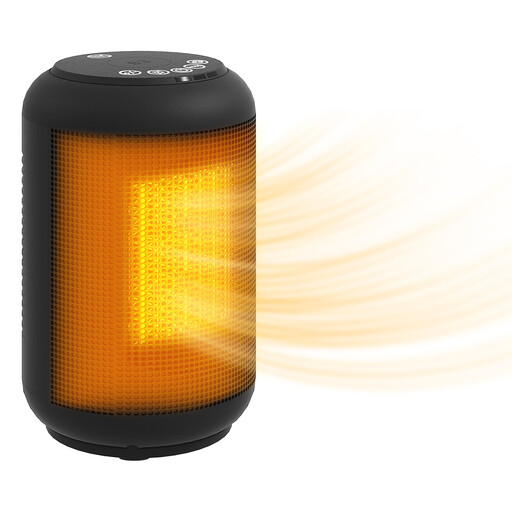
Electric fan heater for your desk, 14 × 14 × 21.5 cm
Could suit your needs if you want occasional warmth at or under your desk and have a suitable place to position it.
The description specifies 800 W and 1,500 W settings, an adjustable thermostat, a 24-hour timer, tip-over protection and overheat protection. Don’t use it on carpets or soft fabrics, or in bathrooms or damp areas.
View at Joybuy
 No image available
OmniHeat ceramic fan heater, 1,800 W, four heating modes
Could be worth considering if you want occasional warmth in your home office or study with adjustable settings.
Features listed include a thermostat adjustable from 5–35 °C, a remote control, a 24-hour timer and oscillation. According to the description, don’t leave it unattended while it’s running, and don’t use an extension lead unless it’s rated for at least 1,800 W.
View at Joybuy
 No image available
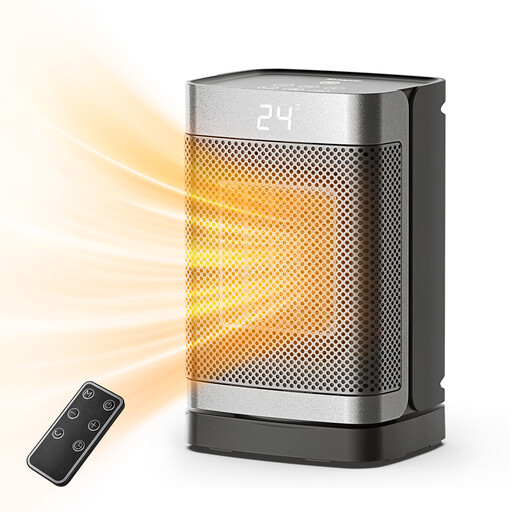
Totopia PTC heater KPT-150 0596YL, 1,500 W
Could suit your desk if you’re looking for a compact heater with a timer and have a hard, level surface available.
The title lists two heating modes, a 12-hour timer, tip-over protection and overheat protection. According to the description, don’t use it on carpets or soft fabrics, or in bathrooms or damp areas.
View at Joybuy
 No image available
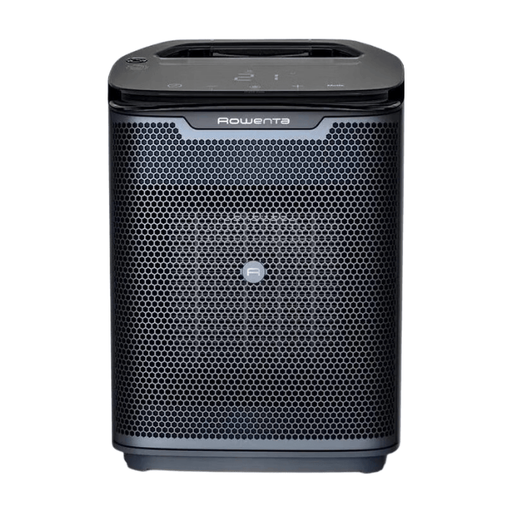
Rowenta Intense Comfort Aqua SO9380F0 ceramic fan heater
Could be worth considering if you want to warm the room air by your table or desk from time to time, with several power settings to choose from.
The description lists 2,000 W, four power settings, a timer and touch controls. It specifies at least 1 m of clearance and a stable, heat-resistant surface for positioning the heater.
View at Joybuy
Frequently asked questions about supplementary heating at your desk
How can I estimate the electricity cost of a supplementary heater?
Multiply the power consumption in kilowatts by the actual running hours and your tariff per kilowatt hour. A 2 kW heater running continuously at that setting for one hour would use 2 kWh; periods when it switches off and use of other settings will change the energy consumption. Rowenta lists the SO2320’s power consumption as 2,000 W.
What should I bear in mind when positioning and using a heater?
Follow the clearances specified in the instructions for your particular heater. Keep flammable objects away, and don’t use a heater with a damaged cable or visible scorch marks. The German Fire Service Association highlights the need to keep heaters away from flammable objects and the fire risks posed by damaged electrical appliances. There is no single clearance that applies to every model.
Is CE marking enough, and does an electric fan heater need an EU energy label?
As the Federal Institute for Occupational Safety and Health explains, the CE mark is not the same as the GS mark. The European Commission lists electric local space heaters as an exception to the energy labelling rules for local space heaters. So, for an electric heater of this type, the absence of an EU energy label alone doesn’t prove that the rules have been broken.
What are my rights if a new appliance is faulty?
Statutory consumer rights are distinct from a voluntary manufacturer’s guarantee and generally apply against the seller. The consumer advice centre lists certain appliance categories covered by the expanded right to repair introduced in 2026; this doesn’t mean that every fan heater comes with an additional right to repair. Check whether the rules apply to the specific appliance.


