If you’re mainly cold at your desk, choose a heater based on the warmth it provides where you sit, rather than on a general area coverage figure for the whole living room. A fan heater circulates warm air, while a suitably positioned infrared panel provides radiant heat. An oil-filled radiator or convector may be a better choice if you also want to warm the air in the room, although this takes time and uses electricity. Before buying, also check the safety and ecodesign requirements that apply to the specific model.
Which type of supplementary heating is right for you?
If you’re often cold at your desk
If you mainly want warmth where you sit, what matters is whether the heater can reach that spot – not just its general area coverage. The North Rhine-Westphalia Consumer Advice Centre points out that small plug-in heaters are no substitute for a room heater.
If you work at your desk for short periods
If you want to feel warm soon after sitting down, the movement of warm air and the noise rating of the specific fan heater may influence your choice. The heat settings and noise levels for the My Nomad Heater SO8231F0 are provided by Rowenta.
If you work for long periods and are sensitive to noise
For long working sessions, both the type of heater and its power and running time matter. To estimate the cost, you can compare its electricity consumption with your own unit rate; the German Federal Network Agency explains how the unit rate feeds into your electricity bill.
What should you consider when choosing?
First decide whether you want to warm just your desk or the rest of the area too. Then narrow down your options by considering how long you’ll use the heater, the type of warmth you want and how much operating noise you’re happy to put up with.
Compact fan heater
Suitable if: You only want occasional warmth at your desk and prefer warm air blown towards you.
Things to consider: You’ll get airflow and fan noise; Rowenta lists a noise level of 42 to 55 dB(A) for the My Nomad Heater SO8231F0, depending on the setting.
Positioned infrared panel
Suitable if: You want radiant heat at a fixed seat without fan-blown air and can position the panel appropriately.
Things to consider: Position is crucial; the warmth will be limited elsewhere in a large room. Check the installation requirements, surface and controls for the model you choose.
Portable oil-filled radiator
Suitable if: You work for longer periods and want to warm the surrounding air as well, rather than directing warm air straight at your seat.
Things to consider: An oil-filled radiator warms up more slowly than a fan heater and stays warm for a while after being switched off; this stored heat was generated using electricity.
Freestanding convector heater
Suitable if: You want to provide supplementary warmth to the air around several seating areas and have a suitable place to position the heater.
Things to consider: A convector is less focused on warming one person sitting in one spot. If you run it for long periods, consider the running time, power and your electricity tariff.
| What you need |
What to check before buying |
Who is it most relevant to? |
| Warmth where you sit |
Check whether the heater can reach your seat, whether there’s enough space to position a panel freely, and whether the model you’ve chosen includes the controls you want. |
If I’m only cold at my desk, I don’t want to heat the whole living room just for that reason. Around 33% of consumers prioritise targeted warmth where they sit. |
| Quick warmth |
Check the heat settings, temperature control, airflow direction and noise rating for the specific model. |
When I’m working for short periods, I want to feel warm quickly without overlooking airflow and fan noise. Around 27% of consumers prioritise fast heat-up. |
| Quiet operation over long periods |
Compare the power rating in kW, expected running time, your unit rate per kWh and the thermostat controls. For fan heaters, check the noise rating for each setting too. |
If I sit at my desk for a long time, I want to keep operating noise down and estimate electricity use based on how long I’ll run the heater. Around 27% of consumers prioritise quiet, predictable operation. |
| Warmth for several areas |
Consider whether your existing heating can heat the room in general, and whether the available space and electrical supply are suitable for the heater. |
If other parts of the living room are cold too, a heat source aimed at my desk may not be enough. Around 13% of consumers mainly want to warm more than just their desk area. |
Avoiding buying and placement pitfalls
-
Expecting a small plug-in heater to warm your whole living room
The North Rhine-Westphalia Consumer Advice Centre says these heaters are not suitable as a replacement for room heating: they don’t have enough power to heat entire rooms, and running them for long periods can increase electricity consumption.
Separate your need for warmth at your desk from the task of heating the whole room.
-
Assuming that lower wattage or stored heat means free heat
A lower power setting also provides less heat. With an oil-filled radiator, the warmth you feel after switching it off comes from oil that was previously heated using electricity.
Estimate consumption over a realistic running time using your own unit rate. The power rating and time switched on determine the kilowatt-hours used; the German Federal Network Agency explains how the unit rate is included in your bill.
-
Positioning the heater near paper, cables or curtains
Flammable objects and damaged cables can compromise safe operation. The German Fire Service Association advises keeping fan heaters a safe distance from flammable objects and warns against drying damp clothes on the appliance.
Before buying, check the available space, electrical connection and clearances specified in the instructions. Don’t cover the heater or use a damaged cable.
Brands worth considering
Rowenta
Portable fan heaters for warm air at your workspace; the My Nomad Heater SO8231F0 is one example.
- Rowenta lists power settings of 900 W and 1800 W and a mechanical thermostat for this model.
- According to the manufacturer, the model has neither oscillation nor a timer. Its noise ratings apply to this model and aren’t a measure of noise at your own desk.
Könighaus Infrarot
P-series wall-mounted infrared panels can direct warmth towards a fixed seat.
- According to the manufacturer, Könighaus offers models with various power ratings and control options, including versions from 130 W.
- Positioning matters. The manufacturer says coverage figures depend on room conditions and insulation; check whether the version you choose has a thermostat.
De’Longhi
Portable oil-filled radiators are an option for supplementary warmth when you’ll be in a room for longer periods.
- For the Radia S TRRS0920, De’Longhi lists three power settings, a maximum output of 2000 W, a room thermostat and castors.
- According to the manufacturer, the oil continues to give off heat after the radiator is switched off. It warms the room more slowly than fan-blown air and doesn’t provide any extra energy savings.
STIEBEL ELTRON
Freestanding and wall-mounted convectors are an option for supplementary warmth in the room; the CNS 2000 Plus LCD Move is a freestanding model.
- STIEBEL ELTRON lists 230 V, 2000 W and a temperature setting range of 5 to 30 °C for this model.
- These technical specifications alone don’t tell you how warm a large living room will get or what the running costs will be.
Joybuy products for your workspace and supplementary room heating
These Joybuy models include fan heaters, oil-filled radiators and convectors for warmth at your workspace or in the rest of the room. Before buying, check the requirements that apply to the specific model and make sure it complies with them.
 No image available
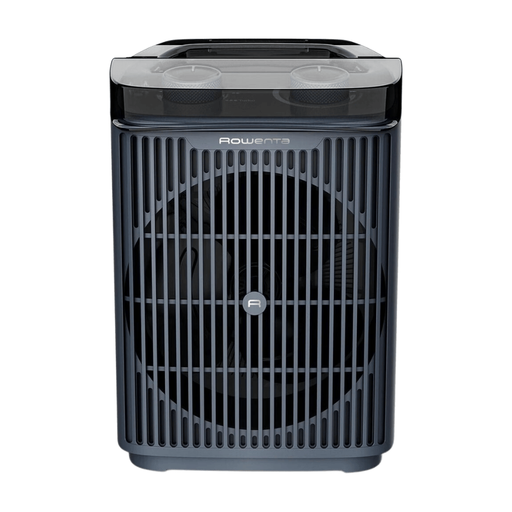
Rowenta Intense Comfort Aqua fan heater, 2400 W
For warmth right at your desk, the product description says this compact heater can be placed on a table or desk.
2400 W; two heat settings; timer; up to 50 dB(A), according to the product specifications.
The product specifications require a distance of at least 1 m from flammable objects and say not to cover the appliance.
View at Joybuy
 No image available
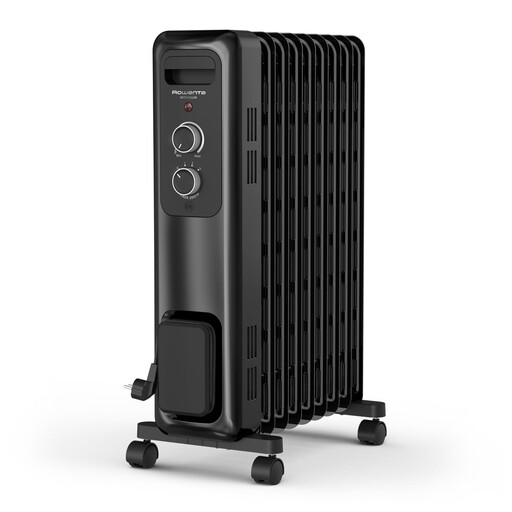
Rowenta Intensium Ultra BU2420 oil-filled radiator, 2000 W
An oil-filled radiator could be a source of supplementary warmth for longer working sessions without fan-blown air; the product description says this model is silent.
2000 W; three power settings; thermostat and castors.
The product specifications require a distance of at least 1 m from flammable objects and say not to cover the appliance. According to the product description, this model isn’t intended for outdoor use or bathrooms.
View at Joybuy
 No image available
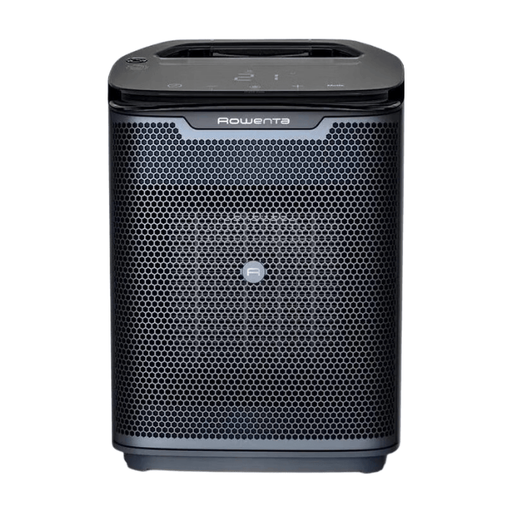
Rowenta Intense Comfort Aqua SO9380F0 fan heater, 2000 W
For warmth at your workspace, the product description says this compact heater can be placed on a table or desk.
2000 W; four settings; timer; maximum 29 dB, according to the product specifications.
The product specifications require a distance of at least 1 m from flammable objects and say not to cover the appliance.
View at Joybuy
 No image available
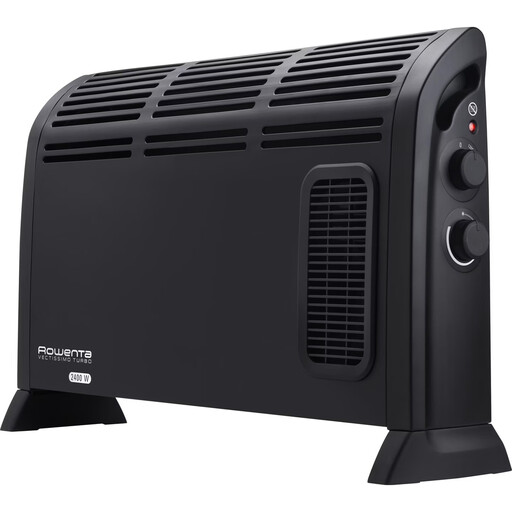
Rowenta Vectissimo II CO3035 convector fan heater
For supplementary warmth in the room, the product description lists a convector heater with a fan to distribute heat around the space.
Two heat settings of 1200 W and 2400 W; thermostat; turbo function and frost protection.
According to the product description, the appliance is intended for indoor use. Keep it at least 1 m from flammable objects.
View at Joybuy
 No image available
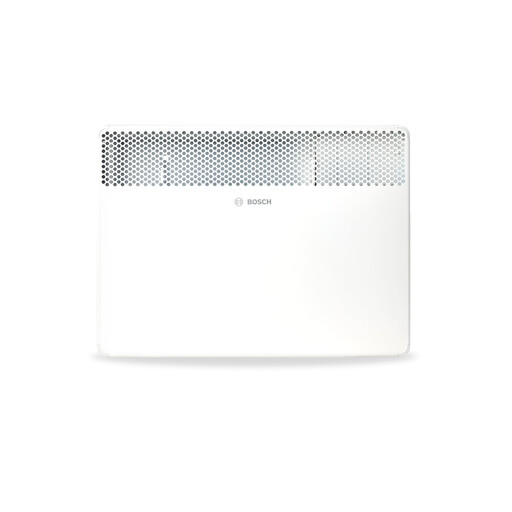
Bosch HC 4000-15 electric convector heater, 1500 W
If you’re planning to add convector heat to an area, the product description says this model can be wall-mounted or used freestanding.
1500 W; temperature setting from 12 to 28 °C; seven pre-set programmes; weekly programme, Eco mode and open-window detection.
According to the product description, the feet for freestanding use are sold separately; alternatively, it can be suitably wall-mounted. Don’t cover the appliance and keep it away from flammable objects.
View at Joybuy
Frequently asked questions
Can a small plug-in fan heater heat a large living room cheaply?
No. The North Rhine-Westphalia Consumer Advice Centre says small plug-in heaters are not suitable as a replacement for room heating: they don’t have enough power to heat entire rooms, and running them for longer increases electricity consumption.
How can I estimate the electricity costs before buying?
Multiply the assumed power rating in kW by the number of hours you’ll use the heater and your unit rate per kWh. This gives you the variable cost for that assumed power and running time; a thermostat may change how long the heater actually runs.
What should I bear in mind when positioning and cleaning the heater?
Follow the clearances in the instructions and keep the heater away from curtains, paper and other flammable objects. Don’t cover it or use a damaged cable. Check that the power supply and position are suitable for the specific appliance, and clean it only as directed in its instructions. The German Fire Service Association also advises against drying damp clothes on a heater or fan heater.
Does an electric fan heater in Germany need an EU energy label?
The European Commission lists electric local space heaters as exempt from the energy labelling requirement for the local space heaters covered by its guidance. This is separate from any applicable ecodesign and electrical safety requirements; check what applies to the specific model and at the time it is placed on the market.
What are my rights if the product is faulty or I return it after buying online?
Your statutory rights against the seller are not the same as a voluntary manufacturer’s guarantee. According to the Consumer Advice Centre, online orders generally come with a 14-day cancellation period from the date you receive the goods; check the terms of your specific purchase.


