If your legs and feet get cold at a fixed desk, an under-desk heater may be a better fit than a device that warms the air in the room. For occasional warm air, you could consider a compact fan heater. If you want to keep the room warm for longer without fan noise, a radiator may suit you, but it will need floor space. The key factors are the type of warmth you want, whether there’s a suitable and permitted place to mount or position the device, and how long you’ll use it for.
Who are these devices suitable for?
Students with cold legs at their desk
If you usually study at a fixed desk and want warmth there rather than throughout the room, an under-desk heater is worth considering. Check that it can be attached to your desk and that you’re allowed to do so. VASNER describes this type of installation for the iTab.
Students whose room gets cold from time to time
If you occasionally need warmer air and have space for a portable device with a fan, you could consider a fan heater. Rowenta and De’Longhi both offer suitable models.
Students who study for long stretches in a quiet space
If you want to avoid fan noise, consider whether warmth at your desk is enough or whether you also want to heat the room. An under-desk heater is designed to warm the area where it’s installed. De’Longhi says that the oil in its Radia S TRRS0715 oil-filled radiator continues to give off heat for a while after it’s switched off.
What should you look for when buying?
| Buying priority |
What to check |
Who is it important to? |
| Warmth at your desk |
Direction of the heat and how the device is attached; whether you want to warm just your legs or the air in the room too. |
If I mainly get cold legs at my fixed desk, I want targeted warmth there rather than heating the whole room. Around 28% of consumers put warmth at their desk first. |
| A safe place to position it |
Instructions on clearances and surfaces; available space and accommodation rules. |
If space is limited and there’s paper or fabric nearby, I check whether the specific device can be positioned safely according to its instructions. Around 28% of consumers prioritise a safe location. |
| Quiet study |
Read noise information alongside the operating setting and test conditions; consider how much warmth you need. |
For long study sessions, I want as little fan noise as possible and may accept that a targeted heat source won’t warm the whole room. Around 22% of consumers prioritise studying in peace and quiet. |
| Energy consumption |
Consider the rated power and actual running time for the warmth you want; take the thermostat and heat settings into account. |
If the device will be used regularly, I want to estimate its energy consumption based on the warmth I need and how long I’ll actually use it. Around 22% of consumers put this first. |
Common buying mistakes
-
Buying a small plug-in fan heater as a replacement for room heating
The Verbraucherzentrale NRW considers these small devices too low-powered to heat whole rooms and warns that they can use a lot of electricity if run for long periods.
First decide whether you want to warm just your desk area or the air in the room. Treat a small device as an extra source of heat, not as a replacement for your regular room heating.
If a device runs for a long time without warming the whole room sufficiently, it may still use electricity without achieving the warmth you want.
-
Assuming a lower wattage or the word ‘ceramic’ means lower energy consumption
The rated power alone doesn’t prove that two devices are equally suitable for the same warmth goal or use the same amount of electricity. Targeted warmth and heating a room are different tasks.
Compare devices designed to warm the same area, and take actual running time and the controls—such as the thermostat or heat settings—into account.
-
Assuming a tip-over switch or CE marking makes any location safe
A tip-over switch is no substitute for following the instructions on clearances and positioning, or for ensuring the device is in good condition. The European Union describes CE marking as the manufacturer’s declaration of conformity, not an independent quality mark.
For the specific device, check the marking, the required safety information in German, and the installation or positioning instructions. CE marking is mandatory for devices covered by the relevant EU rules for 50 to 1,000 V AC. The Bundesnetzagentur lists the associated documentation and German-language instructions as points for retailers to check.
Key brands at a glance
VASNER
VASNER describes the iTab as an infrared under-desk heater for targeted warmth at a fixed workstation.
- The manufacturer specifies 150 W for the iTab, along with a rotary control and adhesive installation that doesn’t require drilling.
- The device is described as a heat source for your legs, not for the whole room. Check whether your desk material and accommodation rules allow it to be installed.
Trotec
Trotec offers fan heaters for occasional extra warmth, and a German-language instruction manual is available for the TFC 15 E.
- The TFC 15 E manual describes a tip-over switch.
- This feature applies to this specific model. It doesn’t mean every location is suitable or that other Trotec devices have the same feature.
De’Longhi
De’Longhi offers a fan heater, the Capsule HFX30C18.IW, and an oil-filled radiator, the Radia S TRRS0715, to suit different heating needs.
- The manufacturer specifies 900 and 1,800 W for the Capsule, and 700 to 1,500 W for the radiator. The oil in the radiator continues to give off heat for a while after it’s switched off.
- The two models are designed for different uses. This information doesn’t show that the brand is more efficient overall.
Rowenta
Rowenta describes the Mini Excel Safe SO9266F0 as a compact ceramic fan heater for occasional extra warmth.
- For this model, Rowenta specifies two heat settings, an electronic thermostat and an overheat cut-out.
- The 50 dB(A) figure comes from the manufacturer. Check the exact variant before buying, as the product page gives different power figures.
Stadler Form
Stadler Form offers fan heaters such as Anna for targeted or more widespread warm air.
- For Anna, the manufacturer specifies 1,200 and 2,000 W, as well as a tip-over switch.
- Anna is not the same as the smaller Anna little model. The manufacturer’s figures are not an independent test of noise or performance.
Heaters available on Joybuy
The Joybuy models below include compact fan heaters, a convector heater and an oil-filled radiator for extra warmth at your desk or in your study. Before using one, check the instructions, required safety information and clearances, as well as any rules that apply in your accommodation.
 No image available
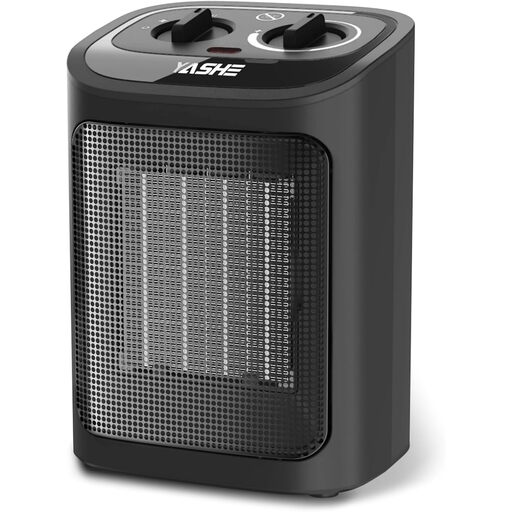
YASHE PTC-919 ceramic fan heater, 1,500 W
This compact fan heater could be a good choice for occasional warmth at your desk or workstation.
The product information specifies 1,500 W, three heat settings, an Eco mode and a thermostat. Overheat and tip-over protection are also listed, and the description states that it operates at less than 40 dB.
View on Joybuy
 No image available
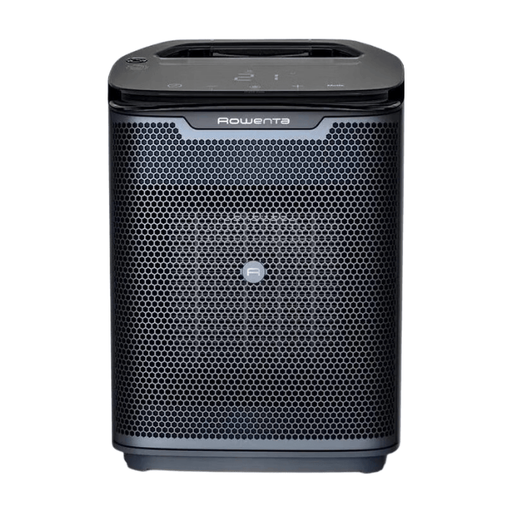
Rowenta Intense Comfort Aqua SO9380F0
This model may suit you if you want occasional warm air at your desk and have space to position a fan heater.
The product information specifies 2,000 W, four settings and IP21. The description states a maximum noise level of 29 dB. According to the product information, place it on a stable, heat-resistant surface at least 1 m from flammable materials. Do not use it in the bathroom.
View on Joybuy
 No image available
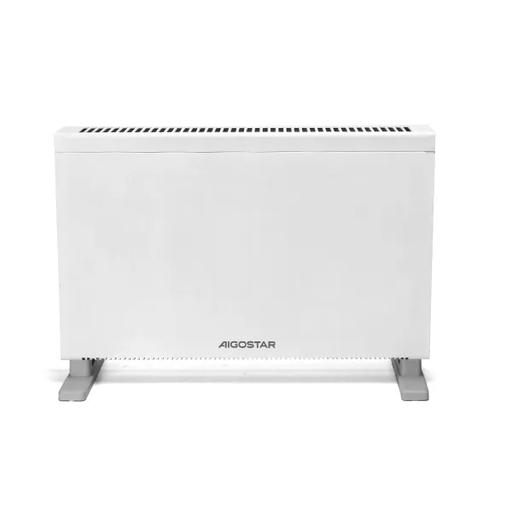
Aigostar convector heater, 2,000 W
A convector heater is an option if you want extra warmth in the room, rather than just at your desk.
The product information lists two heat settings, a thermostat, and overheat and tip-over protection. The description specifies a clearance of at least 1 m from furniture, curtains and other objects.
View on Joybuy
 No image available
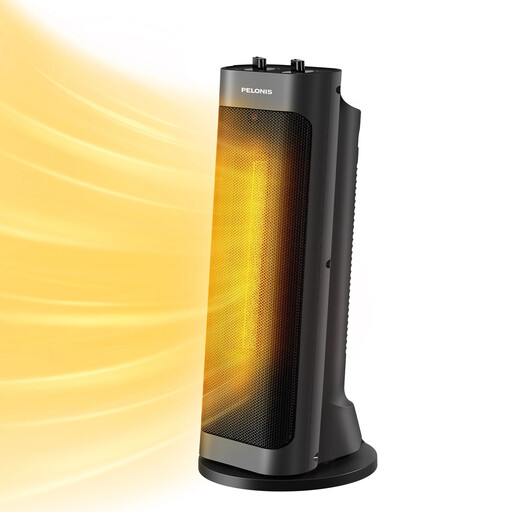
PELONIS ceramic fan heater, 2,000 W
This portable fan heater may suit you if you want targeted warm air in your study from time to time.
The product information specifies 2,000 W, four heat modes, 70° oscillation, and tip-over and overheat protection. The description advises keeping it at least 1 m from flammable materials.
View on Joybuy
 No image available
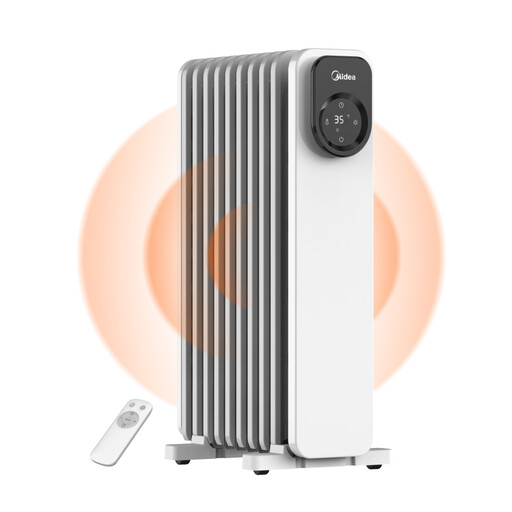
Midea NY2009-24UR oil-filled radiator, 2,000 W
If you want to warm the room during longer study sessions and have space for a radiator, this model could be worth considering.
The product information specifies 2,000 W, nine fins, four modes, a thermostat and a remote control. Overheat and tip-over protection are also listed. According to the product information, keep it at least 1 m from flammable materials and do not use it close to a bath, shower or pool.
View on Joybuy
Frequently asked questions
Is a small plug-in fan heater enough to heat my room?
You shouldn’t rely on a small plug-in fan heater as a replacement for your regular room heating. The Verbraucherzentrale considers these devices too low-powered for whole rooms and warns that they can use a lot of electricity if run for long periods.
How can I assess the energy consumption of a heater?
Consider the rated power and the actual number of hours it’s used alongside the warmth you want. Thermostat breaks and heat settings affect running time. Only compare devices if they’re intended to heat the same area.
What should I check before positioning or attaching a heater?
Read the instructions for the exact model, including information about surfaces and safety clearances, and keep heaters away from easily flammable objects. Don’t use a device with a damaged cable. If you’re attaching an under-desk heater with adhesive, also check the desk surface and, if relevant, your accommodation rules.
Is CE marking an independent quality mark?
No. CE marking is mandatory for devices covered by the relevant EU rules; it means the manufacturer declares the product’s conformity. The Bundesnetzagentur lists the required German-language instructions and safety information as points for retailers to check.
How should I dispose of an old heater?
Electrical waste must not go in your household bin. The Verbraucherzentrale lists local collection points and returning the item to a retailer as options. The take-back service a retailer offers depends on its terms and conditions.


