Targeted warmth
If your workspace is warm enough but you’d like a little extra warmth yourself, a personal heat source may suit your needs better than a heater designed to warm the whole room.


If you mainly want to warm yourself, a personal heat source could be a good option. If you want warmer air at your desk, a fan heater may be suitable, provided you can position it at a safe distance. A convector heater is another option for warming the room, but it needs a suitable spot. A heated cushion won’t warm the room. The German Fire Service Association recommends keeping heaters away from flammable items and warns against overloading sockets. Your electricity use depends on the power setting you choose and how long the heater actually runs.
If your workspace is warm enough but you’d like a little extra warmth yourself, a personal heat source may suit your needs better than a heater designed to warm the whole room.
If you want warmer air at your desk for a limited period, a fan heater may be suitable. It needs a suitable position, with enough space around it and away from flammable items.
If you want to avoid fan noise during calls or focused work, consider a personal heat source or another type of room heater. Noise levels depend on the specific model and the operating setting stated.
First decide whether you want to warm yourself or the air in the room. Then consider noise levels, where you can place the heater and how long you expect to use it.
| What you need | What to look for | Who might find this especially important? |
|---|---|---|
| Warmth for you or the room | Work out whether you’re feeling cold or the room needs warming up. If you’re considering a heated cushion, check its instructions for use. | If I feel cold at my desk but the room is otherwise warm enough, I’d first consider a personal heat source. Around 33% of consumers are likely to prioritise personal warmth. |
| Warmer air in your workspace | Compare the power settings, thermostat controls, airflow direction and recommended position for the specific model. | If I need warmer air at my desk from time to time, I look for a suitable heat setting and a clear space to position the heater. Around 27% of consumers are likely to prioritise quick warmth from warm air. |
| A quiet working environment | Check the noise levels for each operating setting and consider whether a personal heat source or a properly installed convector heater would better suit your needs. | If I’m making calls or need to concentrate for long periods, I want to weigh up possible fan noise against the benefit of warm airflow. Around 20% of consumers are likely to prioritise a quiet working environment. |
| A safe position and electricity use | Follow the clearance distances in the instructions, don’t cover the heater and don’t overload sockets. The power setting and actual running time affect electricity use. | If there’s little free space at my desk, I first check that there’s a safe place for the heater and how long it’s likely to run. Around 20% of consumers are likely to prioritise safe, energy-conscious use. |
The Verbraucherzentrale (German consumer advice centre) does not consider small plug-in heaters a suitable alternative for heating an entire room, because of their low power output. Running one for a long time can also increase electricity use.
Before buying, decide whether you need personal warmth or warmer air in the room. Don’t judge a potential energy-saving claim by the size of the heater.
Safety features don’t replace the need to keep the heater away from flammable items and use it correctly. There may be paper and other items close to your heater at a desk.
Before buying, check whether you can follow the clearance distances and usage instructions at the position you have in mind.
The features below relate to the specific product ranges or models mentioned. They don’t describe a brand’s entire range.
Sam little is a compact, portable ceramic fan heater for targeted extra warmth.
The Capsule range includes portable ceramic fan heaters; this section focuses on model HFX30C18.IW.
The CK 20 Trend LCD is a wall-mounted convector heater, offering an alternative to a portable fan heater at your desk.
Heated cushions such as the HK 35 are an option if you want personal warmth rather than a room heater.
The German heating products overview includes the 316 fan heater, among other products.
The products below include freestanding convector heaters for warming the room and fan heaters for warming the air in your workspace.
 No image available
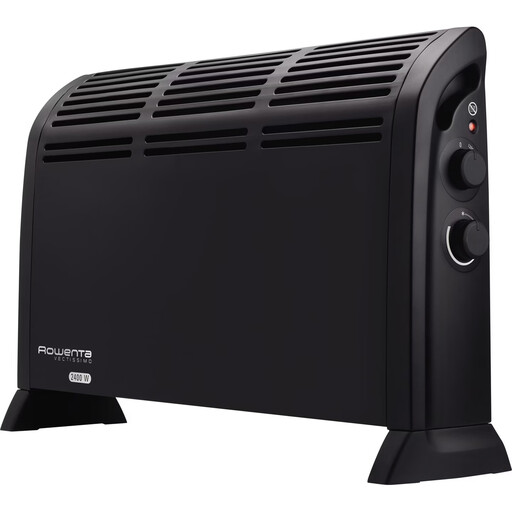
This freestanding convector heater may suit you if you’re looking to warm the room rather than direct a stream of warm air. The description lists 2400 W, two heat settings, a thermostat, overheat protection and a carry handle.
According to the product description, you’ll need to keep it at least 1 m away from flammable materials and place it on a stable, level surface.
 No image available
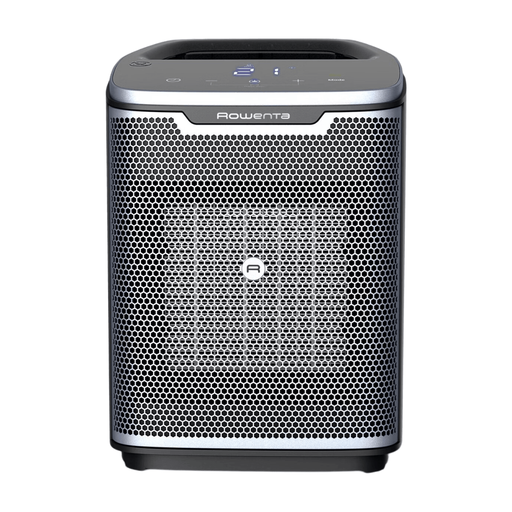
This fan heater may be a good option if you want warm air for occasional use, rather than relying solely on personal warmth. The description lists 2000 W, two heat settings, fan-only mode, a timer, touch controls and overheat protection.
The product description requires at least 1 m of clearance from flammable materials and a stable, level surface.
 No image available
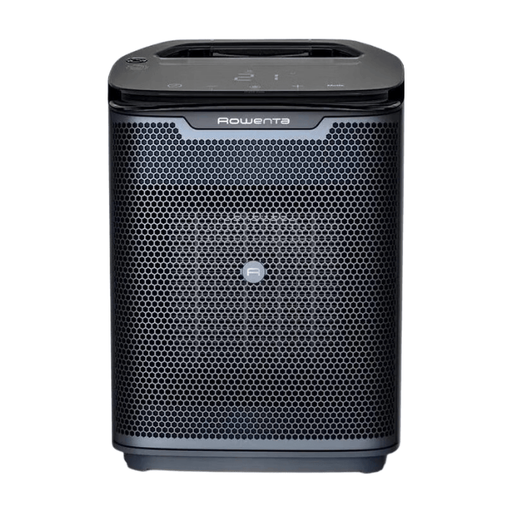
This ceramic fan heater may suit you if you want warm air at your desk and a choice of power settings. The description lists 2000 W, four power settings, a timer, thermostat, overheat protection and IP21.
The product description requires at least 1 m of clearance from flammable materials and a stable, level surface.
 No image available
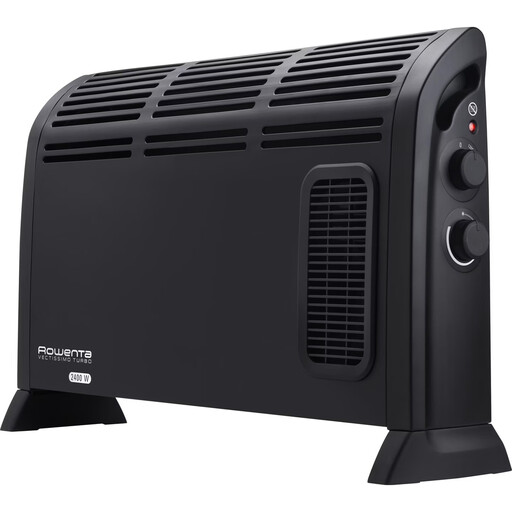
This freestanding convector heater may suit you if you’d prefer a different type of heat distribution to that of a portable fan heater. The description lists a combination of convection and fan heating, 1200 and 2400 W heat settings, thermostat control, frost protection and overheat shut-off.
The product description requires at least 1 m of clearance from flammable materials. The heater is described as suitable for indoor use and has an IP20 rating.
 No image available
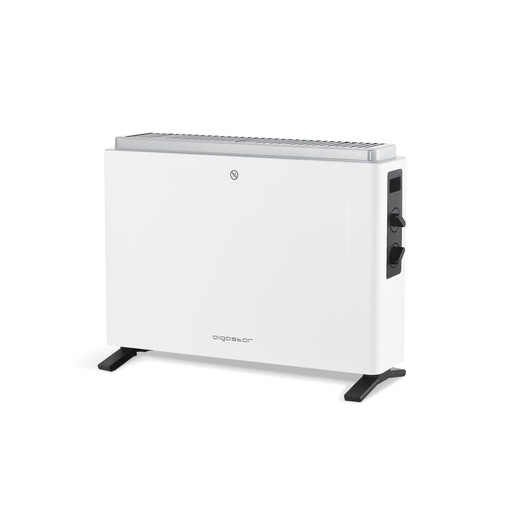
This convector heater may suit you if you want to warm the air in the room, rather than just the person at your desk. The description lists natural convection, 800, 1200 and 2000 W power settings, three heat settings, thermostat control, remote control, a timer, overheat and tip-over protection, and a stated coverage of 10–15 m².
According to the product description, you’ll need to leave at least 1 m between the heater and furniture, curtains or other items, and connect it to a suitable 16 A socket.
Only if the specific position meets the clearance and usage requirements in the heater’s instructions. The German Fire Service Association advises keeping heaters well away from flammable items, not drying clothes on them and avoiding overloaded sockets.
Multiply the power used, in kilowatts, by the running time in hours to calculate energy use in kilowatt-hours. At 0.8 kW for two hours, that would be 1.6 kWh if the heater draws that much power continuously. A thermostat may affect the actual running time.
Follow the instructions for the specific model when cleaning and using it. Beurer says the cover of the HK 35 is machine washable at 30 °C. If a product is faulty, your statutory consumer rights are against the seller; a voluntary guarantee is separate.
According to the European Commission, electric local space heaters are not covered by the energy labelling rules for local space heaters that it describes. Ecodesign requirements still apply to products within the relevant scope. The absence of an energy label alone doesn’t prove that a product is unsafe or particularly energy efficient.
No. A heated cushion warms your body, not the air in the room. If a room isn’t heated or ventilated enough, damp can become a problem. German consumer advice centres recommend regular airing by opening windows wide or creating a through-draught, as well as heating rooms appropriately.